The dark green lobby that nobody talks about
There is a highly influential lobbying group in Europe, founded and based in The Hague, which you have never heard of: the European Climate Foundation. With an annual budget of hundreds of millions of euros, funded by American billionaires, it successfully lobbies for climate neutrality in Europe. Yet the media remains deafeningly silent on this group.


Image generated by AI.
Marcel Crok
Date: 13 July 2026
As director of the Clintel Foundation, I am bombarded weekly on social media with accusations about our funding. We are allegedly paid by the oil industry to spread disinformation about the climate. That narrative was skilfully peddled to the world shortly after Clintel was founded in 2019, by the investigative teams at Follow The Money and the TV programme Pointer, which also devoted two episodes to us, because, according to them, we were “so influential” despite our short history. Just Google “Follow The Money Clintel Guus Berkhout Shell” and this is the AI result:
An investigation by Follow the Money and Pointer has uncovered a financial ‘oil trail’ leading from the fossil fuel industry to Guus Berkhout’s climate-sceptic platform, Clintel. Berkhout received millions from dozens of oil companies, including Shell, for his Delphi Consortium, part of which was used to fund climate-sceptic work.
A “financial oil trail” – you have to hand it to the journalists at Pointer and FTM; they know how to use language effectively to conjure up the ‘right’ image. In their second broadcast in 2022, Pointer blithely claimed that Clintel is funded by the oil industry. I was fed up with Pointer’s lies and, on a shoestring budget, launched a lawsuit against Pointer, which was defended (using public funds) by two lawyers from the Zuidas business district in Amsterdam. The judge did, however, reprimand Pointer on this point, but Clintel still lost the case because the judge ruled that our proposed correction was inadequate. For many people, however, it makes no difference; ‘funded by the oil industry’ remains the easiest way to brush us aside.
European Climate Foundation
Clintel’s total budget has varied in recent years between 200 and 250K per year. It comes almost exclusively from private donors. In the world of fundraising, these are not sums that will make anyone sit up and take notice. Even if the oil industry were to fund us (which it doesn’t), they would be spending very little on it. In the Netherlands, Milieudefensie alone has an annual budget of around 30 million euros, of which nearly 3 million euros comes directly from the government.
But today I want to talk about another organisation, the European Climate Foundation (ECF), founded and based in The Hague in 2008. Ask ten random passers-by on the street if they know of this organisation and the answer will almost always be no. That is precisely the intention. This organisation acts as a conduit for lobbying funds, mainly from American philanthropists. How much money? A great deal! According to its own tax return under its ANBI status, the ECF received no less than 275 million (!) euros in funds from other non-profit organisations in 2023. Here is an overview of organisations donating millions to them, taken from their own website:

We see a number of very large American foundations such as the Rockefeller Brothers Fund (total assets approximately 1.4 billion dollars, annual expenditure in the region of 80 million dollars), the William and Flora Hewlett Foundation (assets of $14.2 billion, $625 million spent annually on grants) and Bloomberg Philanthropies, run by billionaire Michael Bloomberg (estimated assets ~$12.1 billion, estimated annual donations in the region of $3.7 billion worldwide). But we also see the Laudes and Porticus Foundations, both owned by the Brenninkmeijer family (of the C&A clothing chain). Not to mention the Dutch National Postcode Lottery.
Desmog
The European Climate Foundation’s mission is very clear. From their own website:
“Empowering people across society to create a climate-neutral world. We are Europe’s largest climate fund. Together with hundreds of partners, we catalyse climate action and build a safe, resilient and democratic Europe.”
How successful are they? According to the article “Revealed: Ed Miliband and the shady funding of net zero” in the British newspaper The Spectator, they are highly successful: “It has been astonishingly successful in shaping policy, controlling debate and overruling elected governments in the courts. It has prevented the exploration of oil and gas in the North Sea, kept energy prices high and made us ever more dependent on Chinese technology.” In this case, ‘it’ refers to more than just the European Climate Foundation; it refers to a broader network of similar foundations that are closely intertwined.
To see how this works, consider the following example. The British website Desmog is a ‘journalistic’ platform that keeps a critical eye on virtually every climate sceptic in the world (or rather, attempts to smear them). If you haven’t been featured by Desmog yet, you simply don’t count as a climate sceptic, so to speak. So Clintel is getting attention and two Dutch journalists wrote an in-depth article about the Clintel conference in Roelofarendsveen in 2024. Desmog is funded, amongst others, by the Joseph Rowntree Charitable Trust (a major British foundation, with several grants of £400,000+ in recent years), the Polden Puckham Charitable Foundation, the Climate Emergency Collaboration Group and the Minor Foundation (a Norwegian philanthropic foundation that supports climate journalism). So, at first glance, there is no funding from the European Climate Foundation. But who is behind the Climate Emergency Collaboration Group (CECG)? The CECG is itself a consortium of major climate-focused philanthropic organisations, including the IKEA Foundation, the Rockefeller Family Fund and the Rockefeller Brothers Fund, which in turn also fund the European Climate Foundation (ECF). The ECF also funds the British journalism platform Carbon Brief, which publishes in-depth articles on climate science and climate policy. They state: “We are grateful for the support of the European Climate Foundation and the Meliore Foundation, which provide us with philanthropic funding. In the interests of transparency, we voluntarily disclose that this funding totalled £1,892,421 in 2025.”
Carbon Brief is thus one of more than 700 organisations receiving funding from the ECF and is, in any case, considerably more transparent than the ECF itself. The ECF does not disclose how much money it receives from which donors, nor how much money goes towards which causes.
Secrecy
The secrecy surrounding this organisation also caught the attention of Florence Autret, a French journalist based in Brussels. She requested an interview with the ECF’s CEO, the Frenchwoman Laurence Tubiana, who receives an estimated annual salary of 500,000 euros. She is often described as the architect of the Paris Climate Agreement, which was concluded in 2015 and laid the foundations for the current Net Zero policy for 2050. After months of trying, she was told that an interview was out of the question. Nevertheless, Autret managed to paint a clear picture of the ECF in a series of in-depth articles on her website (not in a mainstream newspaper, mind you!). The Belgian blog Firebreak translated her lengthy piece into five in-depth articles. The first article begins with the following summary: “Over the past ten years, a mysterious organisation, controlled by a handful of philanthropic billionaires, has taken over European ‘civil society’. In other words: they have taken over the European Union.” In her articles, Autret highlights the ECF’s enormous lobbying power. A graph from an ECF-funded report reappears, word for word, within a few weeks in a report by the European Commission itself – but without any acknowledgement of the source.
Among the main recipients of ECF grants is the European Environment Bureau (EEB), itself a coalition of NGOs and one of the largest lobbying organisations in Brussels. The EEB has an annual budget of 5.6 million euros and no fewer than 32 accredited activists in the European Parliament. By way of comparison: CEFIC, the trade association representing the entire European chemical industry, has 39. Being accredited means you can walk freely into the Parliament, attend all public meetings, walk through the corridors of MEPs’ offices and those of their assistants, and make use of the cafés and canteens. It is also a prerequisite for requesting a meeting with a civil servant, a European Commissioner or a member of the European Commission’s cabinet.
Another major recipient of ECF grants is CAN Europe, the European branch of the Climate Action Network. This umbrella organisation is a key player in ‘civil society’ during the annual United Nations climate conferences (COPs). CAN Europe claims to bring together 1,500 NGOs and to represent 47 million citizens. The ECF is by far the largest funder: in 2021, it contributed 2.5 million euros to a total budget of 4.5 million euros. Both CAN Europe and the EEB have two of the largest lobbying budgets within the EU, comparable to those of major financial and industrial associations and Big Tech.
Shell
In the Netherlands, the traditional media have been deafeningly silent on the European Climate Foundation. Follow The Money did, however, mention the ECF once at the end of last year in a box accompanying an article entitled “US companies and billionaires influence EU policy via think tanks”.
The article states: “‘The amount of money coming from the US is shocking. It is, in fact, structural foreign interference, and has been for decades,’ says political scientist Inderjeet Parmar, who has conducted extensive research into think tanks.”
The article confines itself to the role of think tanks, and the references to the ECF are so brief that the extent of this organisation’s influence has undoubtedly escaped the attention of FTM readers. Furthermore, in the Netherlands we have to rely on the ‘alternative’ media. Wouter Roorda wrote two lengthy pieces on the European Climate Foundation and CAN Europe for Wynia’s Week. Financial journalist Arno Wellens once lashed out at the ECF over a TNO study funded by them, in which cooking with gas was labelled extremely dangerous due to particulate matter emissions.
In the article about Clintel, Follow The Money makes a big deal of the fact that Guus Berkhout worked for Shell from 1965 to 1971 (he then spent 40 years at Delft University of Technology). But when it comes to the European Climate Foundation, Follow The Money doesn’t seem to care about that at all. The founder and first CEO of the ECF is, in fact, Jules Kortenhorst. After studying economics at Erasmus University in Rotterdam, he first worked at Shell for eight years, then served for two years in the House of Representatives on behalf of the CDA, and immediately afterwards, in 2008, founded the European Climate Foundation.
A fledgling Clintel organisation with a meagre budget was reason enough for the Dutch media to assign several journalists to cover it. Yet a much longer-established dark-green lobbying network – which has hundreds of millions of euros at its disposal each year, mainly from the US, and which exerts significant influence on climate and energy policy in Europe – receives absolutely no coverage from those same media outlets. This introductory article makes one thing clear. The absence of the ECF from the Dutch media is a missed opportunity. I call on Follow The Money to assign a team of journalists to this story. I will be the first to buy the book that this might lead to.
This article originally appeared in Dutch on Indepen.eu on 13 July 2026.
Marcel Crok
Marcel Crok is a Dutch science journalist who has been writing full-time about the climate debate and climate policy since an award winning article about the notorious hockey stick graph in 2005. He published two books in Dutch (De Staat van het Klimaat (The State of the Climate) and was co-author of the book Ecomodernisme (Ecomodernism)). With the British independent researcher Nic Lewis he wrote an extensive report about climate sensitivity, titled A Sensitive Matter. He was asked by the Dutch government to become expert reviewer of the IPCC AR5 report. Together with the Dutch climate institutes KNMI and PBL, Crok set up an international discussion platform Climate Dialogue.
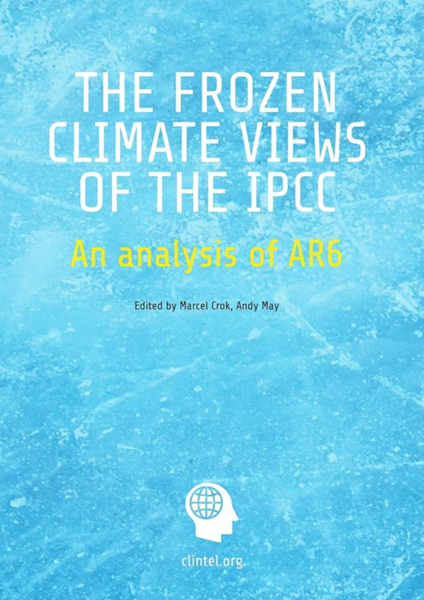
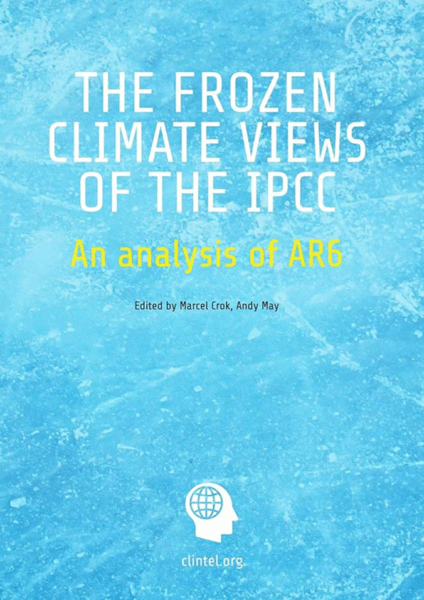
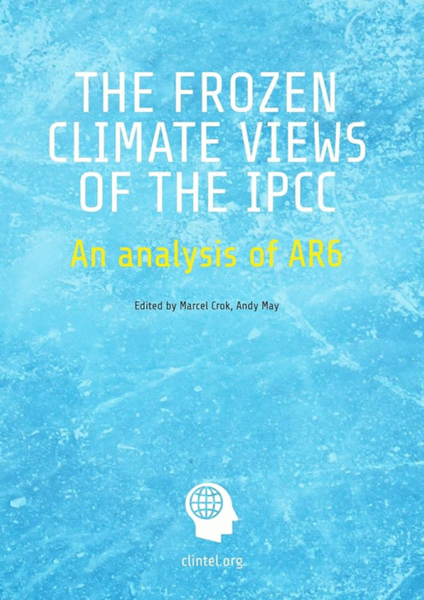
In 2019, Crok and emeritus professor Guus Berkhout founded the Clintel Foundation. They published the World Climate Declaration, which has now been signed by over 2000 scientists and experts. Together with Andy May and a team of scientists from the Clintel network, Crok contributed to and edited the book The Frozen Climate Views of the IPCC.
The article you have just read was made possible by our donors.
Every day, Clintel publishes articles on climate, energy and science. We also translate and share international analyses in multiple languages, produce videos, publish reports and organize conferences and events around the world.
We receive no government funding and rely entirely on the support of our donors. Your support helps us promote independent research and contribute to a more open and balanced debate on climate and energy issues.
Would you like to support our work? Choose the option that suits you best:
• Become a Friend of Clintel – support us with an annual contribution
• Make a recurring donation – provide ongoing support and help us plan ahead
• Make a one-time donation – every contribution helps
Thank you for your support.

more news

Nicola Scafetta on Tom Nelson’s podcast: the limitations of global climate models
Nicola Scafetta recently talked about his new book Frontiers of Climate Science: Solar Variability, Cycles and Model Uncertainty on Tom Nelson’s podcast. The book is an attempt to encourage a broader discussion about the uncertainties that remain in climate science and the limitations of contemporary global climate models.

The Case for Abolishing the EU Emissions Trading System
For two decades, the EU Emissions Trading System (EU ETS) has been at the heart of the European Union’s climate policy. Yet Samuel Furfari, former senior official at the European Commission’s Directorate-General for Energy and emeritus professor of energy geopolitics, argues that the system rests on shaky legal foundations, undermines Europe’s competitiveness and has evolved into an expensive political instrument. His conclusion is clear: the EU Emissions Trading System should be abolished.

The Pseudoscience behind Extreme Weather Attribution
Extreme weather attribution studies claim to determine how much human-caused climate change influences individual events such as hurricanes, floods and heatwaves. In this article, Ralph B. Alexander examines the scientific methods behind these studies and questions whether their conclusions are supported by reliable evidence.
The post The dark green lobby that nobody talks about appeared first on Clintel.
Please consider helping!
Awake Freedom TV On Roku is Broken! 🙂

I could no longer maintain the costs on my own, so I moved the off of a dedicated server which was needed for the TV platform to work. On top of that, I want to build an app Awake Freedom TV app, for mobile phones. We need your help to first resurrect our TV channel, and then build the mobile app. In order to do that, I need a minimum of 800/month on subscription payments. Please help anyway you can with the form below.