


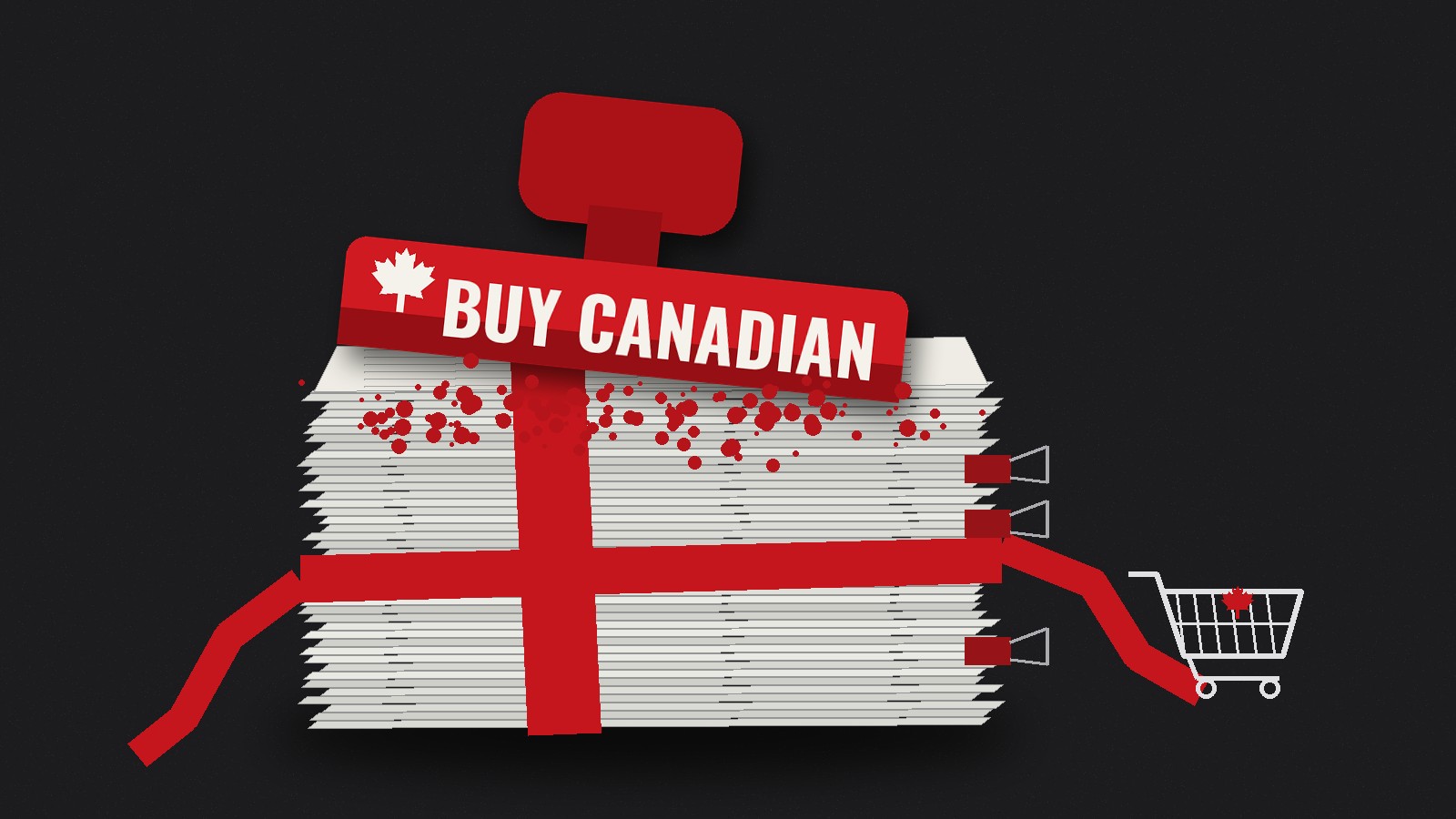
When Mark Carney’s government rolled out its Buy Canadian procurement policy, it was pitched as a patriotic answer to Donald Trump’s tariffs. Ottawa would use its enormous purchasing power to back Canadian workers and Canadian companies.
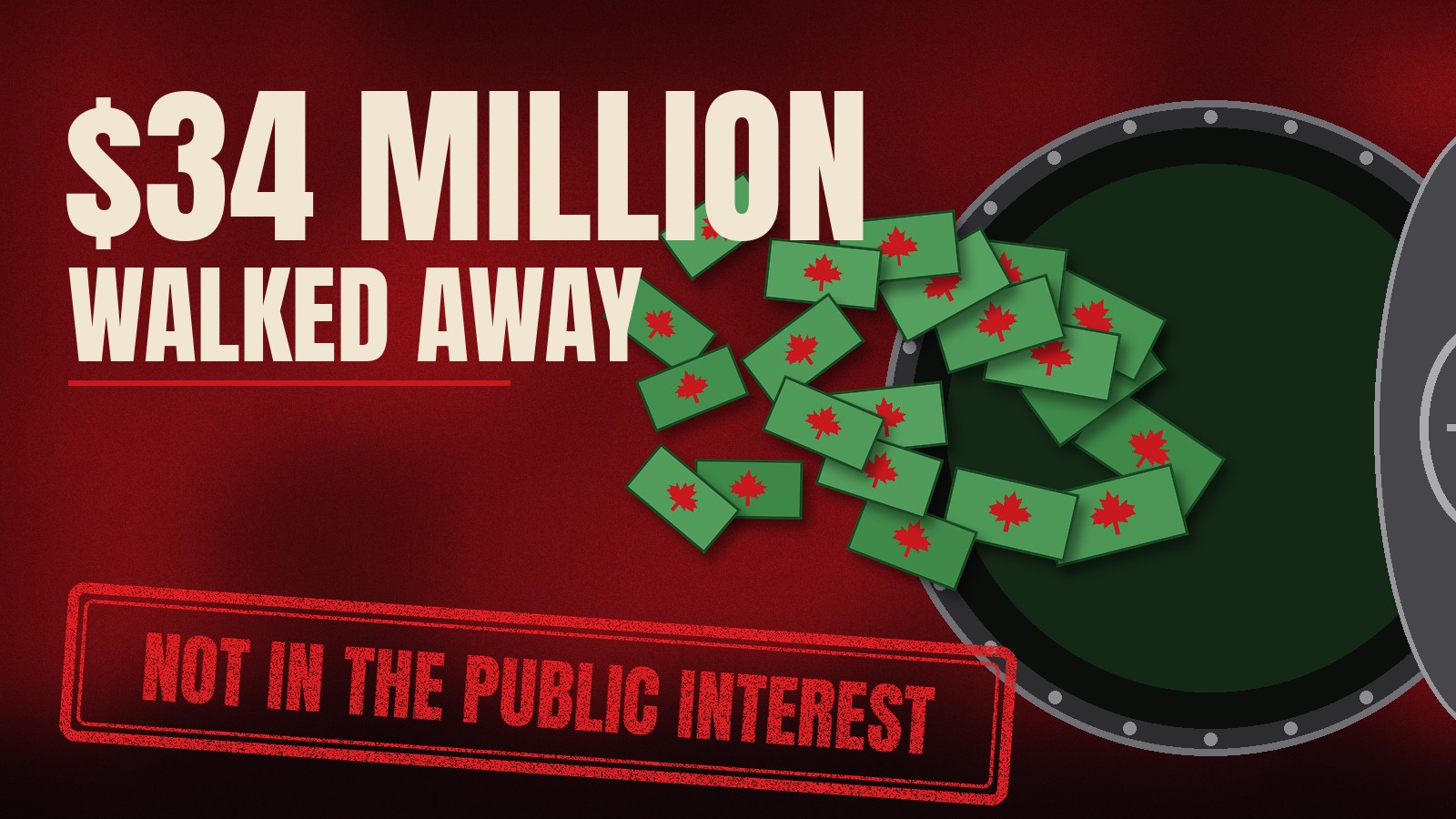
More than a year after it was first announced, the evidence points to something much less impressive: a policy that either costs taxpayers more or does almost nothing, piles new paperwork on the very Canadian firms it claims to help, and has managed to irritate the trading partners Carney says he wants to get closer to.
A Promise That Was Never Realistic
When the plan was introduced in September 2025, the government committed to prioritizing Canadian suppliers and their products “in all federal spending,” according to an analysis in Policy Options, the magazine of the Institute for Research on Public Policy.
The author of that analysis, Noah Fry, called that commitment “evident hyperbole.” Canada has signed a dozen major trade agreements that limit how federal departments can favour domestic suppliers. So the version that actually launched in December was much narrower: a price or point advantage for Canadian bidders on “strategic” contracts worth $25 million or more, in areas like defence, health, transportation and communications technology.
In other words, the slogan promised “all federal spending,” and the fine print delivered a sliver of it.
The Numbers Show How Little It Changes
The Policy Options analysis went through the contract data. Under the $25-million threshold, only six contracts had not already gone to Canadian suppliers. Once you count only contracts that drew more than one bid, the number drops to two. For comparison, the federal government can report as many as 56,000 contracts in a year.
Even under the lower $5-million threshold, the analysis found only nine contracts that would have been affected, worth $249 million in total.
A Globe and Mail column published October 16 by economist Kevin Yin reached a similar conclusion. Of more than $28 billion in federal procurement contracts awarded in 2025, only $970 million, or 3.43 per cent, went to foreign suppliers on contracts large enough to matter. Restrict that to genuinely competitive contracts, and it falls to under $350 million, which Yin says is about 1 per cent of direct federal procurement dollars.
That’s the entire pool of money Buy Canadian could realistically redirect. Most federal contracts were already going to Canadian companies before Carney ever said the words.
Meanwhile, the government’s spring economic update claimed Buy Canadian had already been applied to planned purchases and contracts “valued at around $3.6 billion.” As Policy Options points out, there’s a difference between adding Buy Canadian language to a contract and actually changing who wins it. In many of those cases, a Canadian vendor would have been chosen anyway.
Either It Costs Us More, or It Does Nothing
Critics disagree on how expensive the policy will be, but none of the possible answers is good news.
The Montreal Economic Institute estimated in March that the policy could inflate the cost of large infrastructure projects by between $4.8 billion and $12.2 billion a year, as reported by the National Post. The study’s author, economist Vincent Geloso, warned that protecting domestic firms from competition makes them “lazier” and leaves taxpayers paying more for less.
Policy Options argues the MEI figure relies on shaky assumptions, because it applies the cost of a California small-business preference to all of Canada’s public procurement. Its own estimate is far smaller.
But think about what that defence of the policy actually says. If Buy Canadian doesn’t cost billions, it’s because it barely touches anything. As the Policy Options headline put it: “Buy Canadian won’t cost us much. That’s the problem.”
So Canadians get one of two outcomes. Either the policy works as advertised and taxpayers pay a premium, or it’s mostly a press release. Neither is the nation-building win the government sold.
More Paperwork for Canadian Companies
There’s a cost that doesn’t show up in either estimate: red tape.
Yin notes in the Globe that companies must now prove they qualify as a Canadian supplier based on location, business-hours accessibility, tax residency, employment records, and a lack of intent to subcontract to non-Canadian firms. Since many federal suppliers were already Canadian, he writes, “this administrative burden is falling precisely on those companies it is purporting to help.”
That cost gets paid either by the company or by taxpayers through pricier contracts.
Picking Fights With the Friends We Need
The diplomatic cost is real, too. The Logic reported in April that the United States, the European Union, Japan, New Zealand, Norway, Switzerland and the United Kingdom all raised concerns about the policy at the World Trade Organization. Australia flagged it as well.
That matters because Carney’s whole trade strategy depends on getting closer to Europe and Asia. Yet here are those same partners questioning whether Canada is keeping its word on fair access to government contracts.
The Logic also reported that, weeks before the December announcement, the government changed Canadian International Trade Tribunal rules to prevent foreign companies from challenging the preferential treatment. One procurement lawyer, Timothy Cullen of McMillan LLP, put it bluntly: “You wouldn’t need to create these sorts of protections for yourself if what you were doing was totally consistent with the trade rules.”
The Bottom Line
Buy Canadian was supposed to show that Carney could turn “elbows up” into real economic muscle. Instead, it shows a familiar pattern for this government: a big promise, a much smaller policy, extra bureaucracy, and a bill that someone will have to pay.
Canadian workers deserve a procurement strategy that gets value for money and strengthens our industries for real, not a slogan that looks good on a podium and leaves trading partners asking whether Canada still keeps its commitments.
Please consider helping!
Awake Freedom TV On Roku is Broken! 🙂

I could no longer maintain the costs on my own, so I moved the off of a dedicated server which was needed for the TV platform to work. On top of that, I want to build an app Awake Freedom TV app, for mobile phones. We need your help to first resurrect our TV channel, and then build the mobile app. In order to do that, I need a minimum of 800/month on subscription payments. Please help anyway you can with the form below.


Leave A Comment