Trump is Right to Take On the Climate Litigation Complex
In this opinion piece, energy analyst Tilak Doshi argues that President Trump was right to challenge a new National Academy of Sciences report claiming to support climate litigation based on extreme weather attribution. According to Doshi, the report blurs the line between independent scientific advice and advocacy for climate lawsuits.

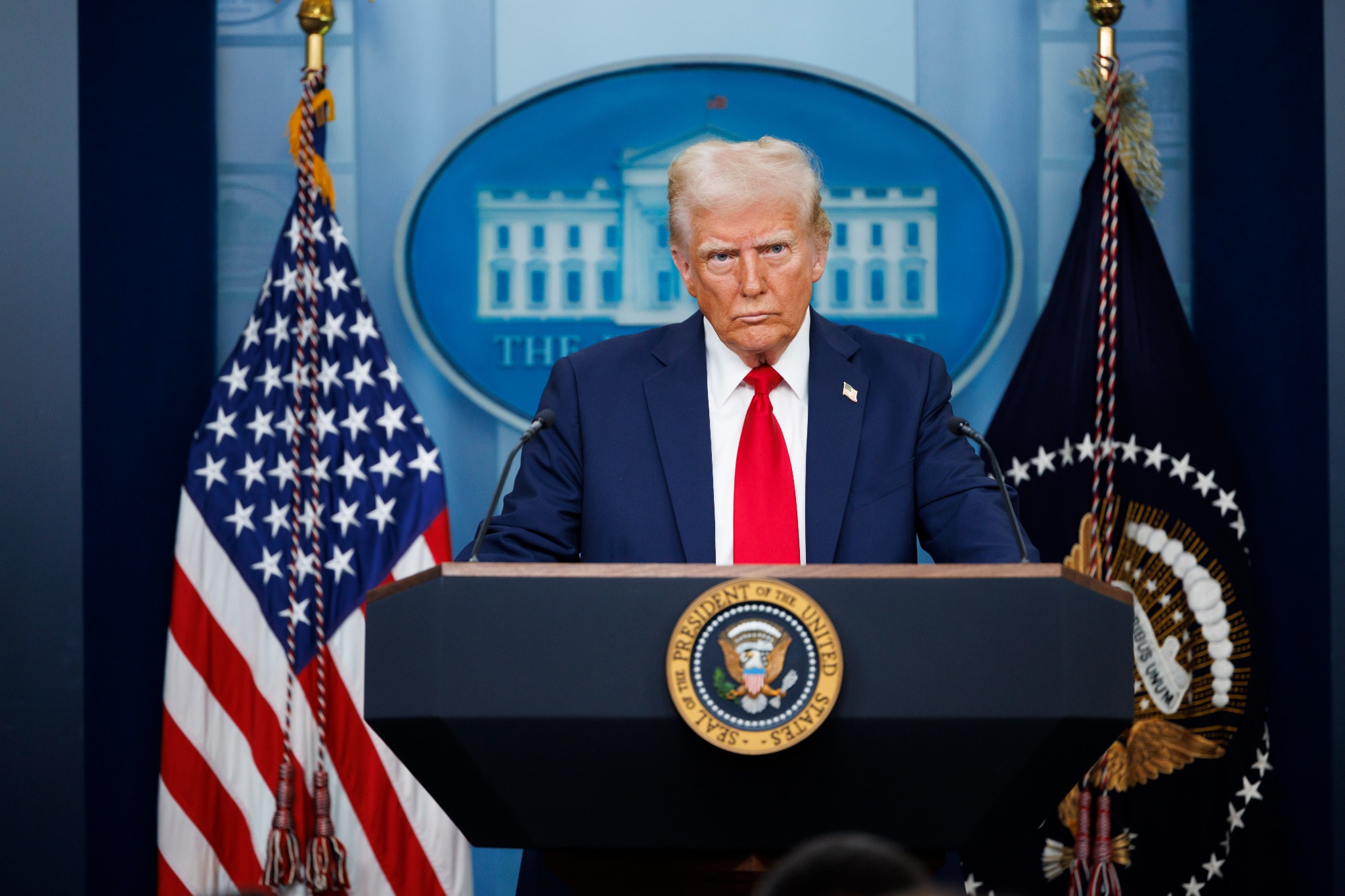
US President Donald Trump (Photo: Shutterstock)
Tilak Doshi
Date: 28 July 2026
There is a particular kind of institutional decay that announces itself not through incompetence but through overreach – the moment a body built to advise quietly converts itself into an advocacy outfit. That moment arrived in plain view last week when the National Academies of Sciences, Engineering and Medicine released a 253-page report claiming that scientists can now attribute individual heatwaves and rainstorms to man-made emissions “with a high degree of confidence”, and wildfires, droughts and cyclones with “moderate confidence”. Two days later President Trump did something no prior occupant of the White House had quite dared to do: he called the report what it is on Truth Social: “Fraudulent, biased and misleading,” ordering federal suspension and debarment officials to review the Academies’ conduct and taxpayers’ exposure to what he termed “Climate Fraud”.
The howls of outrage were immediate and predictable. But strip away the theatre of a Presidential Truth Social post – capital letters, “Radical Left Dumocrats”, the invented spelling – and what remains is a serious institutional question that deserved to be asked years ago: has the National Academy of Sciences become an advocacy organisation wearing the borrowed authority of ‘consensus science’?
From weights and measures to trial-lawyer auxiliary
Congress chartered the National Academies in 1863 for a modest and useful purpose: advising the government on technical matters such as the calibration of currency and the protection of ship hulls from corrosion. It is worth dwelling on how far the institution has travelled from that brief. As the Wall Street Journal’s editorial board observed in its own broadside against the report, published the same weekend under the pointed headline ‘A Climate Coup at the National Academies of Science’, the new document explicitly frames itself as “relevant to policy and legal decisions pertaining to climate change and liability for losses sustained as a result of extreme weather and climate events”. That is not the language of scientific advice. It is the language of a legal brief.
The report goes further, noting that its methodology could help state and local governments demonstrate the “concrete injury” needed to establish standing in lawsuits against fossil fuel producers, and that it might “inform” measures such as Vermont’s climate superfund law – which empowers state officials to calculate the “financial impact” of greenhouse gas emissions and then demand payment from energy companies to cover it. As the Journal’s editors put it with admirable bluntness, “the point is to put a scientific gloss on a coercive exercise of government power”. The scientific gloss provides a legal strategy, built to order, for a litigation campaign that has been running for the better part of a decade against the companies that keep the lights on.
None of this should surprise anyone who has followed the emergence of so-called ‘attribution science’ as a distinct field, nor is it the first time House Republicans have raised the alarm: members of the House Committee on Science, Space, and Technology argued that the report presents a conflict of interest precisely because attorneys involved in ongoing climate litigation helped establish the scientific standards the Academies used.
As noted in these pages in an earlier article examining the Nature paper on “the scientific case for climate liability”, the World Weather Attribution initiative itself has admitted that, unlike any other branch of climate science, “event attribution was originally suggested with the courts in mind”. That is a remarkable thing for a scientific field to concede about its own origins. Most disciplines discover applications for their findings after the fact. Attribution science was conceived, from the outset, as a tool for tort lawyers – the conclusion came first, and the methodology was reverse-engineered to support it.
The conflict-of-interest problem
The most damning detail in the whole affair, and the one that ought to trouble even sympathetic observers of the Academies, concerns Michael Burger, the Executive Director of Columbia Law School’s Sabin Centre for Climate Change Law. Burger assisted with the new report and is cited approvingly within it. What the report does not mention is that Burger is also a counsel at Sher Edling LLP, the law firm that has led – and profited handsomely from – the wave of municipal and state lawsuits against ExxonMobil, Chevron, Shell and the rest of the industry. This is not a minor conflict of interest tucked away in a footnote. It is the central actor in the litigation campaign helping write the scientific document that the litigation campaign will then cite as independent authority.
This is not the first time the pattern has surfaced. The WSJ editorial board reminds readers that a climate chapter written for the Fourth Edition of the Reference Manual on Scientific Evidence – a joint publication of the Federal Judicial Centre and the National Academies, distributed to federal judges as guidance on how to weigh expert testimony – drew heavily on Burger’s prior work without proper attribution. That chapter, once the plagiarism and the conflicts came to light, was quietly retracted by the Federal Judicial Centre in February. Electronic copies had already gone out to hundreds of federal judges the previous December and, as one report on the affair noted dryly, could not be recalled. Judges across the country had already been handed a manual instructing them, in effect, on how to receive plaintiff-side attribution evidence – drafted substantially by a plaintiffs’ lawyer.
One retraction might be an embarrassment. A second report, released five months later featuring the same actor and pursuing substantially the same legal agenda, is something closer to an institutional pattern – what David Wojick, writing on Watts Up With That website some years back, described as the Academy’s evolution “from guardians of science to an alarmist fortress”. Institutions rarely announce their capture by groupthink. They simply keep producing the same kind of document, staffed by the same networks, funded by the same interests, until groupthink becomes the institution’s ordinary business.
Follow the funding
It also matters as to who paid for the report. Part of the funding, as the Daily Caller reported, came from the Bezos Earth Fund – the $10 billion philanthropic vehicle established by Amazon’s founder, which has poured money into climate advocacy, activist journalism and litigation-adjacent research since 2020. There is nothing illegal about a foundation funding research it favours. But there is something worth noting when a nominally independent scientific academy, chartered by Congress and substantially funded by American taxpayers, produces a document serving the strategic interests of billionaire-funded activist litigation – and does so using the imprimatur of disinterested expertise that taxpayer funding is meant to secure.
The ‘climate liability’ paper published in Nature last year attempted to quantify, down to the dollar, the specific damages attributable to individual oil and gas companies, estimating that Chevron’s emissions alone caused between $791 billion and $3.6 trillion in heat-related losses between 1991 and 2020. That paper was underwritten by the same activist ecosystem: law firms working on contingency, foundations with declared advocacy missions and NGOs as proxy plaintiffs whose stated purpose is ‘legislation through litigation’, bypassing the elected legislatures that would ordinarily set energy and climate policy. The National Academies report simply extends this machinery one further step up the credibility ladder, converting activist economics into what looks, to a busy federal judge without a physics or econometrics background, like ‘consensus science’.
The attribution chain was never solid
The scientific case underlying all of this – the claim that individual weather events, and the economic losses that follow from them, can be attributed with confidence to the historical emissions of a named company – rests on a flimsy chain of inference with at least three weak links. The first link runs from carbon dioxide emissions to global mean surface temperature, a relationship that depends on climate sensitivity estimates still disputed within the scientific literature itself, with published ranges running from roughly 1.5°C to 4.5°C of warming for a doubling of CO2.
The second link, ‘pattern scaling’, attempts to translate that global average into specific regional and local weather outcomes – a method that imposes a linear, orderly relationship onto a chaotic and non-linear climate system. The IPCC’s own reports as well as independent researchers such as Roger Pielke Jr. have shown how such pattern scaling does a poor job explaining actual trends in hurricanes, droughts and heatwaves once the data are normalised for population growth and economic development.
The third link, translating weather extremes into quantified economic losses, ignores the adaptive capacity of modern economies – air conditioning, flood defences, crop resilience – that has driven a dramatic long-term decline in weather-related mortality, as Bjørn Lomborg has documented at length.
Each of these links is contestable on its own terms. Multiplied together across the ‘end-to-end’ framework that this style of research proposes, the uncertainty compounds rather than cancels. Tort law asks for ‘but-for’ causation: that the harm would not have occurred but for the defendant’s conduct. A model producing damage estimates for a single company spanning a range of several trillion dollars – as the Nature paper did for Chevron – is not evidence of precise causation but rather of spurious claims dressed up in the mock certainty of numbers and dollar amounts.
There is also a more fundamental omission running through the entire attribution literature, one that the National Academy of Sciences report shares with its predecessors: the studied silence on the benefits of the very gas being prosecuted. Carbon dioxide is not merely an externality to be priced and litigated against; it is, among other things, plant food, and NASA’s own satellite data have documented a substantial global greening effect over recent decades, with researchers finding that CO2 fertilisation explains roughly 70% of the observed increase in global leaf area since 1982, an area equivalent to twice the size of the continental United States. A genuine cost-benefit accounting – of the kind William Nordhaus’s Nobel-winning integrated assessment models are meant to enable – would weigh these benefits against the harms before assigning liability. The attribution literature, by contrast, counts only one side of the ledger. It is advocacy dressed in the vocabulary of science, selectively blind to any finding that would complicate its verdict.
A reckoning worth having
None of this is to say that Trump’s chosen instrument – a suspension and debarment review, more commonly used to bar contractors guilty of fraud or safety violations from further federal work – is obviously the right lever, or that his framing, with its capital letters and conspiratorial flourishes, will do much to persuade anyone not already persuaded. Presidential bombast is a blunt tool, and the more considered critique here belongs to the Journal’s editorial board and to the House Committee on Science, Space and Technology, whose members raised the underlying conflict-of-interest concerns well before the President reached for his phone. But the underlying complaint is sound, and it would remain sound if it had been delivered in the driest bureaucratic prose imaginable. A body established by Congress to give federal judges disinterested technical guidance has instead handed them a document substantially shaped by the very lawyers profiting from the litigation that the document is meant to inform.
The Soviet Union’s Lysenko episode showed what happens when ideological conformity displaces empirical rigour inside an institution wearing the trappings of science. The National Academy of Sciences exhibits a modern Lysenkoism rife across the climate change debate. American federal judges, weighing genuinely complex scientific questions in courtrooms across dozens of pending climate lawsuits, deserve better than manuals ghost-written, in substance if not in name, by the plaintiffs’ bar. So, for that matter, does the American taxpayer footing part of the bill.
President Trump signed an executive order titled ‘Restoring Gold Standard Science’ on May 23rd 2025, aiming to overhaul research-integrity policies and ensure that federal government-sponsored science is “transparent, rigorous and impactful”. The order sparked concern among scientists who fear it could lead to political interference in scientific research and undermine independent scientific inquiry. In Leftist-progressive circles, it has become fashionable to treat any political scrutiny of a scientific body as an assault on science itself – a framing that conveniently forecloses the harder question of whether the body in question has behaved as a scientific one. The path forward is clear: federal agencies and tax-funded NGOs such as the National Academy of Sciences must adopt rigorous, transparent and falsifiable standards to ensure that science serves truth, not power.
Whatever one makes of President Trump’s chosen words, the underlying demand – that a body claiming the authority of disinterested science should actually be disinterested – is one any serious defender of scientific integrity ought to be able to endorse. Surely the most litigated-against President in US history is right in ensuring that judges overseeing climate litigation in the courts are provided truly objective scientific advice.
This article by Tilak Doshi is republished from Tilak’s Substack. It was first published by the Daily Sceptic on July 24, 2026.
Tilak’s Substack is a reader-supported publication. To receive new posts and support his work, consider becoming a free or paid subscriber.

Dr Tilak K. Doshi
Dr Tilak K. Doshi is the Daily Sceptic‘s Energy Editor. He is an economist, a member of the CO2 Coalition and a former contributor to Forbes. Follow him on Substack and X.
The article you have just read was made possible by our donors.
Every day, Clintel publishes articles on climate, energy and science. We also translate and share international analyses in multiple languages, produce videos, publish reports and organize conferences and events around the world.
We receive no government funding and rely entirely on the support of our donors. Your support helps us promote independent research and contribute to a more open and balanced debate on climate and energy issues.
Would you like to support our work? Choose the option that suits you best:
• Become a Friend of Clintel – support us with an annual contribution
• Make a recurring donation – provide ongoing support and help us plan ahead
• Make a one-time donation – every contribution helps
Thank you for your support.

more news

Coal’s Rise: Energy Security and Climate Realism
Despite years of predictions that coal would soon disappear, global coal consumption continues to reach new record highs. Vijay Jayaraj examines why rising electricity demand, energy security concerns, and geopolitical realities are driving a renewed reliance on coal despite the rapid expansion of renewable energy.

No hay pruebas de que los fenómenos meteorológicos extremos sean cada vez más frecuentes o intensos: (1) Olas de calor
En una serie de artículos sobre la atribución de fenómenos meteorológicos extremos, el físico Ralph B. Alexander examina si las pruebas observacionales respaldan la afirmación de que estos fenómenos son cada vez más frecuentes o intensos. Tras su artículo anterior sobre la metodología de los estudios de atribución, esta entrega se centra en las olas de calor y en el registro histórico de las temperaturas.

Van Wijngaarden: “No scientific support for net zero policies”
Are net-zero climate policies based on sound science? Professor William A. van Wijngaarden examines observational climate data to show why the evidence does not support radical net-zero policies.
The post Trump is Right to Take On the Climate Litigation Complex appeared first on Clintel.
Please consider helping!
Awake Freedom TV On Roku is Broken! 🙂
I could no longer maintain the costs on my own, so I moved the off of a dedicated server which was needed for the TV platform to work. On top of that, I want to build an app Awake Freedom TV app, for mobile phones. We need your help to first resurrect our TV channel, and then build the mobile app. In order to do that, I need a minimum of 800/month on subscription payments. Please help anyway you can with the form below.