Professor Seok Soon Park: Climate Models Are Fear-Mongering Machines
During a lecture in Oslo on June 30, 2026, Professor Seok Soon Park, a leading South Korean environmental scientist and Clintel Ambassador for South Korea, presented a comprehensive critique of the climate models used by the IPCC. Drawing on decades of experience in environmental modeling, he argued that these models have fundamental scientific limitations and function more as “fear-mongering machines” than reliable tools for predicting future climate.


Professor Seok Soon Park and Dr. John Clauser, the Nobel Prize laureate in Physics,
in El Paso Texas USA July 2024. Both are Clintel Ambassadors.
Professor Seok Soon Park Ph.D.
Date: 22 juli 2026
In this lecture, Professor Seok Soon Park presented a critical analysis of the structure and limitations of the climate models used by the Intergovernmental Panel on Climate Change (IPCC) from the perspective of an environmental modeling expert. In the lecture summary distributed in advance, he introduced his research background as follows:
“Since my graduate school years in the 1980s, I have devoted my academic career to developing computer models for quantifying complex natural phenomena. My research has encompassed differential equations, numerical analysis, computer programming, graphical visualization, and the calibration and verification of environmental models using observational data. I have also specialized in ecological informatics and nonparametric statistical methods that account for seasonality, non-stationarity, and long-term trends. By employing these models, I have sought to predict the impacts of human activities on environmental systems and to develop scientifically sound strategies for addressing environmental problems.”
Professor Park opened his lecture by arguing that climate models have become the fundamental foundation of today’s climate apocalypse narrative. He maintained that public warnings of an impending climate catastrophe rely more heavily on simulations generated by climate models than on direct observational evidence. According to him, current climate models possess fundamental limitations that make them unsuitable as reliable scientific tools. For this reason, he describes them as “fear-mongering machines”.
The lecture was organized in five parts: (1) why the IPCC came to rely on climate models (2) the principles underlying climate model construction (3) the fundamental weaknesses of climate models (4) the application of climate models to the concept of Earth’s Energy Imbalance and (5) his views on current climate policy.
Political objectives
Professor Park began by reviewing the establishment of the IPCC and the early global warming claims made by the United Nations Environment Programme (UNEP). He presented documentary evidence indicating that, as early as 1989 – before the publication of the IPCC’s First Assessment Report (FAR) – UNEP had already expressed confidence that global warming was caused by human activities and that it was the beginning of an impending global catastrophe.
By contrast, the IPCC’s First Assessment Report, published in 1990, cited the climatic history developed by Hubert Lamb, acknowledging both the Medieval Warm Period and the Little Ice Age while concluding that it remained uncertain whether the observed warming could be attributed to human activities. Nevertheless, the United Nations proceeded to adopt the United Nations Framework Convention on Climate Change (UNFCCC) in 1992 and the Kyoto Protocol in 1997.
Professor Park argued that if the conclusions of AR1 had been accepted consistently, it would have been difficult to justify the adoption of these international agreements. He contended that this marked the point at which climate science began to be subordinated to political objectives.
Hockey stick
Professor Park cited the well-known ‘Hockey Stick’ graph produced by Michael Mann as a representative example. He argued that Mann’s papers, published in 1998 and 1999, effectively eliminated the Medieval Warm Period and the Little Ice Age from the historical temperature record and portrayed recent warming as primarily the result of human activity. He further maintained that the IPCC’s Third Assessment Report (TAR) abandoned the climatic history developed by the renowned climatologist Hubert Lamb and instead adopted Mann’s Hockey Stick reconstruction.
Professor Park then argued that two developments posed a major challenge to the IPCC: the so-called Global Warming Hiatus, widely regarded as lasting from 1998 to 2015, and the Climategate scandal of 2009. According to him, these events prompted the IPCC to rely increasingly on climate models rather than observational evidence, shifting its emphasis toward projecting future climate catastrophes through numerical simulations.
RCP8.5
He went on to explain that climate model output based on the RCP8.5 scenario became the principal scientific basis for the IPCC’s Fifth Assessment Report (AR5). He further argued that the Paris Agreement, adopted in 2015, was founded largely on these model projections. In his view, the carbon neutrality policies currently being pursued by many countries are likewise based on these climate models and on the objective of limiting the increase in global mean temperature since the pre-industrial era to 1.5°C. However, he pointed out that TAR (2001) itself had already acknowledged the inherent limitations of accurately predicting long-term climate using numerical models.
Professor Park then described the basic structure of climate models. Climate models are built upon the Earth’s energy budget, balancing incoming solar radiation against outgoing energy, while mathematically representing the interactions among the atmosphere, oceans, cryosphere, and land surface. Atmospheric circulation, the hydrological cycle, chemical reactions, ocean currents, changes in snow and ice, vegetation, and surface albedo are all incorporated into mathematical formulations. According to Professor Steve Koonin’s book “Unsettled” (2021), the atmosphere is divided into approximately one million computational grid cells and the oceans into roughly one hundred million cells, with each grid cell assumed to possess uniform physical properties.
Clouds
From the perspective of a modeling specialist, Professor Park argued that these climate models contain numerous fundamental limitations that prevent them from serving as reliable scientific tools for prediction. He identified the inadequate treatment of clouds as the most significant deficiency. Current climate models typically employ horizontal grid resolutions of approximately 100 to 250 kilometers, whereas most clouds are much smaller than a single grid cell. Furthermore, the varying properties of clouds with altitude and their role in reflecting incoming solar radiation cannot be represented adequately. He contended that unless clouds can be modeled accurately, neither the reconstruction of past climate nor the prediction of future climate can be considered reliable.
Professor Park further argued that the specification of initial and boundary conditions, together with the calibration and verification of climate models, is in practice impossible. He noted that the climate model projections presented in AR5 differ substantially from observational records and that the projections produced by different models vary by as much as a factor of three to four. He added that these shortcomings are discussed extensively in Professor Steve Koonin’s “Unsettled” and that Nobel Prize-winning physicist John Clauser has likewise repeatedly criticized the fundamental deficiencies of contemporary climate models.
Professor Park also referred to several recent developments. He noted that Jim Skea, the current Chair of the IPCC, has cautioned against overinterpreting the Paris Agreement’s 1.5°C target and announced in May that the RCP8.5 scenario would no longer be used in the preparation of the IPCC’s Seventh Assessment Report (AR7).
In addition, he referred to remarks by Jonathan Cohler, who argued at the Heartland Institute Conference held in Washington, D.C., in April 2026 that the concept of a global average temperature itself is scientifically questionable. According to Cohler, an average temperature has rigorous physical meaning only for systems in thermodynamic equilibrium state. Since the Earth’s climate system is inherently a non-equilibrium system, he argued that global average temperature should not be regarded as a scientifically valid physical metric.
Data manipulation
Professor Park explained that, beginning with the Fifth Assessment Report (AR5), the IPCC increasingly emphasized the concept of Earth’s Energy Imbalance (EEI) as a complement to the conventional metric of global average temperature. He argued, however, that the comparison between climate model simulations and observations from NASA’s CERES (Clouds and the Earth’s Radiant Energy System) satellites in the Sixth Assessment Report (AR6) was also problematic.
Professor Park referred to a claim made by Ned Nikolov and Karl Zeller in 2024 that, during the processing of the CERES data, the observational dataset had been multiplied by –1 in order to facilitate comparison with the model results, thereby reversing its trend. According to Dr. Nikolov, the authors of the AR6 Chapter 7 (WG1) admitted that the CERES data had indeed been multiplied by –1, but were unable to provide a scientifically convincing justification for doing so. He argued that this constituted data manipulation and presented the corresponding figure from AR6, maintaining that it demonstrated a substantial discrepancy between the observational data and the climate model simulations.
Professor Park further argued that the CERES observations indicate that recent warming is closely associated with changes in the Earth’s albedo, whereas climate models attempt to explain the phenomenon primarily in terms of increasing greenhouse gases. In his view, this fundamental difference inevitably leads to discrepancies between observations and model projections. He also discussed Dr. John Clauser’s criticism of the large uncertainties involved in calculating the Earth’s energy budget and raised additional concerns regarding the interpretation of climatic history presented in AR6.
Water vapor
In his final remarks, Professor Park argued that more than 90 percent of the atmospheric greenhouse effect is attributable to water vapor and that the current increase in atmospheric carbon dioxide has only a limited influence on the overall greenhouse effect. He further maintained that clouds, rather than carbon dioxide, play the dominant role in regulating the Earth’s temperature and asserted that this conclusion is supported by climatic history as well as numerous evidences.
Professor Park also noted that, despite the annual Conferences of the Parties (COP) held under the United Nations Framework Convention on Climate Change (UNFCCC) since 1992 and the implementation of increasingly stringent climate policies, atmospheric carbon dioxide concentrations have continued to rise. He argued that the absence of any measurable reduction during the global COVID-19 lockdowns of 2020 demonstrates that humanity cannot substantially control atmospheric carbon dioxide concentrations. He further maintained that rising atmospheric carbon dioxide provides significant benefits for both human society and terrestrial vegetation.
Finally, Professor Park expressed agreement with the views of Bjørn Lomborg (Denmark) and Alice Weidel (AfD politician, Germany), arguing that the United Nations has pursued a fundamentally misguided course in climate policy. He also noted that the U.S. Trump administration had withdrawn from 66 international organizations, leaving the United Nations in a serious financial crisis. He concluded the lecture by briefly reviewing his own career in environmental modeling and reiterating the perspective from which he had evaluated the IPCC climate models.
This is a summary article about the talk that professor Seok Soon Park recently gave in Norway.
Interested in the full story?
Watch Professor Seok Soon Park’s complete lecture below, where he presents the evidence and arguments behind the conclusions summarized in this article.
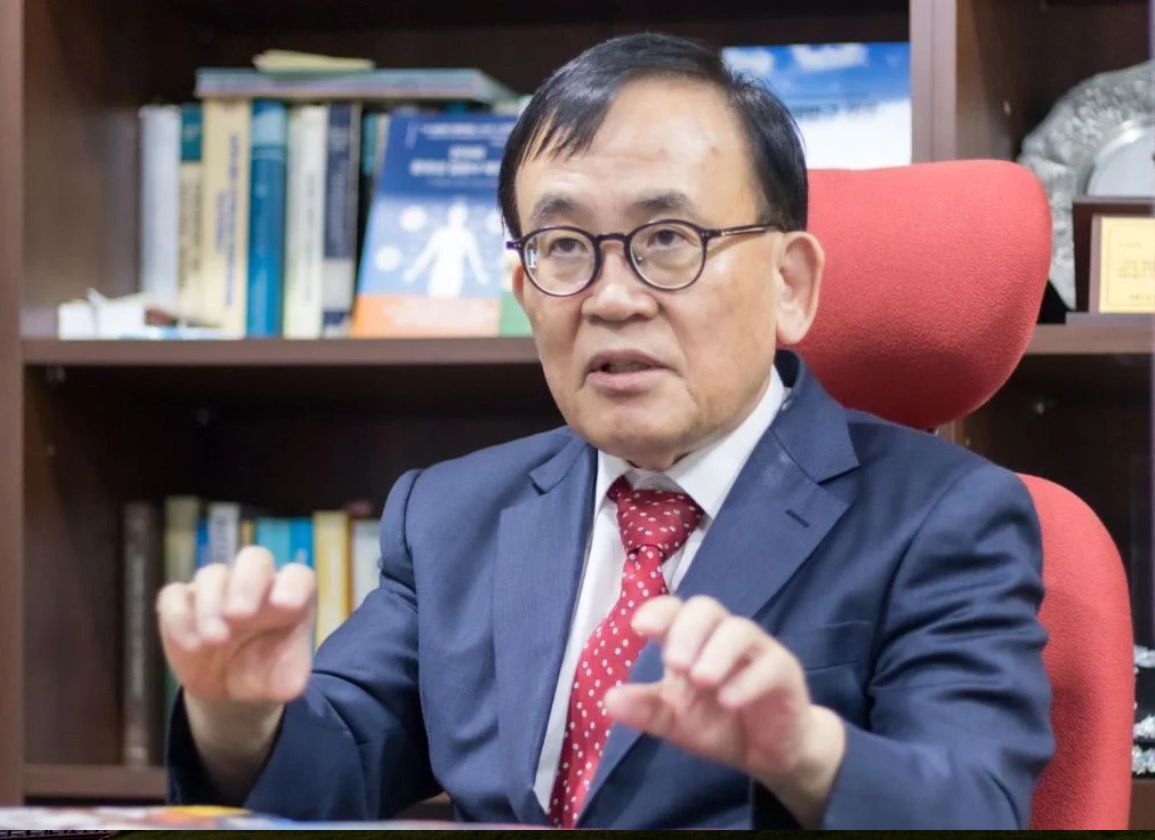
Seok Soon Park
Professor Seok Soon Park is a leading South Korean environmental scientist and Professor Emeritus at Ewha Womans University. He holds a Ph.D. in Environmental Science from Rutgers University and formerly served as President of the National Institute of Environmental Research. He is the Clintel Ambassador for South Korea.
The article you have just read was made possible by our donors.
Every day, Clintel publishes articles on climate, energy and science. We also translate and share international analyses in multiple languages, produce videos, publish reports and organize conferences and events around the world.
We receive no government funding and rely entirely on the support of our donors. Your support helps us promote independent research and contribute to a more open and balanced debate on climate and energy issues.
Would you like to support our work? Choose the option that suits you best:
• Become a Friend of Clintel – support us with an annual contribution
• Make a recurring donation – provide ongoing support and help us plan ahead
• Make a one-time donation – every contribution helps
Thank you for your support.

more news

Henrik Svensmark fired by his university
Danish scientist Henrik Svensmark, known for his controversial research on cosmic rays and cloud formation, has been dismissed by his university in Copenhagen after years of internal conflict. In an interview with the Danish newspaper Berlingske, he described the decision as “a death blow” to his research.

Steven Koonin: “There Is a Significant Gap Between What Climate Science Says and What You’ve Been Told It Says”
During the ARC Conference 2026, American physicist Steven Koonin argued that there is “a very significant gap” between what climate science actually says and what the public has been told it says. The former science adviser to President Barack Obama calls for a more honest debate about climate science, scientific uncertainty and climate policy.

The Desperate Attempt to Save the Climate Alarm Narrative
In this commentary, energy analyst Tilak Doshi examines the growing debate over climate messaging within the Democratic Party. He argues that political leaders are quietly retreating from climate alarmism as voters become increasingly concerned about the costs of decarbonisation.
The post Professor Seok Soon Park: Climate Models Are Fear-Mongering Machines appeared first on Clintel.
Please consider helping!
Awake Freedom TV On Roku is Broken! 🙂
I could no longer maintain the costs on my own, so I moved the off of a dedicated server which was needed for the TV platform to work. On top of that, I want to build an app Awake Freedom TV app, for mobile phones. We need your help to first resurrect our TV channel, and then build the mobile app. In order to do that, I need a minimum of 800/month on subscription payments. Please help anyway you can with the form below.