


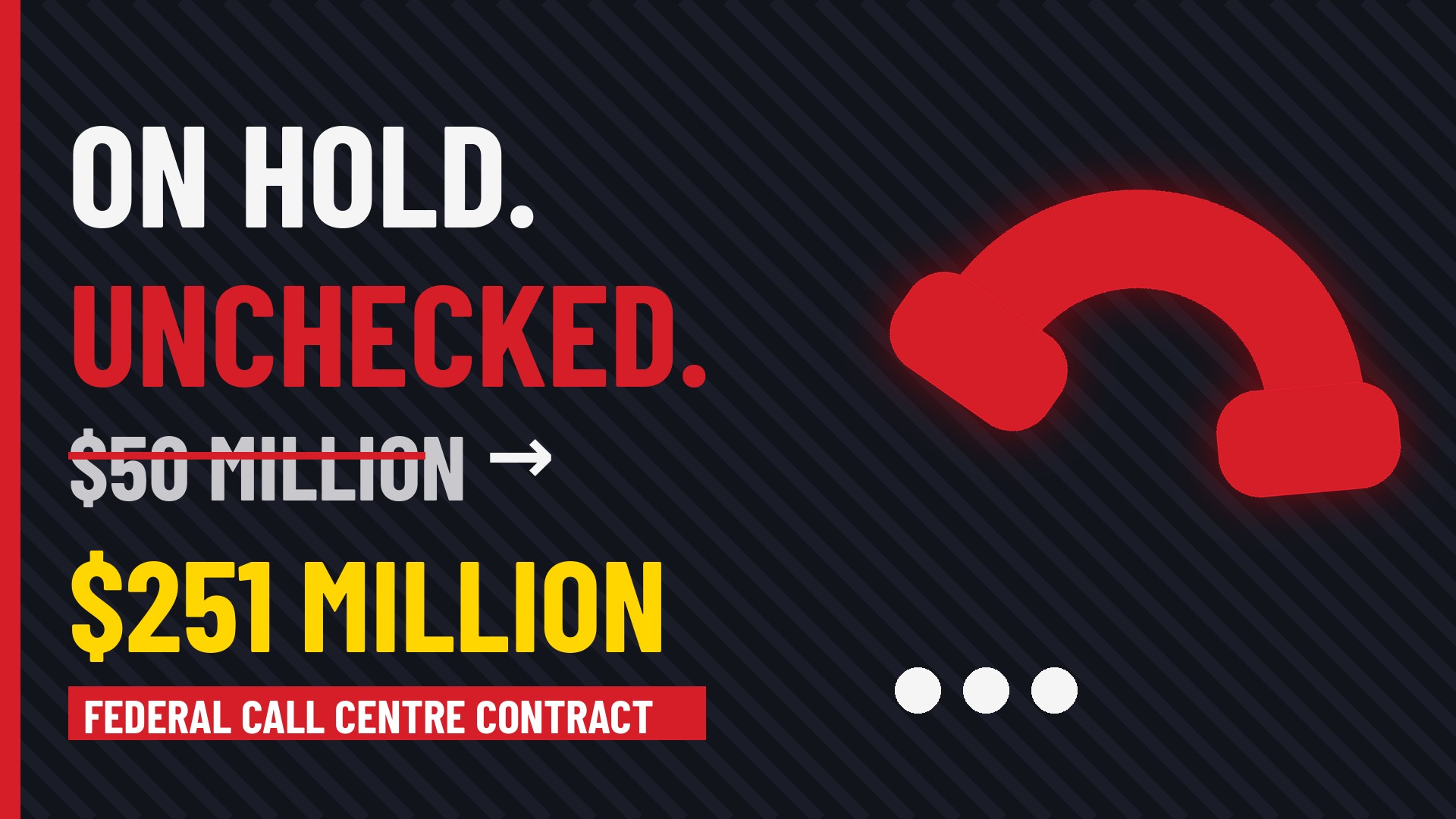
If you have ever sat on hold with the Canada Revenue Agency, listening to the same loop of music while your lunch break disappears, here is something that will make your blood pressure climb. The phone system behind some of those calls was supposed to cost taxpayers a fraction of what it has. Now the Auditor General says Ottawa never properly checked the bills.
On October 29, Auditor General Karen Hogan tabled an audit of how the federal government bought technology for its call centres. Her conclusion was blunt: Shared Services Canada, with its partner departments, did not manage these contracts “with due regard for economy, efficiency, and effectiveness.”
From $50 million to $251 million
The story starts in 2015, when Shared Services Canada handed IBM Canada a 10-year contract to modernize the phone systems behind 220 federal call centres. The contract had a minimum value of $50 million.
According to the full audit report, the project collapsed almost from the start. The department had budgeted $16 million to roll out the new system. By 2020, rollout costs had hit $52 million, more than three times the estimate. And instead of 220 call centres, only eight ever came on board before the department gave up adding more.
The contract went through ten amendments. With the option years and a 14-month extension, its total value will reach $251 million by 2028, roughly five times the original figure. The last jump, to $251 million, came in March 2026, well into Mark Carney’s time as prime minister. “In our view, Shared Services Canada did not obtain the best value for money,” the auditors wrote.
They knew about the mistake and didn’t fix it
This was not bad luck. As the Ottawa Citizen reported, bidders and the government’s own internal advisers warned that the cost estimates left out the full price of storing data. The Auditor General found the department “was aware of the issue” and did not correct it.
Instead, after the contract was signed, officials rewrote the terms. The cost per agent for basic features, like receiving and routing calls, went from less than a dollar to more than $100. Voice authentication was dropped. The mandatory five-year retention period for data storage was scrapped. Canadians paid more and got less.
Nobody checked the bills
Here is the part that should anger every taxpayer. The auditors found Shared Services Canada did only limited checking of the usage-based invoices it paid. It did not confirm with the CRA or Employment and Social Development Canada how many agents were actually using the system.
Officials claimed they compared the invoices against past usage. The auditors found “no evidence” that any such check was done. When IBM submitted timesheets, there was no evidence anyone reviewed them to confirm the hours billed matched the hours worked. About $180 million had been spent by March 2026.
Testifying at the Public Accounts Committee, Hogan put it simply: “If you’re not doing that, how do you know that what you were being charged was the right number?” She said these are “basic rules” under the Financial Administration Act.
Carney’s government repeated the pattern
Carney inherited the IBM contract. But the replacement happened on his watch, and the same mistakes showed up again.
The department did not start buying a replacement until October 2024. New contracts went to Bell Canada between May and July 2025, after Carney took office. The auditors found the paperwork for those deals had gaps. In one case, the CRA’s $286 million cost estimate was written up inconsistently, sometimes with taxes and sometimes without. With taxes included, it would have gone over the department’s $300 million limit and triggered extra Treasury Board review. The CRA estimated that review could have added six to eight months.
Then, in January 2026, Shared Services Canada’s authority to sign telecom contracts without Treasury Board approval was doubled to $600 million. A department that just failed an audit on value for money now has more room to spend with less outside scrutiny.
Meanwhile, the clock is running. The IBM system stops working after December 2028. Employment and Social Development Canada has changed its migration plans three times since November 2025. Only three call centres had moved to the new system at the time of the audit, and officials admitted “functional issues arose” once it went live. The auditors warned the new system may not be fully rolled out before the old one shuts off.
The wider network is shaky too. Of the remaining federal call centres, 18 run on technology with contracts expiring in 2027 and no option years left, and 88 rely on aging in-house legacy systems.
Long waits, wrong answers
This is not just about accounting. A year earlier, the Auditor General found that CRA callers waited about 31 minutes on average to reach an agent in 2024–25, and only 18 per cent got through within the agency’s 15-minute standard. In June 2025, just 5 per cent did. When auditors asked general questions about individual taxes, agents gave accurate answers only 17 per cent of the time.
So Canadians are paying hundreds of millions for phone systems that were cut back, billed without checks, and replaced late, while the service on the other end of the line keeps getting worse.
“Agreed” is not accountability
The department’s response to the Auditor General was a single word: “Agreed.” It promises a five-year consolidation plan and more committees. And according to the Citizen, Shared Services Canada has since been folded into a new body called Digital Transformation Canada, which now owns the cleanup.
New name, same problem. Carney promised to make Ottawa more efficient. On the most basic job a government has, answering the phone when Canadians call, his Ottawa is paying more and checking less.
Please consider helping!
Awake Freedom TV On Roku is Broken! 🙂
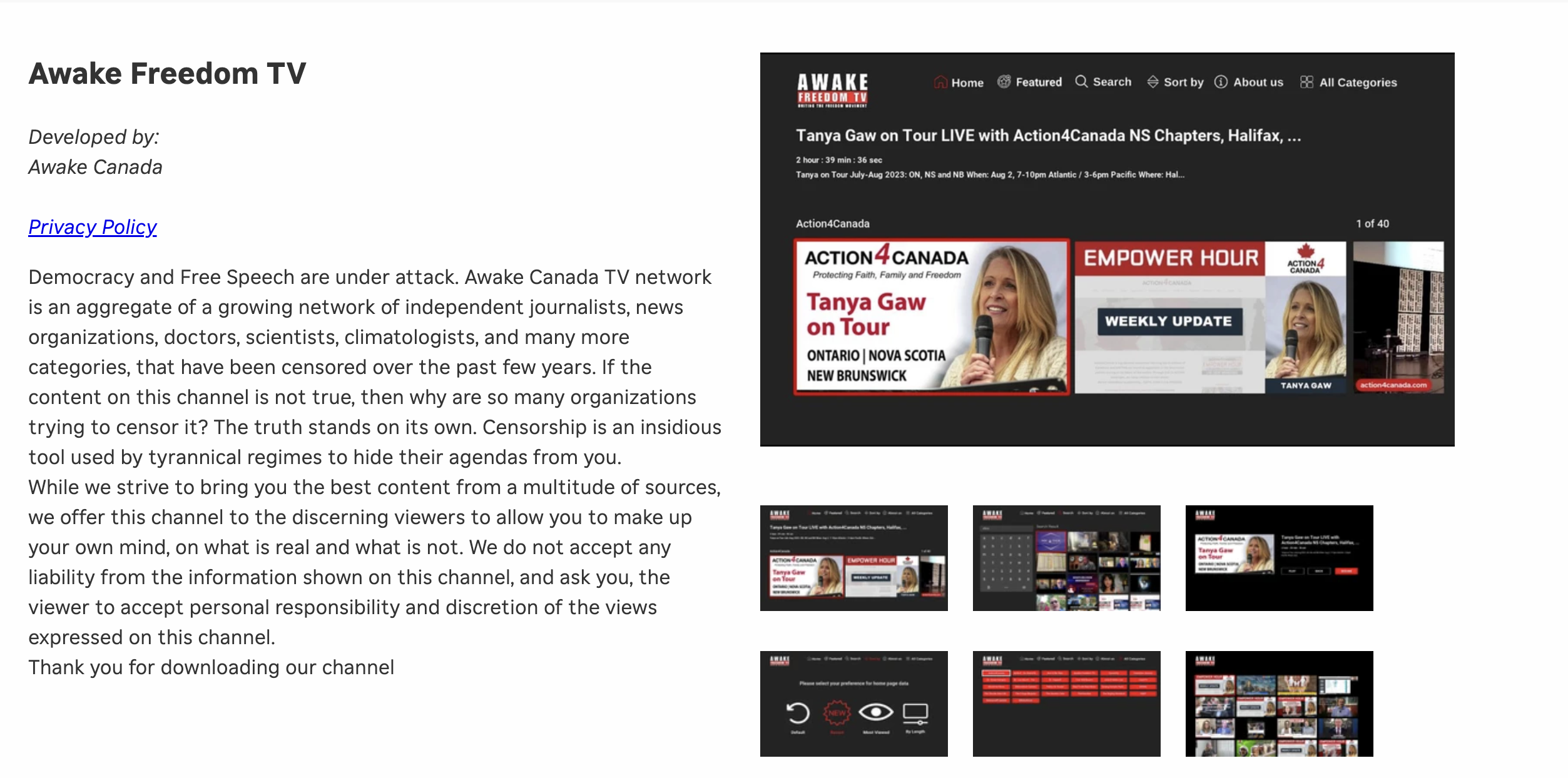
I could no longer maintain the costs on my own, so I moved the off of a dedicated server which was needed for the TV platform to work. On top of that, I want to build an app Awake Freedom TV app, for mobile phones. We need your help to first resurrect our TV channel, and then build the mobile app. In order to do that, I need a minimum of 800/month on subscription payments. Please help anyway you can with the form below.


Leave A Comment