


Why solar is much more expensive than coal in Germany
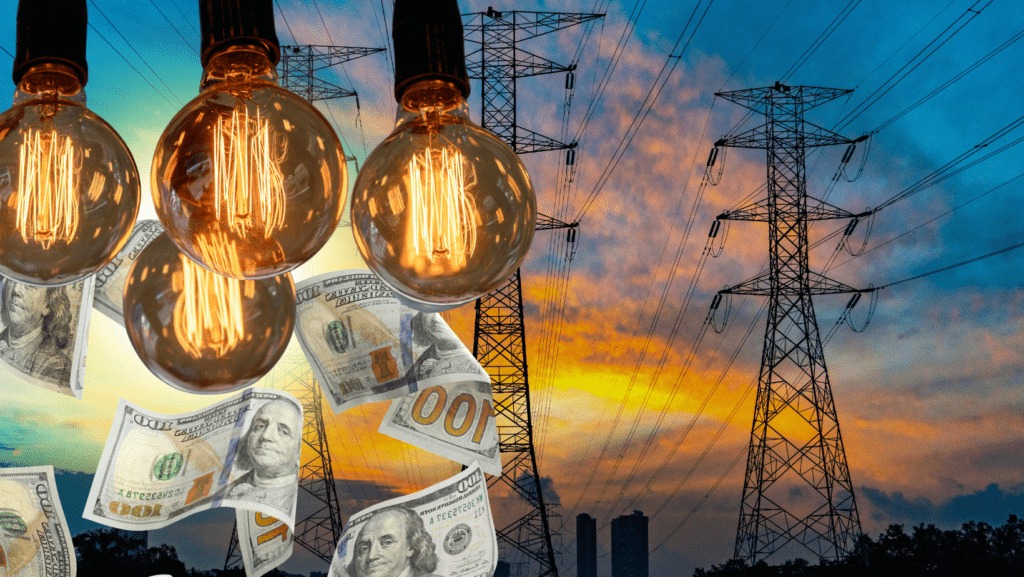
The more solar and wind energy is deployed, the more it reshapes the system around it and the more costs shift into areas that are often not immediately visible but should be considered, says energy expert Lars Schernikau.
Source: Lars Schernikau
Dr. Lars Schernikau: Energy Economist, Commodity Trader, Author
Date: 8 May 2026
Details including the full blog “Rethinking the cost of electricity in a complex energy system” are available at www.unpopular-truth.com
We think we understand electricity costs. We don’t.
Most of us believe the cost of electricity is a question already answered. We compare technologies, quote numbers per kWh, and rely on a couple of familiar metrics to tell us what is cheap and what is not. But, what if I tell you that those numbers only tell part of the story?
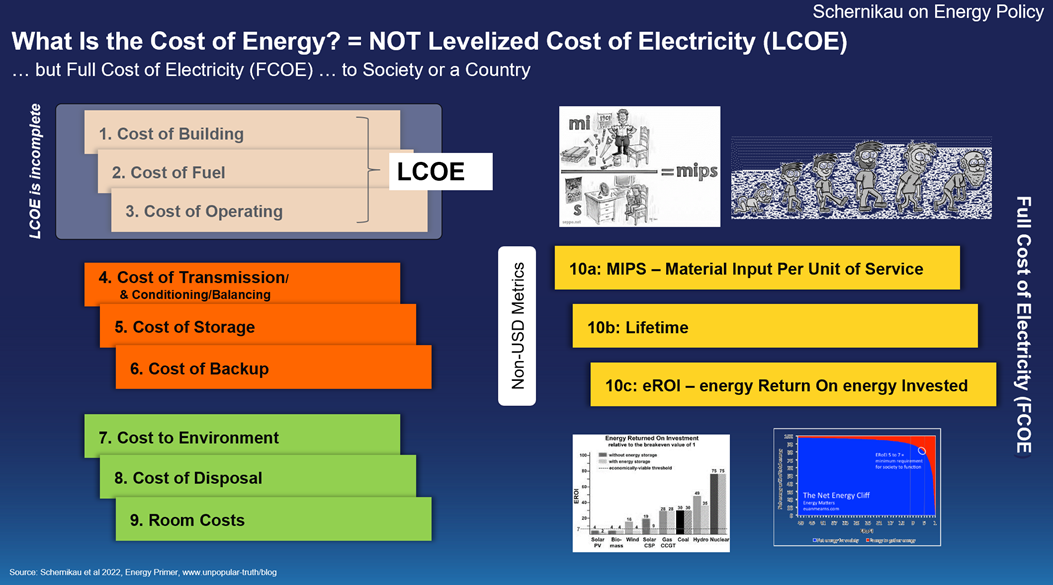
For decades, the conversation has been shaped by simplified measures like the levelized cost of electricity (LCOE). These figures seem easy to communicate and widely accepted, yet they focus narrowly on individual power plants while ignoring the system they operate in… and that matters a lot!
Electricity is not a product
Electricity is often treated as a commodity or a product. A unit of energy sold at a price per kWh.
In reality this is not correct as electricity is a service provided on demand 24/7/365.
Therefore, it must be delivered reliably, at the right voltage, frequency, phase, and current every millisecond of every day. That requires a highly complex system made up of generation, reserve capacity, storage, transmission networks, and stability mechanisms.
Once you look at electricity this way, the question to be asked, changes quite a bit.
We are no longer just asking “what does this technology cost?” but rather “what does it cost to make the entire system work?” Because what would you do with electricity if it is not delivered to your location, ready for use?
What the standard metrics miss
Common metrics like LCOE were never designed to answer system-level questions as they capture plant-level costs, but leave out balancing, grid integration, backup, and storage (system-costs).
More complete approaches exist, such as the Full Cost of Electricity (FCOE), which attempt to account for the entire system required to deliver reliable electricity and when these broader costs are considered, the picture begins to shift.
Even institutions like the OECD and UNECE now acknowledge that increasing the share of wind and solar can raise total system costs (see links in the original blog here). Not because the technologies themselves are inherently flawed, but because they require additional infrastructure and support to function within a stable grid.
The paradox of adding more wind and solar
At first glance, expanding wind and solar seems like a straightforward path to cheaper and “cleaner” energy…but systems rarely behave that simply.
As their share increases, the cracks start to show….
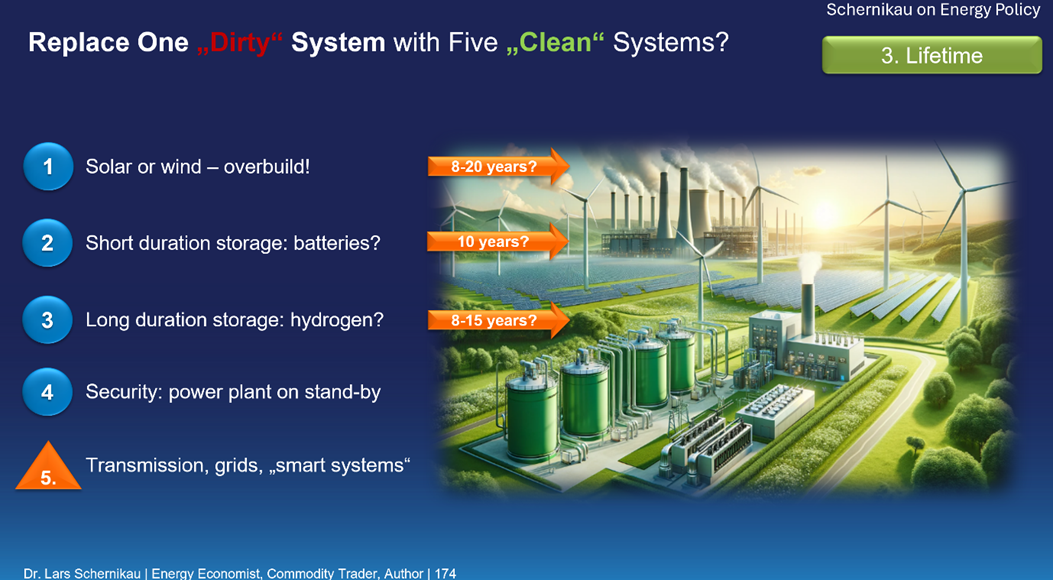
- additional balancing and backup capacity is required
- grid infrastructure must expand and become more complex
- storage becomes a necessity and eats away at the generated energy
- market value declines through falling capture rates and the list goes on…
So as you can see, the more these technologies are deployed, the more they reshape the system around them and the more costs shift into areas that are often not immediately visible but should be considered!
A system under tension
Let’s look at today’s energy debate.
On one hand, there is a strong push to electrify quickly, using wind and solar, reducing dependence on imports and lowering emissions.
On the other, there is continued reliance on coal, gas, and other dispatchable sources to maintain reliability, stability, and security of supply.
Both perspectives operate on different assumptions about how the system behaves and what it actually costs, but in the end coal and its dispatchable friends, seem to be the ones we can depend on.
Germany as a real-world example
Despite significant investment and a large expansion of wind and solar capacity, total system costs remain high and continue to rise. Installed capacity now far exceeds peak demand, yet the system still depends on conventional generation to ensure reliability.
So, how long will we avoid the unpopular but necessary question of:
Are we measuring the cost of electricity in a way that reflects reality, or are we relying on metrics that overlook the most important factors?
We are doing the latter…
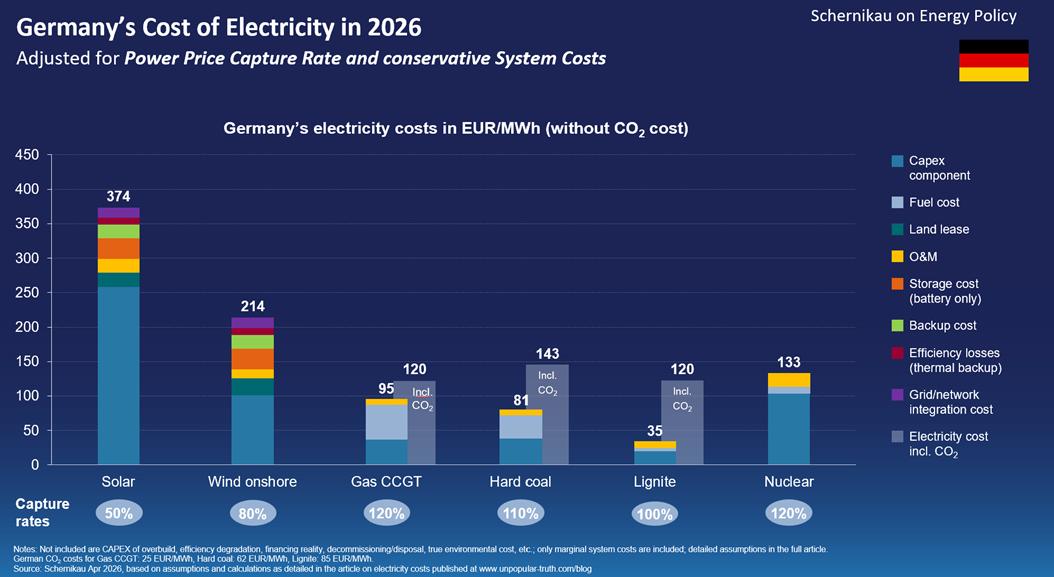
In fact, in Germany, domestic lignite has the lowest cost of generating electricity with 40 EUR/MWh excl. CO2 and 120 EUR/MWh incl CO2. As you can see below, solar is and remains the most expensive.
A different way to look at cost
In my latest blog, I step back from the usual debate and look at electricity from a system perspective.
I explore:
- the limitations of commonly used cost metrics
- the role of capture rates in understanding market value
- the often overlooked system costs of wind and solar
- and a simplified estimate of electricity costs in Germany
with the aim to better understand the full picture and not to provide a perfect number.
The question worth asking
If electricity is a system, not a product…
If costs extend far beyond individual technologies…
And if those costs rise as complexity increases…
Then the real question is no longer which technology is cheapest, it is:
What does it actually cost to keep the lights on, reliably, 24/7/365 year after year?
Read the full blog and try out my calculator linked in the blog to see for yourself how the numbers behave.
This article is an introduction to the full blog and was published first on wattsupwiththat.com on 6 May 2026
Lars Schernikau
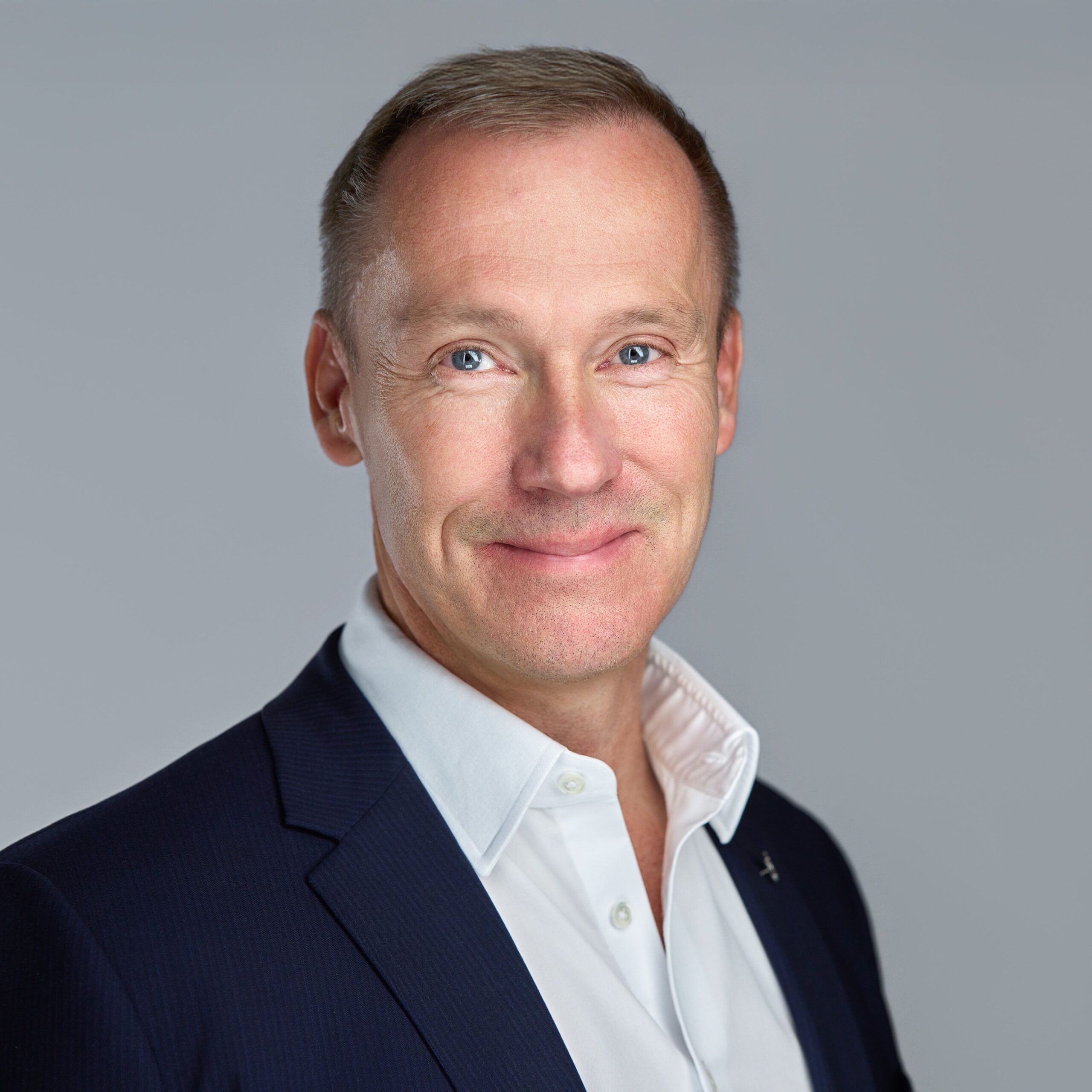
Lars Schernikau, PhD has more than two decades of experience in the global energy and commodities industry. He began his career with the Boston Consulting Group in the U.S. and Germany, where from 1997 to 2003 he gained deep expertise in international coal, ore, and steel markets. He also managed a wind farm in Germany for three years, giving him first-hand experience in renewable energy operations.
As co-founder, shareholder, and former supervisory board member of HMS Bergbau AG and IchorCoal NV—international commodity marketing and mining companies—Lars has become a recognized authority on global energy economics. He is a frequent keynote speaker at energy and commodity forums worldwide and advises governments, banks, educational institutions, and corporations on macroeconomics, markets, and energy policy.
Lars is the author of several books, including The Unpopular Truth… About Electricity and the Future of Energy, which examines the economic realities of the transition from oil, coal, and gas to wind, solar, storage, and hydrogen. He has also written extensively on coking and thermal coal, contributing data-driven insights to the global energy conversation.
more news
Why solar is much more expensive than coal in Germany
The more solar and wind energy is deployed, the more it reshapes the system around it and the more costs shift into areas that are often not immediately visible but should be considered, says energy expert Lars Schernikau.
IPCC Admits Apocalyptic Climate Scenarios Are “Implausible”
Almost every fearmongering mainstream media climate headline and story that has been written over the last 15 years is junk, says Chris Morrison.
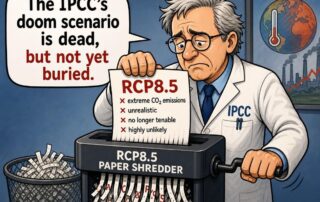
The IPCC’s doomsday scenario is dead, but not yet buried
Finally, the IPCC’s doomsday scenario is being tossed in the trash. The Dutch newspaper De Volkskrant deemed the news important enough for the front page. Marcel Crok wrote as early as 2018 that the IPCC’s extreme scenario was untenable. However, the wheels of science turn slowly, and so it took more than eight years for this insight to be recognized by the scientific community.
The post Why solar is much more expensive than coal in Germany appeared first on Clintel.
Please consider helping!
Awake Freedom TV On Roku is Broken! 🙂
I could no longer maintain the costs on my own, so I moved the off of a dedicated server which was needed for the TV platform to work. On top of that, I want to build an app Awake Freedom TV app, for mobile phones. We need your help to first resurrect our TV channel, and then build the mobile app. In order to do that, I need a minimum of 800/month on subscription payments. Please help anyway you can with the form below.

Leave A Comment