


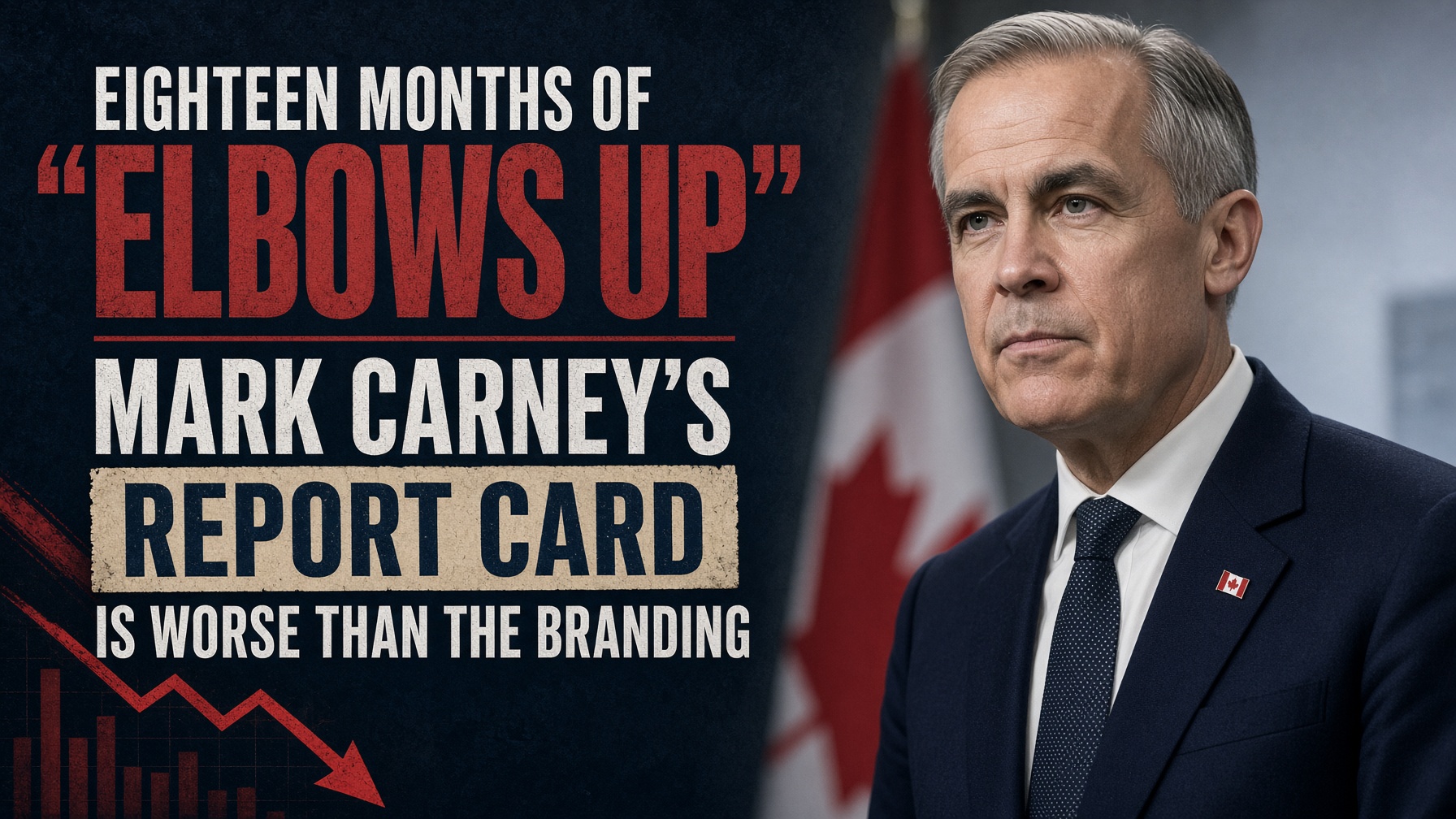
Mark Carney sold himself as the grown-up in the room: the central banker who would spend less, build more, and stare down Donald Trump. Eighteen months in, the competence brand is still doing well in the polls (WSJ). The record is a different story. Here’s what the marketing leaves out.
“Spend less, invest more”? He’s spending more.
Carney campaigned on a “very different approach” from Justin Trudeau, built on spending less. What we got was more spending. The Fraser Institute’s analysis of the spring fiscal update found the government plans to spend $83.2 billion more than Trudeau had planned over 2025/26 to 2029/30. Projected deficits now total $309.2 billion over five years, double Trudeau’s $154.4 billion forecast, and federal debt is on track to hit roughly $2.9 trillion by decade’s end (Fraser Institute).
The Financial Post called the $66.9-billion 2025-26 deficit “history-making by any measure.” It also noted that debt charges are projected to rise from $54 billion to $80.9 billion by 2030-31. That’s more than Ottawa will send the provinces for health care (Financial Post).
The accounting trick the watchdog won’t buy
Carney’s solution to bad numbers was to change what we count. He split the budget into “operating” and “capital” buckets and promised to balance only the operating side. The Parliamentary Budget Officer isn’t buying it. The PBO found that about $94 billion (30%) of what the government labelled capital spending was really operating spending. It projects operating balance in 2029, not the promised 2028. PBO Annette Ryan has also warned that debt-servicing costs are heading toward a “danger zone” and called the abandonment of a debt-to-GDP anchor “the opposite of prudence” (Toronto Sun, Toronto Sun). Bondholders don’t care which bucket a dollar sits in. Neither should you.
The trade “fight” that ended in 50% tariffs
The core promise of the 2025 campaign was that Carney was the one who could handle Trump. In August 2026, after a deal looked imminent, talks collapsed overnight. The U.S. slapped 50% tariffs on roughly $27–28 billion of Canadian goods, and Ottawa matched them dollar for dollar (CBC, CBC).
Carney says Washington “asked too much and offered too little,” and maybe it did. But even the BBC noted that he now has to convince Canadians the economic pain is worth it (BBC). Before the collapse, provincial leaders and opponents were already worried he hadn’t delivered the fight he promised. Canadians still haven’t seen the actual terms that were rejected. Asking voters to trust you on a deal they’re never allowed to read isn’t leadership. It’s PR.
Jobs are slipping
Statistics Canada reports that the economy lost 68,000 jobs in September 2026, the second straight monthly decline after 42,000 losses in August. Unemployment rose to 6.5%, right where it started the year (StatCan, CBC). Economists expected a gain. CBC also reports that Deloitte cut its growth forecast for next year by 20% as new U.S. import bans add drag.
500,000 homes a year? Not even close.
The Liberals promised to double homebuilding to nearly 500,000 homes a year. CMHC says starts are trending down: the six-month trend was 244,149 in August, and year-to-date starts are down 4% from 2025 (CMHC). The PBO estimated that the flagship Build Canada Homes agency will add just 26,000 homes over five years. It also said Ottawa “has not yet laid out an overall plan” to reach 500,000 (Canadian Affairs). Housing economist Mike Moffatt has criticized the lack of clear targets and performance indicators.
Climate whiplash, and a cabinet resignation to show for it
On his first day, Carney scrapped the consumer carbon tax. In November 2025, he signed an MOU with Alberta that clears a path for a million-barrel-a-day bitumen pipeline to the B.C. coast. The MOU suspends the proposed oil and gas emissions cap, exempts Alberta from the Clean Electricity Regulations, and sets an industrial carbon price floor of $130 a tonne instead of the $170 Ottawa had previously demanded (CBC).
Steven Guilbeault quit cabinet over it, citing among other things the lack of consultation with B.C. and First Nations (CBC, Global News). Whatever you think of pipelines, a self-styled “climate leader” who rolled back the core policies is open to a fair charge of saying one thing and doing another.
The Brookfield problem never went away
Carney chaired Brookfield Asset Management before entering politics. Instead of selling everything, he set up a blind trust and an ethics screen covering 103 companies tied to Brookfield and Stripe (National Post, Globe and Mail). The screen lets him take part in decisions of “general application” that affect those companies as part of a broad class. Democracy Watch calls that loophole a “smokescreen” and argues the trust “isn’t blind at all” because he knows what’s in it (National Post). Clerk Michael Sabia told MPs that the screen has been triggered 13 times and applied in six (CBC). The easier fix is the one he still hasn’t taken: sell.
Cuts for workers, not for the deficit
Despite all that spending, the cutting is happening to front-line services. PSAC warns that the government’s sweeping public-service cuts will weaken services Canadians rely on, such as tax, EI and benefits (PSAC). The Ottawa Citizen reports that the federal workforce shed more than 12,000 positions in a single fiscal year (Ottawa Citizen). The deficits keep growing anyway.
The bottom line
Carney’s best asset is that he looks like the person who should be fixing this. But the record shows bigger deficits than Trudeau’s, creative accounting the budget watchdog rejects, a trade fight that ended in 50% tariffs, falling housing starts against a 500,000-home promise, climate reversals, and ethics arrangements full of loopholes. Eighteen months is long enough to stop grading on vibes. Canadians should judge him by the numbers.
— Awake Canada
Please consider helping!
Awake Freedom TV On Roku is Broken! 🙂
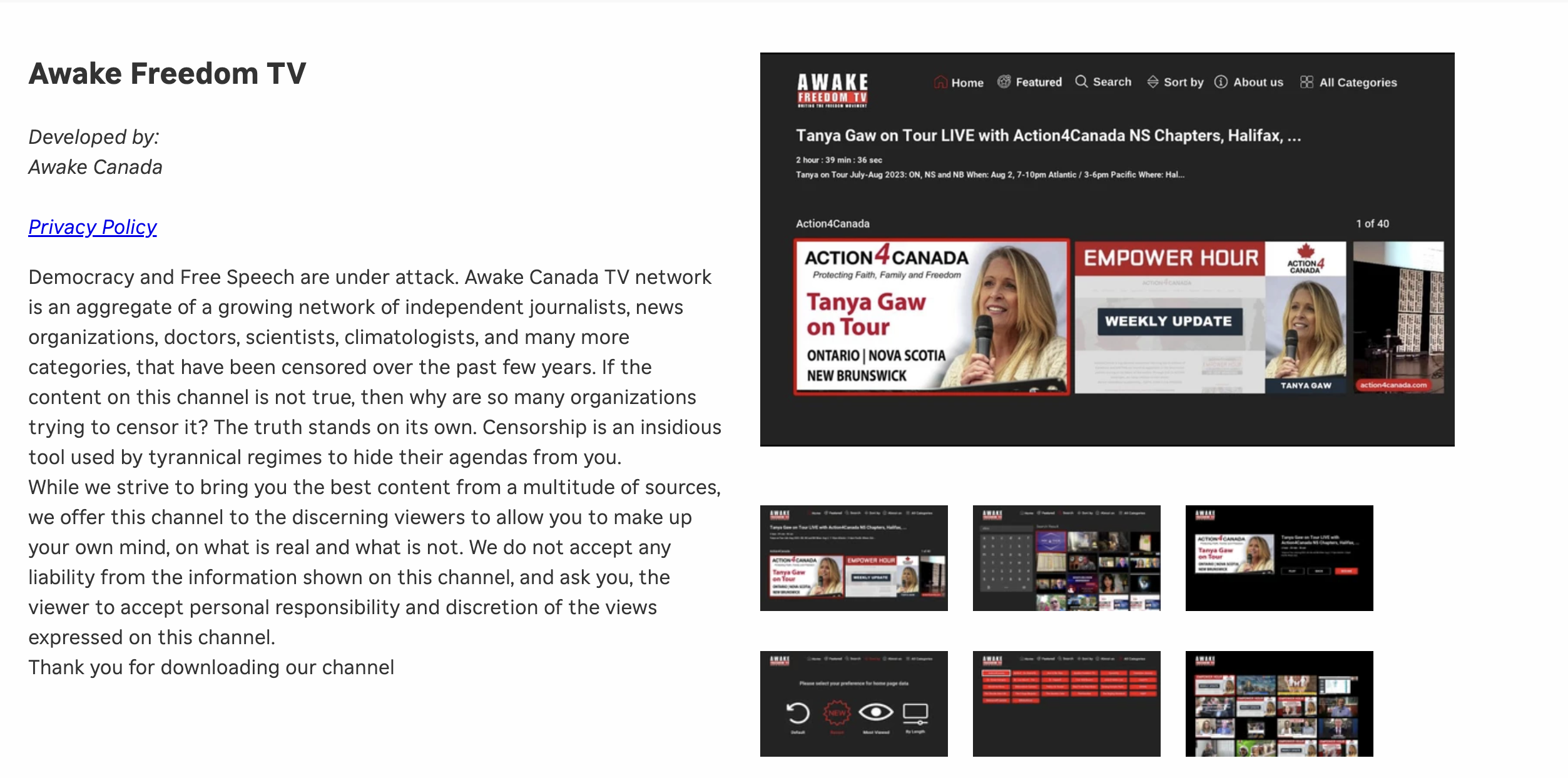
I could no longer maintain the costs on my own, so I moved the off of a dedicated server which was needed for the TV platform to work. On top of that, I want to build an app Awake Freedom TV app, for mobile phones. We need your help to first resurrect our TV channel, and then build the mobile app. In order to do that, I need a minimum of 800/month on subscription payments. Please help anyway you can with the form below.






Leave A Comment