



Climate Splits Voters by 51 Points, but Economy Ranks Higher
Among voters backing Democratic House candidates, 66% still call environment and climate policy very important. Among Republican backers, 15% do, says Charles Rotter.

Pew Research Center’s recent midterm survey, released October 8, asked registered voters how important 16 issues are to their vote this fall. The economy came first. Environment and climate policy came in 41%, well down the list.
From the report:
“84% of registered voters – including 88% of those who support Democrats and 82% who back Republicans – say it is very important to their vote.”
Ahead of environment and climate policy, according to the report’s tables, are the future of democracy (73%), healthcare (68%), education (62%), immigration (59%), foreign policy (57%), energy policy (54%), violent crime (52%), abortion (46%), gun policy (45%), artificial intelligence (44%) and the size and scope of the federal government (43%).
The party split is where climate stands out. Among voters backing Democratic House candidates, 66% call environment and climate policy very important. Among Republican backers, 15% do. Pew lists that 51-point gap as one of the two largest of the 16 items. The other is investigations into Trump and his administration, 63% to 7%.

Share of registered voters saying environment and climate policy is very important to their vote. Pew Research Center, Sept. 28–Oct. 4, 2026.
Even on the Democratic side, the economy outranks it, 88% to 66%.
Energy policy can be tracked cleanly, because Pew asked it the same way in 2022. That October, 61% of registered voters called it very important. Now it’s 54%. The drop is almost entirely on one side. Republican supporters went from 63% to 48%. Democratic supporters went from 63% to 62%.
Climate is harder to track. In 2020, 42% of registered voters called climate change very important, and in October 2022, 38%. The 2026 item was reworded to “environment and climate policy,” and Pew says in a table note that the trends are not directly comparable. That same note describes the 2022 item as “climate policy,” while the report’s own topline labels it “Climate change.” Whichever wording it was, the number has sat around four in ten.
Prices
Then there are prices. Pew asks all adults, not just voters, how concerned they personally are about “the price of gasoline and energy.” In January, 43% said very concerned. In July, 60%. In the latest survey, 74%. That is 31 points in about eight months, and higher than the 69% Pew recorded in October 2022.
So three out of four adults are very worried about what they pay for gas and power, while the share of voters calling energy policy very important has fallen, mostly among Republicans. Pew doesn’t ask why.
None of this adds up to a Republican wave. Only 22% of Americans are satisfied with the way things are going, Trump’s approval is at 30%, down from 47% in early 2025, and Democrats lead the generic House ballot 44% to 36%. The low Republican number on climate tells you how Republican voters rank the issue. It doesn’t say how the country votes on it.
A note on the survey itself. The margin of error is plus or minus 1.6 points for the full sample and 1.8 for registered voters, larger for the half-sample questions and for each party’s supporters. Pew reports a cumulative response rate of 3%, after recruitment nonresponse and panel attrition, and weights the results to compensate.
What the survey doesn’t ask is the question that matters for energy policy.
How much more on the monthly electric bill would these voters accept for faster emissions cuts?
Would the 66% hold once the household cost of a specific policy mandate is on the table?
The article you have just read was made possible by our donors.
Every day, Clintel publishes articles on climate, energy and science. We also translate and share international analyses in multiple languages, produce videos, publish reports and organize conferences and events around the world.
We receive no government funding and rely entirely on the support of our donors. Your support helps us promote independent research and contribute to a more open and balanced debate on climate and energy issues.
Would you like to support our work? Choose the option that suits you best:
• Become a Friend of Clintel – support us with an annual contribution
• Make a recurring donation – provide ongoing support and help us plan ahead
• Make a one-time donation – every contribution helps
Thank you for your support.
more news

Under a ‘business-as-usual’ scenario, the IPCC will soon be bankrupt
There is turmoil at the UN Intergovernmental Panel on Climate Change (IPCC). There is disagreement over deadlines, and with the loss of US support, a serious financial shortfall looms. To put it in the IPCC’s own terms: if we do nothing, the IPCC will be bankrupt in a few years’ time.

Roger Pielke Jr.: “Don’t accept the label climate sceptic so easily”
In his first of two recent lectures for Clintel, Roger Pielke Jr. examined the politicized debate over climate change. His central argument was that climate change is real and deserves serious attention, but that public discussion frequently goes far beyond what the scientific evidence supports. He also described how he was a target of political attacks, including some from the Obama White House.
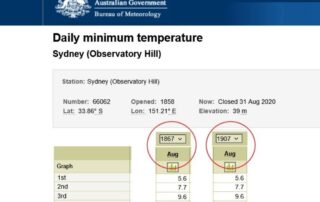
Australian Bureau of Meteorology in trouble for copy-pasting temperature records
Jennifer Marohasy gives an update about the scandal surrounding the temperature records of the Australian Bureau of Meteorology. Its digital file showed August 1867 and August 1907 as identical on all 31 days, to a tenth of a degree. But that’s not the only problem.
The post Climate Splits Voters by 51 Points, but Economy Ranks Higher appeared first on Clintel.
Please consider helping!
Awake Freedom TV On Roku is Broken! 🙂
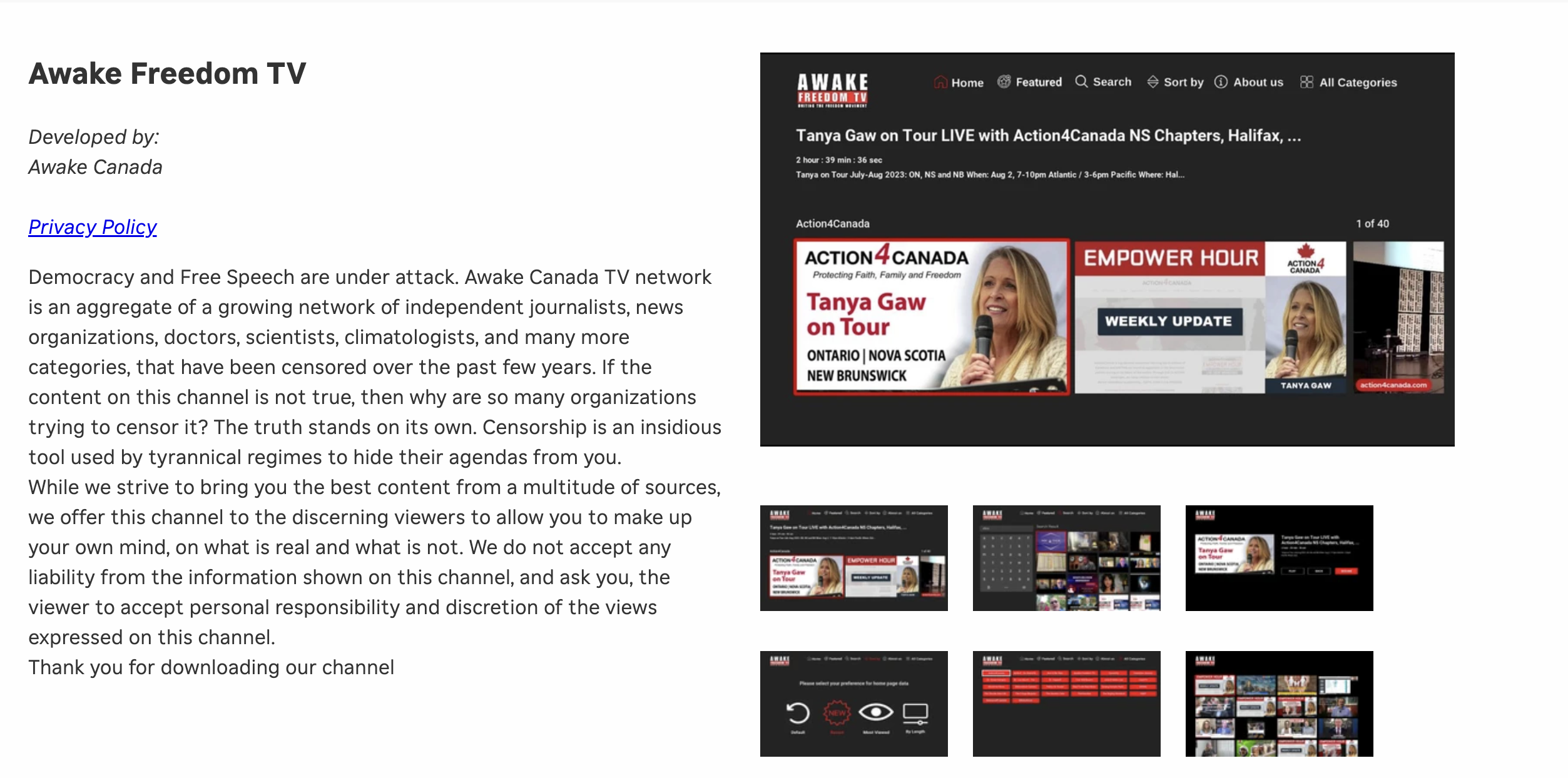
I could no longer maintain the costs on my own, so I moved the off of a dedicated server which was needed for the TV platform to work. On top of that, I want to build an app Awake Freedom TV app, for mobile phones. We need your help to first resurrect our TV channel, and then build the mobile app. In order to do that, I need a minimum of 800/month on subscription payments. Please help anyway you can with the form below.



Leave A Comment