


Kathryn Porter: “The whole model is starting to crumble”
Policymakers and media institutions underestimate the dangers created by unreliable energy systems and rising electricity costs, energy analyst Kathryn Porter recently stated on the Heretics podcast. But she thinks the problem is much bigger than that: “Societies entering periods of political and economic stress, often become more authoritarian. The whole model is starting to crumble.”
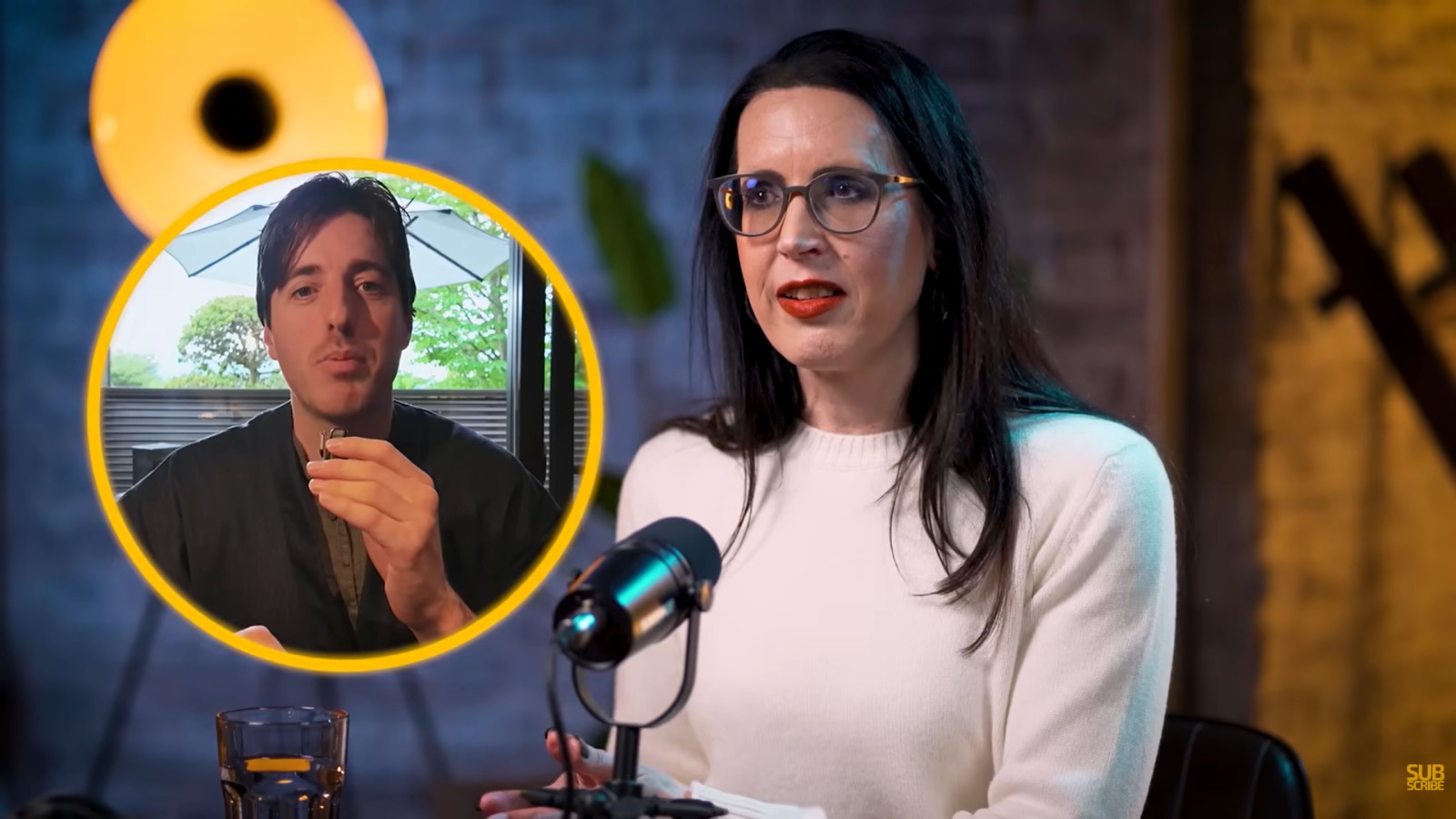
Kathryn Porter on the Heretics Podcast
Clintel Foundation
Date: 9 June 2026
In this episode of the Heretics Podcast, host Andrew Gold interviews energy analyst Kathryn Porter about the consequences of net-zero energy policies, public fear surrounding climate change, the fragility of European electricity grids, and the broader political and cultural implications of environmental ideology.
You can see the entire conversation here:
Porter begins by warning that current energy policies may create serious risks for ordinary people. She argues that expensive and insecure energy systems already have deadly consequences, citing excess winter deaths linked to fuel poverty in the UK and deaths associated with the Spanish blackout in April 2025. Early in the conversation, she states bluntly, “I am trying to scare people because the path that we’re on has consequences that are genuinely scary.” According to Porter, policymakers and media institutions underestimate the dangers created by unreliable energy systems and rising electricity costs. She argues that thousands of deaths connected to fuel poverty in Britain receive far less attention than climate projections about the distant future.
Climate messaging
A major theme throughout the interview is Porter’s criticism of what she sees as exaggerated climate messaging. She argues that media outlets routinely frame ordinary weather events as evidence of climate catastrophe, contributing to widespread fear among the public. She mocks sensational headlines about record temperatures and criticizes claims that “the oceans are boiling,” arguing that such rhetoric is scientifically misleading and emotionally manipulative. Porter repeatedly emphasizes that she does not deny climate change itself, but believes public discussion lacks proportionality and scientific literacy. She insists that “There is no evidence that we’re getting anywhere close to existential threat with climate,” arguing that climate risks are frequently overstated by politicians and journalists.
The conversation then shifts toward the psychology of environmental politics. Porter suggests that many supporters of aggressive net-zero policies have come to view climate change as an existential threat, which in turn justifies extreme policies. She compares the intensity of modern climate activism to religious zealotry and invokes historical comparisons to the Protestant Reformation and the Spanish Inquisition. According to her, people become willing to support harmful policies because they believe they are preventing a greater disaster in the future. She argues that climate politics increasingly resembles a moral crusade in which dissenters are treated almost like heretics.
Harms
One of Porter’s key arguments is that climate policy often ignores cost-benefit analysis. Governments rarely compare the economic and social costs of decarbonization policies with the harms they are supposedly trying to prevent. She criticizes targets such as limiting warming to one degree Celsius or achieving net zero by 2050 as arbitrary political goals rather than scientifically rigorous benchmarks. In her view, policymakers are driven more by ideology than by pragmatic assessments of human welfare.
The interview also explores how fear and media narratives influence public opinion. Porter argues that many citizens lack the scientific or mathematical background needed to critically evaluate climate claims. She says people therefore become vulnerable to emotionally charged headlines and political messaging. She also points out that many dramatic climate predictions made in previous decades never materialized, citing warnings that London or the Netherlands would be underwater by now or that the Arctic would become permanently ice-free during summer months. For Porter, these failed predictions undermine public trust and reveal the dangers of oversimplifying highly complex climate systems.
Blackouts
A substantial portion of the interview focuses on electricity grids and blackouts. Porter explains in detail how modern renewable-heavy power systems function and why they are becoming increasingly fragile. Using the Spanish blackout as a case study, she describes how a faulty solar inverter allegedly created disturbances on the grid that cascaded into widespread failure. She explains that renewable systems depend on electronic inverters to synchronize with the alternating-current grid and that these systems can disconnect rapidly when instability occurs.
Porter predicts that similar grid failures could become more common across Europe. She points to Spain as an example of a system already showing signs of stress. She explains how negative electricity prices can encourage solar farms to shut down generation suddenly, reducing supply and destabilizing grid frequency. Once frequency falls too low, automatic protection systems disconnect generators to avoid physical damage, potentially causing widespread outages within seconds. Porter suggests that the Scottish power system is already under strain and warns that the combination of intermittent generation, insufficient grid infrastructure, and declining conventional power capacity could eventually produce a large-scale blackout similar to the one discussed in Spain.
More complicated
Another major topic is the transformation of Britain’s electricity market since privatization in the 1980s and reforms introduced in 2000. Porter explains that balancing the modern grid has become dramatically more complicated because electricity generation is now distributed across thousands of renewable installations instead of a relatively small number of large conventional plants. She notes that the National Energy System Operator may issue tens of thousands of balancing instructions during certain periods and that the cost of balancing the grid has risen sharply.
The interview repeatedly returns to the social consequences of energy policy. Porter argues that net zero is fundamentally “totally a luxury belief” held primarily by affluent societies that have never experienced genuine energy insecurity. Referring to conversations with African delegates at international conferences, she says many developing countries prioritize industrialization and poverty reduction over climate targets. She explains that access to cheap natural gas is viewed in many poorer nations as essential for economic growth, industrialization, and food production.
The discussion emphasizes society’s deep dependence on fossil fuels. Porter notes that oil is used not only for transport and energy but also in hospitals, plastics, medical equipment, pharmaceuticals, and countless industrial products. She argues that many people underestimate how integrated hydrocarbons are within modern civilization. She points out that almost every component inside a hospital—from floors and walls to syringes and medicines—depends on oil-derived materials.
The wind and the sun are not free
The economics of renewable energy receive sustained criticism from Porter. She disputes the popular claim that renewable energy is inherently cheap. As she puts it, “People think renewables are cheap because the wind and the sun are free.” She argues that while wind and sunlight themselves cost nothing, the infrastructure needed to convert them into reliable electricity is enormously expensive. According to Porter, governments spend billions subsidizing renewable generation while still relying heavily on backup gas generation to guarantee reliability when weather conditions are unfavourable.
She further argues that renewable systems require massive investments in grid infrastructure because wind and solar farms are geographically dispersed and operate intermittently. In contrast, she says conventional gas power stations can generate large amounts of electricity from relatively compact facilities connected directly to existing infrastructure. These technical and logistical realities, she claims, are often ignored in public debate.
Elites
The political dimension of net zero becomes increasingly central in the latter half of the conversation. Porter suggests that elites and policymakers are insulated from the economic pain caused by expensive energy policies. However, she rejects the idea of a coordinated global conspiracy. Instead, she argues that political leaders genuinely believe they are acting for the public good, even if their policies disproportionately hurt poorer citizens. In her interpretation, the problem is less malicious intent than ideological certainty combined with insulation from economic hardship.
This leads into a broader discussion about state power and free speech. Porter argues that Western governments are increasingly attempting to control public discourse, particularly around climate policy. She cites examples from Canada, the European Union, and the UK, claiming that governments are becoming more willing to restrict speech while tolerating rising economic dysfunction. She warns that societies entering periods of political and economic stress often become more authoritarian. “The whole model is starting to crumble.”
more news

Matthew Wielicki on Climate Debrief: “The human condition has never been better”
Students were crying during conversations about the future, their fears largely driven by repeated exposure to highly negative messaging about climate change, recalls ‘professor in exile’ Matthew Wielicki on the Climate Debrief Podcast. He encourages young people to approach environmental and climate concerns with balance, optimism, and practical action rather than despair.
Twenty years after the Stern Review
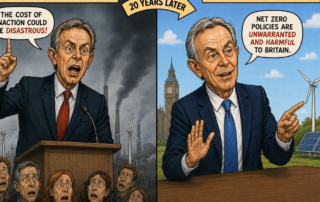
It’s now 20 years since the publication of the Stern Review on the Economics of Climate Change. This review began the UK-drive towards the crazy carbon-phobic policies which are helping to impoverish the nation, aided by unrealistic scenarios.
Today, even Tony Blair can perceive that the pursuit of Net Zero is unwarranted and harmful to Britain.
China cooks the carbon accounting books by 400 million tons
China treats us like mugs and we cheer it on, says Jo Nova. Almost no one cares that the largest emitter on Earth has gaping holes in its CO2-numbers.
The post Kathryn Porter: “The whole model is starting to crumble” appeared first on Clintel.
Please consider helping!
Awake Freedom TV On Roku is Broken! 🙂
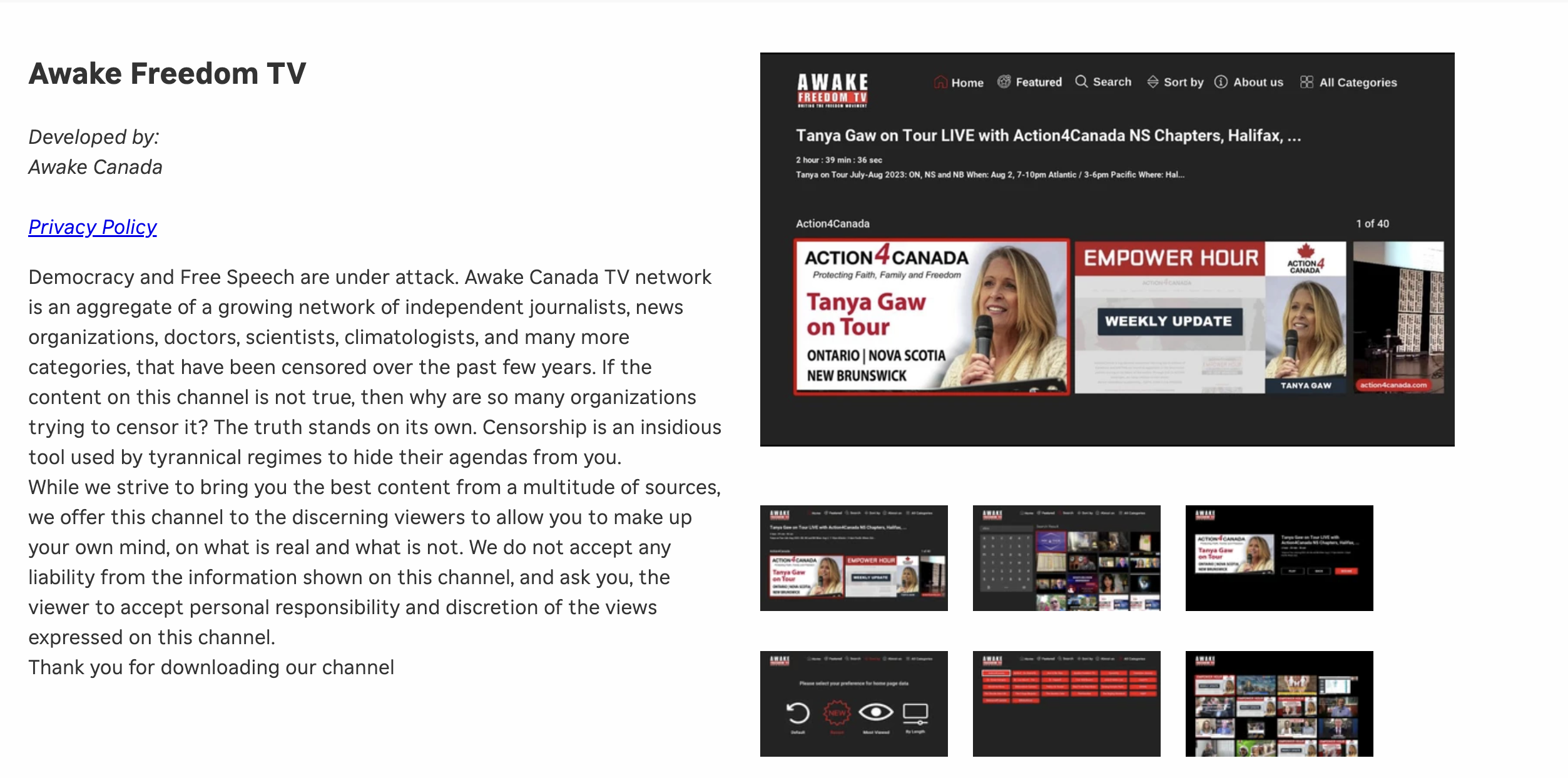
I could no longer maintain the costs on my own, so I moved the off of a dedicated server which was needed for the TV platform to work. On top of that, I want to build an app Awake Freedom TV app, for mobile phones. We need your help to first resurrect our TV channel, and then build the mobile app. In order to do that, I need a minimum of 800/month on subscription payments. Please help anyway you can with the form below.

Leave A Comment