Thomas Kurz: Why there is no climate crisis
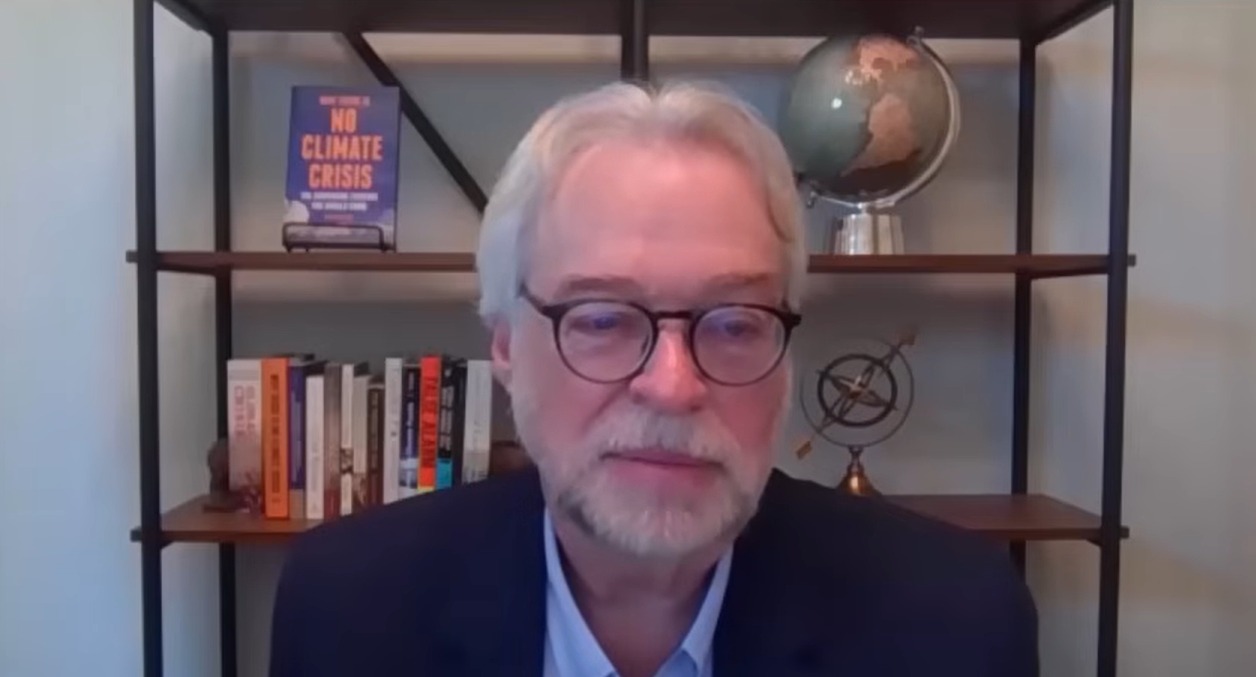
There is no climate emergency, says Clintel’s World Climate Declaration. Thomas Kurz is the author of an upcoming book with that very theme. Recently he spoke about it on Tom Nelson’s podcast.

Thomas Kurz
Clintel Foundation
Date: 9 May 2026
In a recent episode of Tom Nelson’s podcast, Thomas Kurz—an analyst with a background in mass spectrometry—discusses his research into climate science and previews his upcoming book Why There Is No Climate Crisis which is scheduled for release online this month, followed by a print edition in June (available here).
You can see the entire conversation below:
Kurz explains that his investigation began with personal curiosity after conversations with concerned friends. What started as an open-minded inquiry evolved into a firm conviction that prevailing narratives about a climate crisis are overstated: “The more I dug into it, the more shocked I was that there is no climate crisis.”
Climate cycles
Kurz positions his book as a synthesis of peer-reviewed literature that, in his view, challenges mainstream interpretations promoted by institutions such as the IPCC. While his book covers a wide range of topics—including greenhouse gases, feedback mechanisms, and ocean temperatures—this podcast focuses specifically on climate cycles, which he argues are central to understanding long-term climate variability.
A key part of Kurz’s explanation involves paleoclimatology, particularly the use of isotopes as temperature proxies. He describes how variations in oxygen isotopes (oxygen-16 and oxygen-18) in natural archives such as ice cores, tree rings, and ocean sediments allow scientists to reconstruct past temperatures. The ratio between these isotopes reflects evaporation and precipitation processes, which are temperature-dependent. According to Kurz, “if you look at the ratio of oxygen 16 to 18, it’s a proxy for the water temperature,” making it possible to infer climatic conditions over long timescales.
Beyond terrestrial proxies, Kurz introduces cosmic influences on climate, particularly the role of galactic cosmic rays. These rays, produced by supernovae, vary depending on the solar system’s position within the Milky Way. Kurz claims that every 140 million years, Earth passes through spiral arms of the galaxy, increasing cosmic ray flux. He highlights research suggesting that this correlates with temperature fluctuations, arguing that cosmic rays influence cloud formation by generating ions that act as condensation nuclei. Increased cloud cover, in turn, reflects solar radiation and cools the planet. This mechanism, he suggests, provides an alternative explanation for large-scale climate cycles.
Milankovitch
Kurz also discusses shorter-term cycles, including Milankovitch cycles, which involve variations in Earth’s orbit, axial tilt, and precession. These cycles, occurring over tens to hundreds of thousands of years, are widely accepted in climate science as drivers of ice ages. Kurz emphasizes that these natural cycles explain historical temperature fluctuations and argues that carbon dioxide plays a secondary role. He uses an analogy to illustrate this point: “if you put [a Coca-Cola] out in the warm sun, you’re going to lose the carbonation… that’s Henry’s law.” In other words, he claims that temperature changes drive CO2 levels rather than the reverse.
To support this claim, Kurz cites studies showing that temperature increases precede rises in atmospheric CO2 by several hundred years. He argues that this lag indicates causation flows from temperature to CO2, not vice versa. He further contends that the radiative forcing effect of CO2 is relatively small compared to natural temperature variations observed in paleoclimate records.
Solar variability
Another major theme in the discussion is solar variability. Kurz outlines several types of solar cycles, including the 11-year Schwabe cycle and longer millennial-scale cycles identified through isotopic analysis (such as carbon-14 and beryllium-10). These cycles, he argues, align closely with known historical climate periods such as the Roman Warm Period, the Medieval Warm Period, and the Little Ice Age. He suggests that fluctuations in solar activity significantly influence Earth’s climate, though he acknowledges that short-term satellite measurements show only modest temperature changes.
Kurz then turns to historical and geological evidence supporting climate variability. He presents data from glaciers, tree lines, sea levels, and sediment layers, arguing that these independent records consistently reflect the same cyclical patterns. For example, glacier advances and retreats correspond to known cold and warm periods, while tree-line elevations shift with temperature changes. He sees this convergence of evidence as validation: “when you see this type of consistency across all these different types of records, that to me verifies and validates all of them.”
The podcast also explores historical accounts of climate impacts on human societies. Kurz argues that warm periods tend to be beneficial, leading to longer growing seasons, increased agricultural productivity, and societal prosperity. In contrast, cold periods are associated with crop failures, famine, disease, and social unrest. He links major historical events—such as the collapse of Bronze Age civilizations, the fall of the Roman Empire, and the crises of the Little Ice Age—to climatic deterioration.
Little Ice Age
For instance, during the Medieval Warm Period, Kurz describes a time of agricultural abundance, population growth, and cultural flourishing. Conversely, the Little Ice Age is portrayed as a period of hardship marked by severe winters, food shortages, and widespread instability. He cites examples such as frozen rivers, failed harvests, and historical records of famine and plague to illustrate these conditions.
Kurz also highlights evidence from agriculture and ecology, including the cultivation of crops in regions where they cannot grow today and shifts in animal migration patterns. These, he argues, further demonstrate that past climates were often warmer than the present. He emphasizes that such findings challenge the notion that current warming is unprecedented.
In concluding his argument, Kurz maintains that climate change is primarily driven by natural cycles rather than human activity. He suggests that current warming fits within a long history of cyclical variation and is not indicative of a crisis. As he states, “the story is so consistent as you look into the science,” reinforcing his view that multiple lines of evidence converge on the same conclusion.
Overall, the podcast presents Kurz’s perspective that climate variability is dominated by natural processes operating over various timescales—from cosmic to solar to orbital—and that these processes offer a more comprehensive explanation for observed climate changes than anthropogenic factors alone. His forthcoming book aims to expand on these ideas and make them accessible to a broader audience.

more news
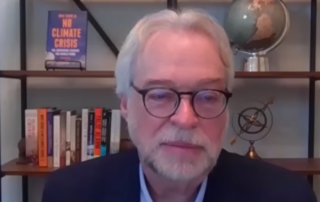
Thomas Kurz: Why there is no climate crisis
There is no climate emergency, says Clintel’s World Climate Declaration. Thomas Kurz is the author of an upcoming book with that very theme. Recently he spoke about it on Tom Nelson’s podcast.
Why solar is much more expensive than coal in Germany
The more solar and wind energy is deployed, the more it reshapes the system around it and the more costs shift into areas that are often not immediately visible but should be considered, says energy expert Lars Schernikau.
IPCC Admits Apocalyptic Climate Scenarios Are “Implausible”
Almost every fearmongering mainstream media climate headline and story that has been written over the last 15 years is junk, says Chris Morrison.
The post Thomas Kurz: Why there is no climate crisis appeared first on Clintel.
Please consider helping!
Awake Freedom TV On Roku is Broken! 🙂
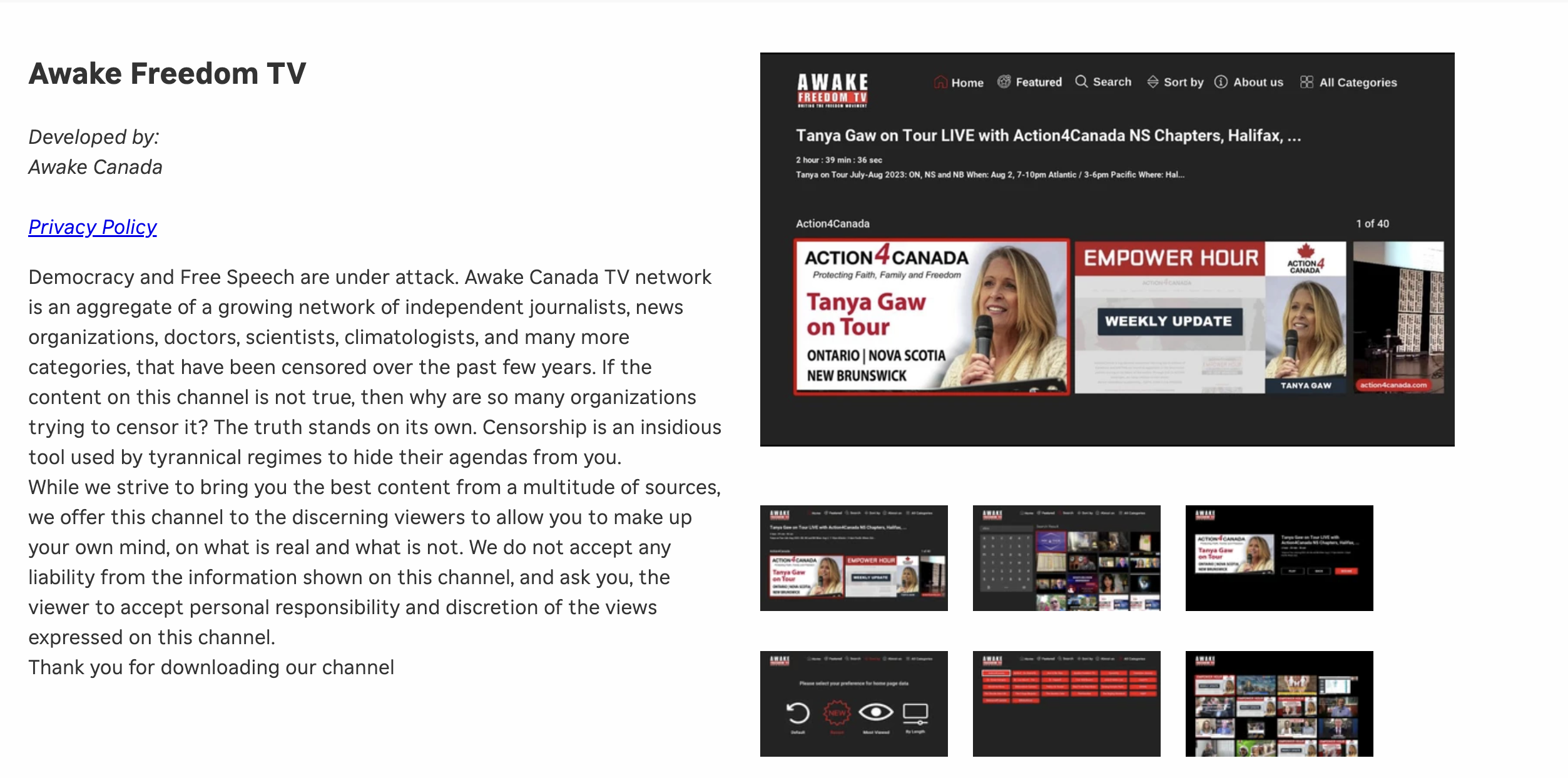
I could no longer maintain the costs on my own, so I moved the off of a dedicated server which was needed for the TV platform to work. On top of that, I want to build an app Awake Freedom TV app, for mobile phones. We need your help to first resurrect our TV channel, and then build the mobile app. In order to do that, I need a minimum of 800/month on subscription payments. Please help anyway you can with the form below.