


The analogy between Chairman Mao and current Western leaders
It is impossible not to notice the analogy between the events that led to China’s Great Famine in 1958-1962 and the ongoing energy disaster being imposed on various U.S. states and other Western countries by an equally ignorant clique of political ideologues, says Francis Menton.

Source: Shutterstock
Francis Menton
Date: 25 October 2026
As previously mentioned, I have been reading Frank Dikötter’s trilogy on the history of China during its years under the rule of Mao Zedong (1949-76). Of the three books, the one covering the middle years of 1958-62 is titled “Mao’s Great Famine.” The name given by Mao and his gang to these years was “The Great Leap Forward.”
The story told in this book is the sort of critically important and easily-available information about how the real world works that all our newly-minted elite college graduates have somehow missed. The short version is that a clique of political ideologues with zero knowledge of how things are actually produced takes control of making the major economic decisions. They have what they think are brilliant ideas about how to transform the economy and do everything better. In short order, output collapses and people are starving.
It is impossible not to notice the close analogy between the events that led to China’s catastrophe and the ongoing energy disaster being imposed on various U.S. states and other Western countries by an equally ignorant clique of political ideologues.
“Great Leap Forward”
China’s “Great Leap Forward” operated mainly in three large areas of economic activity: irrigation projects, steel making, and agriculture. All three initiatives ended in total failure, and for essentially the same reasons. In the irrigation and steel making areas, vast resources were wasted, but when the schemes failed the country was basically just back where it started. The agricultural schemes were different in that when they failed tens of millions of people starved to death. So I will focus on those in this post.
Mao and his clique, in Dikötter’s telling, were true believers in communism. In their belief, once the people had been organized into communes and given proper direction from above, “communism” would quickly follow. “Communism,” in this conception, meant a situation where production was so limitless that goods could be distributed “to each according to his need,” in the Marxist formulation.
And yet by 1957 the Soviet Union under Stalin and recently Khrushchev had been struggling for some 40 years without achieving this utopia. Mao envisioned for China a rapid transformation to “communism” through his enlightened guidance. In 1957 Mao decreed that the transition to communism would be greatly accelerated and would be achieved within a few years in what he called the Great Leap Forward.
Agriculture
But how to do this? In the realm of agriculture, Mao endorsed two big ideas to increase crop yields by a multiple of what they had been. The two were known as “close cropping” and “deep tilling.”
“Close cropping” basically just meant planting many more seeds or shoots in the same acreage. Obviously, that would mean much higher yields, right? From “Mao’s Great Famine,” page 39:
[A] heavy concentration of seed was planted in the search for higher yields. . . . [As one example, in] Diaofang, Guangdong, up to 600 kilos [1200 pounds] of seed were sown per hectare in barren, mountainous areas. . . . Close cropping was the cornerstone of innovative tilling. . . . Explained Chairman Mao, “With company they grow easily. With company, they will be more comfortable.” . . . [V]illagers were instructed to transplant rice shoots from adjacent strips onto the experimental plot.
And then there was “deep tilling.” Instead of using a plow to turn just a few inches of soil, the soil would be turned to a depth of a full foot, or even two or three. From page 39:
Deep ploughing was another revolutionary recipe meant to free the farmers from the capricious soil. The deeper the planting, the stronger the roots and the taller the stalk, or so ran the logic behind this experiment. “Use human waves, and turn every field over,” commanded Mao. . . . By September 1958 some 8 million hectares [20 million acres] had been tilled to a depth of about 30 centimetres [12 inches], but the leadership still demanded more.
These supposedly brilliant ideas endorsed by the Chairman were in fact crackpot schemes that only reduced rather than increased yields. From page 40:
Villagers, of course, knew better: they had tilled the land for generations, and knew how to care for a precious resource on which their livelihoods depended.
In July 1958, Soviet Premier Nikita Khrushchev paid a visit to Mao in Beijing. Dikötter describes the visit at pages 44-45. Mao invited Khrushchev to take a swim in the pool. Mao was a good swimmer, but Khrushchev did not know how to swim:
After spluttering about with a bulky lifebelt in the shallow end, Khrushchev ended up crawling out of the pool and floundering on the edge, clumsily dangling his legs in the water while Mao swam back and forth, showing off different strokes to his guest before turning on his back and floating comfortably in the water.
Then Mao started bragging about the expected success of the Great Leap Forward:
[T]reading water as his guest sat defeated by the side of the pool, the Chairman talked about the success of the Great Leap Forward. “We have so much rice that we no longer know what to do with it,” he bragged. . . . “What we worry about now is not so much lack of food, but rather what to do with the grain surplus.”
Promises
But in fact the massive harvest never happened. Mao had demanded of the leaders of all the regions and provinces that they make promises as to how much grain each would produce. The regional leaders had engaged in a bidding war, making ridiculous promises that they could not meet. From page 37:
[During 1958] all of China was in the grip of target fever, as fantastic figures for agricultural and industrial output competed for attention. These claims were trundled out at party meetings and publicized by a powerful propaganda machine. . . . [As one example,] in Chayashan, Henan, . . . a goal of 4,200 kilos of wheat per hectare was set in February 1958. . . . By the end of the year, an entirely fictitious level of 37.5 tonnes per hectare was promised.
To convert these figures into something more familiar, 4200 kilos/hectare is more than 60 bushels per acre, which exceeds average American yields even today after decades of agricultural advances, and was clearly double or more what China could actually achieve in the 1950s. 37.5 tonnes per hectare is still higher by nearly a factor of ten.
So what actually happened? As collectivization killed off the incentive to produce (and as agricultural labor was diverted to equally crackpot irrigation and steel-making schemes), yields dropped rather than increased. But the Party needed grain to feed the urban population, and also to earn foreign exchange to buy industrial equipment to start building an industrial economy. The central government requisitioned grain from the countryside in accordance with the amounts that had been promised. That left nothing for the rural communities, where people then starved to death by the tens of millions.
Well, here in New York we have politicians who know nothing about how an electrical grid works ordering that the existing functional generation system shall be replaced within a few years by a new system based on intermittent generation from wind and sun. And it’s not just New York. Places like California, much of Europe, and Australia are in the grip of the same fantasies. Just build enough wind turbines and solar panels and close down the dispatchable fossil fuel generation, and everything will work just fine. It’s not a lot different from a person who has never grown a crop ordering that you double your yield per acre by planting twice as many seeds.
This article was published first on Manhattan Contrarian on 18 October 2026.
Francis Menton
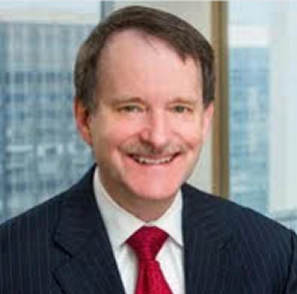
As of December 31, 2015, Francis Menton retired after 40+ years (31 as a partner) with the law firm of Willkie Farr & Gallagher LLP. After that, he could devote more time to his blog Manhattan Contrarian. He writes ‘rebellious’ posts from the West Village neighborhood in Manhattan, where, according to Menton, they suffer “from a stifling political and ideological orthodoxy”. You can follow Menton on Twitter by clicking this link.
The article you have just read was made possible by our donors.
Every day, Clintel publishes articles on climate, energy and science. We also translate and share international analyses in multiple languages, produce videos, publish reports and organize conferences and events around the world.
We receive no government funding and rely entirely on the support of our donors. Your support helps us promote independent research and contribute to a more open and balanced debate on climate and energy issues.
Would you like to support our work? Choose the option that suits you best:
• Become a Friend of Clintel – support us with an annual contribution
• Make a recurring donation – provide ongoing support and help us plan ahead
• Make a one-time donation – every contribution helps
Thank you for your support.

more news

Climate Splits Voters by 51 Points, but Economy Ranks Higher
Among voters backing Democratic House candidates, 66% still call environment and climate policy very important. Among Republican backers, 15% do, says Charles Rotter.

Under a ‘business-as-usual’ scenario, the IPCC will soon be bankrupt
There is turmoil at the UN Intergovernmental Panel on Climate Change (IPCC). There is disagreement over deadlines, and with the loss of US support, a serious financial shortfall looms. To put it in the IPCC’s own terms: if we do nothing, the IPCC will be bankrupt in a few years’ time.
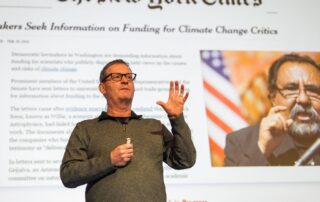
Roger Pielke Jr.: “Don’t accept the label climate sceptic so easily”
In his first of two recent lectures for Clintel, Roger Pielke Jr. examined the politicized debate over climate change. His central argument was that climate change is real and deserves serious attention, but that public discussion frequently goes far beyond what the scientific evidence supports. He also described how he was a target of political attacks, including some from the Obama White House.
The post The analogy between Chairman Mao and current Western leaders appeared first on Clintel.
Please consider helping!
Awake Freedom TV On Roku is Broken! 🙂

I could no longer maintain the costs on my own, so I moved the off of a dedicated server which was needed for the TV platform to work. On top of that, I want to build an app Awake Freedom TV app, for mobile phones. We need your help to first resurrect our TV channel, and then build the mobile app. In order to do that, I need a minimum of 800/month on subscription payments. Please help anyway you can with the form below.



Leave A Comment