


Lucy Biggers: How I Became a Biased Climate Reporter
As a young journalist, Lucy Biggers wanted to do good but gradually lost confidence in her own judgment. She now describes how group pressure, guilt and fear of exclusion shaped her climate reporting.


Lucy Biggers is Head of Social Media at The Free Press
Evert Doornhof
Date: 19 September 2026
Lucy Biggers was 25 when she joined NowThis News in 2015. She entered a young, progressive newsroom and wanted to belong. Ten years later, she describes how that environment turned her into what she calls “an extremely biased climate reporter.”
For years, Biggers was deeply involved in the climate movement. She spent time with Greta Thunberg and worked with prominent Democratic congresswoman Alexandria Ocasio-Cortez, better known as AOC. Photographs of Biggers with both women make clear that she was not an outside observer: she was part of the world she now critically examines.
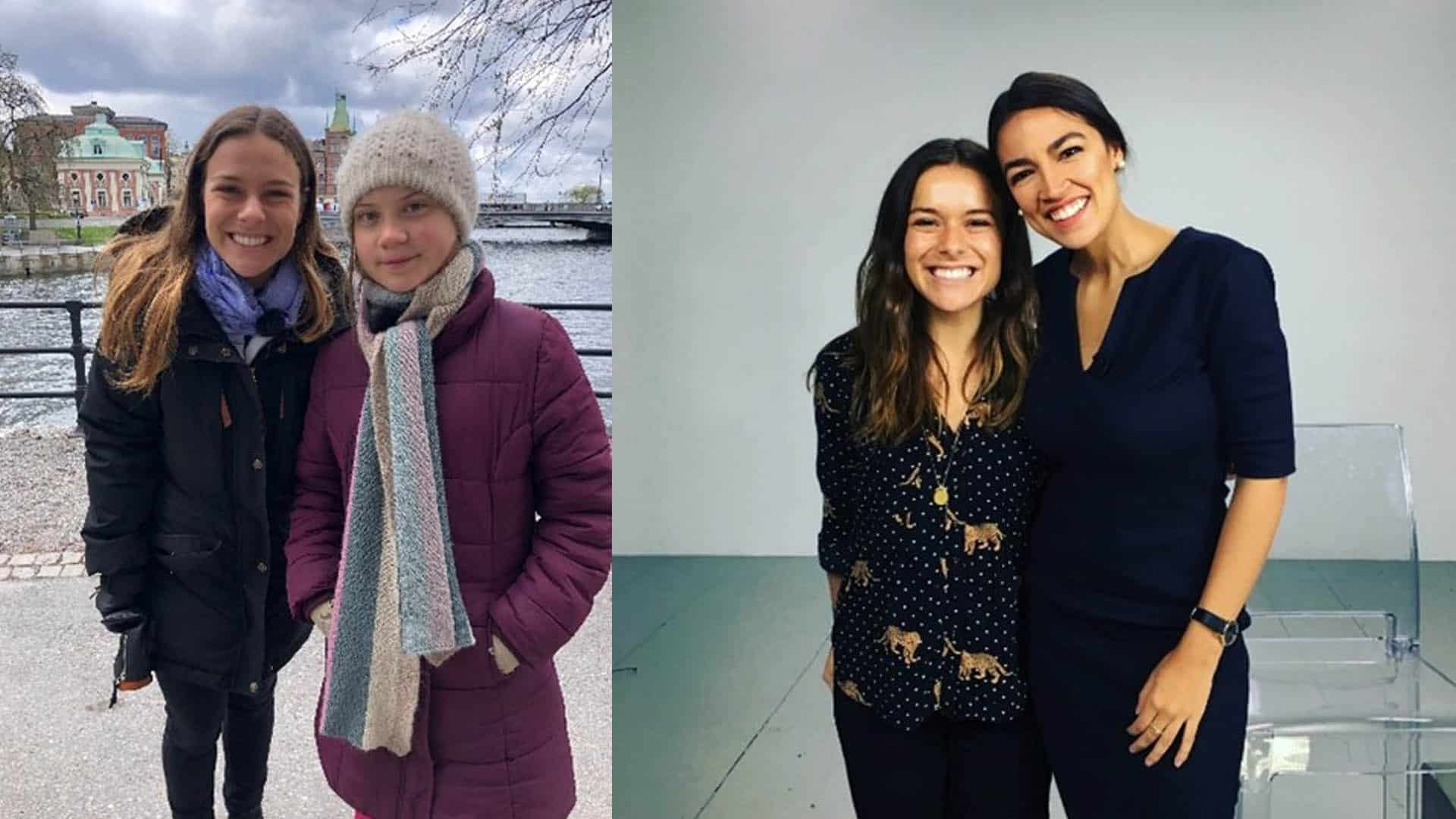
Lucy with Greta in Stockholm (2019) and with AOC (2018), source: The Free Press
Biggers now actively shares climate-realist content on social media and challenges bias in climate reporting. She has more than 40,000 followers on X and also serves as Head of Social Media at The Free Press.
In her recent X post, she summarizes her transformation in three steps and three short video’s you can see below:
- Deconstruct your identity
- Atone for your sins
- Fully submit to the ideology
A group she wanted to join
Biggers describes her new colleagues at NowThis as members of the political “Tumblr generation.” They supported Bernie Sanders and viewed society as a struggle between the oppressed and their oppressors.
Anyone who was white, Western, American or otherwise privileged automatically belonged to the oppressor class. Such people could not trust their own perception because it was assumed to be shaped by racism, sexism and privilege.
Biggers admired her colleagues. They appeared smarter, more progressive and better informed. As a result, she says, she surrendered her judgment to the group. If the group disliked something, she disliked it too. Who was she, “just some stupid white girl,” to disagree?
This thinking directly affected her climate reporting. Activists told her that fossil fuel companies were evil, capitalism was destroying the planet and the West was responsible for the world’s problems. Biggers accepted their truth as the truth.
In three parts, I explain how I was brainwashed into becoming a biased climate reporter.
Step 1: Deconstruct your identity.
When I entered a newsroom at 25, this was the pervasive ideology: The world is divided into two groups—the oppressed and the oppressors.
If you are white, straight, privileged, or American, you are inherently an oppressor. Everything you grew up believing is wrong or evil. You cannot be trusted to see the world as it really is because you are inherently racist, biased, and part of the oppressor class.
I was young, excited to be there, and surrounded by people I thought were smarter and cooler than I was. So I absorbed their worldview and ceded my judgment to the group.
Once you are demoralized, feel guilty for being an oppressor, can no longer trust your own intuition, or your own interpretation of the facts, you will believe whatever the group tells you to believe.
Step 2: Atone for your sins.
Because you are an oppressor all you can do is atone for the sins of your birth. You can do that by repeating and advancing the group’s ideology. You never question it, because questioning the ideology is treated as proof that you are racist, selfish, or an oppressor.
For me, this manifested as becoming a climate reporter. Through my work I could help the downtrodden, the indigenous people and other marginalized groups. I could be a good ally.
And so without questioning, I pushed the idea that climate change was an existential crisis, fossil-fuel companies were evil, capitalism was destroying the planet, and America was an imperialist country that had destroyed the environment. Essentially all of the problems we faced were because of Western imperialism.
If I had any doubts about this way of thinking I would shut them down. Who was I to question any of it? I was just some stupid, privileged white girl who didn’t know anything. That was what I had been told about myself and that is what I believed. Better to go along with the group, keep my head down, and be a good ally.
Step 3: Fully submit to the ideology.
The West is evil. America is evil. Capitalism is evil. White people are evil. Everything you grew up believing is wrong, and the only way to fix the world is to tear all of these systems down.
The weird thing is that I fell for all of this from a place of compassion. I wanted to help the downtrodden. I wanted to solve inequality. I wanted to fix the world.
I thought that by giving up my personal agency to this ideology, I was playing my part in atoning for the sins of my birth.I believe what I went through is still incredibly relevant today. It helps explain the DSA’s growing power within the Democratic Party. Why most Democrats can’t bring themselves to condemn socialism. Why so many young people believe America deserved 9/11. Why young people and celebrities chant “Free Palestine” without understanding that Hamas is a terrorist organization or anything about the conflict. They’ve been told what to believe and who the oppressor is in each of these situations.
Ten years of cancel culture has taught people that questioning the ideology doesn’t simply mean you disagree. It means you are an evil oppressor. You are racist, sexist, privileged, out of touch, evil. Disagree and you will be cast out and lose everything.
Once people become afraid to trust themselves, examine the facts, or stand against the group, you’ve got them. They can be convinced to believe and do anything.
What do you all think? Did I describe this accurately?
— Lucy Biggers (@LLBiggers) September 17, 2026
Climate reporting as atonement
This led to the second step: atoning for her background and privilege.
Biggers wanted to fight inequality and help people. She acknowledges the United States’ history of racism and recognizes that she grew up with certain advantages. These were, she says, the “seeds of truth” that made the wider ideology persuasive.
But the conclusions went much further. As a white, privileged American, she felt she had to prove that she stood on the right side. Climate reporting became her way of atoning for “the sins of her birth.”
She began presenting climate change in a very specific way: as an existential threat caused by fossil fuel companies, capitalism and Western imperialism. By advancing that narrative and amplifying marginalized groups, she could demonstrate that she was a good ally.
Her motivation did not come from cynicism, Biggers stresses, but from compassion. That was precisely why she failed to recognize that her reporting had become ideological. Her beliefs determined which facts she could accept — and which she could not.
— Lucy Biggers (@LLBiggers) September 17, 2026
The fear of being cast out
In the third video, Biggers explains how difficult it is to break away from such a group. Many people recognize her experience, she says, but are afraid to agree with her publicly. They fear rejection by friends and colleagues, consequences at work or cancellation by their own peer group.
Biggers experienced that fear herself. Before speaking out about bias in climate reporting, she worried that people would call her racist. Within the oppressor-versus-oppressed framework, criticizing the climate movement also felt like betraying marginalized communities.
A decade of cancel culture, she argues, has taught people that questioning an ideology does not simply mean disagreement. Those who ask difficult questions can be portrayed as evil, racist, sexist or privileged.
This allows the group to sustain itself. People remain silent because they believe they are alone. Their silence then convinces everyone else that almost the entire group agrees.
— Lucy Biggers (@LLBiggers) September 17, 2026
The Climate Policy Trap from the inside
Biggers’ three steps form a closed system. First, people are taught not to trust their own judgment. Next, they are assigned a moral debt for which they must atone. Finally, agreement with the ideology becomes a requirement for being a good person and remaining part of the group.
Her experience connects with what we have previously called the Climate Policy Trap: a worldview that becomes increasingly resistant to criticism through group identity, moral status and social pressure. Biggers shows what that trap looks like from the inside.
“Once people become afraid to trust themselves, examine the facts, or stand against the group, you’ve got them,” she writes. “They can be convinced to believe and do anything.”
Evert Doornhof
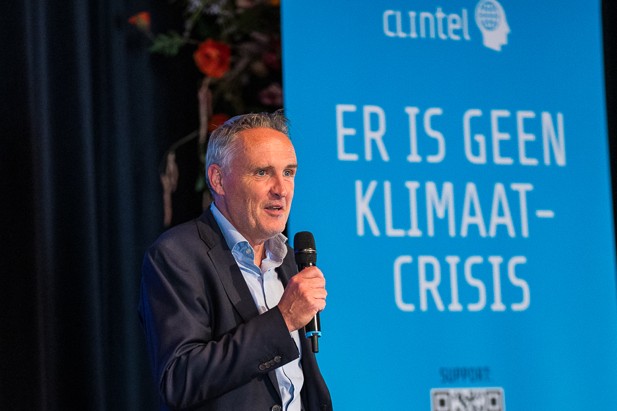
Evert Doornhof has long been active in the financial world in commercial and management roles. After the COVID pandemic, he changed course when he observed how quickly personal freedoms can be restricted. He is now committed to shedding light on crises that appear to be manufactured or exaggerated. Among other things, he is active with the Clintel Foundation, where he manages social media and has written several articles.
The article you have just read was made possible by our donors.
Every day, Clintel publishes articles on climate, energy and science. We also translate and share international analyses in multiple languages, produce videos, publish reports and organize conferences and events around the world.
We receive no government funding and rely entirely on the support of our donors. Your support helps us promote independent research and contribute to a more open and balanced debate on climate and energy issues.
Would you like to support our work? Choose the option that suits you best:
• Become a Friend of Clintel – support us with an annual contribution
• Make a recurring donation – provide ongoing support and help us plan ahead
• Make a one-time donation – every contribution helps
Thank you for your support.

more news
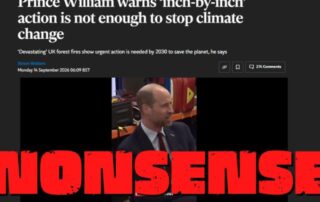
Prince William is Wrong: Sweeping Climate Action Will Only Harm People
Prince William is behind the curve when it comes to climate change. He is also very misinformed about the history of European and global wildfire occurrences, says Linnea Lueken.

OECD and Brussels Still Want Banks to Pick ‘Climate Winners’
The OECD is risking US wrath by pushing ahead with green finance initiatives despite Washington calling time on Net Zero, says Tilak Doshi. Its new report on climate regulation has Brussels’s fingerprints all over it.

Trump tells US power plants to emit as much CO2 as they want
The EPA (Environmental Protection Agency) has announced that they will scrap the limits set for ‘climate pollution’ from US power plants. Jo Nova thinks that the mission creep of bureaucrats may finally be coming to an end: Slaying the Bureaucratic Blob.
The post Lucy Biggers: How I Became a Biased Climate Reporter appeared first on Clintel.
Please consider helping!
Awake Freedom TV On Roku is Broken! 🙂
I could no longer maintain the costs on my own, so I moved the off of a dedicated server which was needed for the TV platform to work. On top of that, I want to build an app Awake Freedom TV app, for mobile phones. We need your help to first resurrect our TV channel, and then build the mobile app. In order to do that, I need a minimum of 800/month on subscription payments. Please help anyway you can with the form below.

Leave A Comment