


Climate Mania Has Made the World Bank Stupid
The World Bank was founded to promote economic growth in developing countries but has joined the brigade fulminating against the weather gods. The world’s poor deserve better than that, says Tilak Doshi.
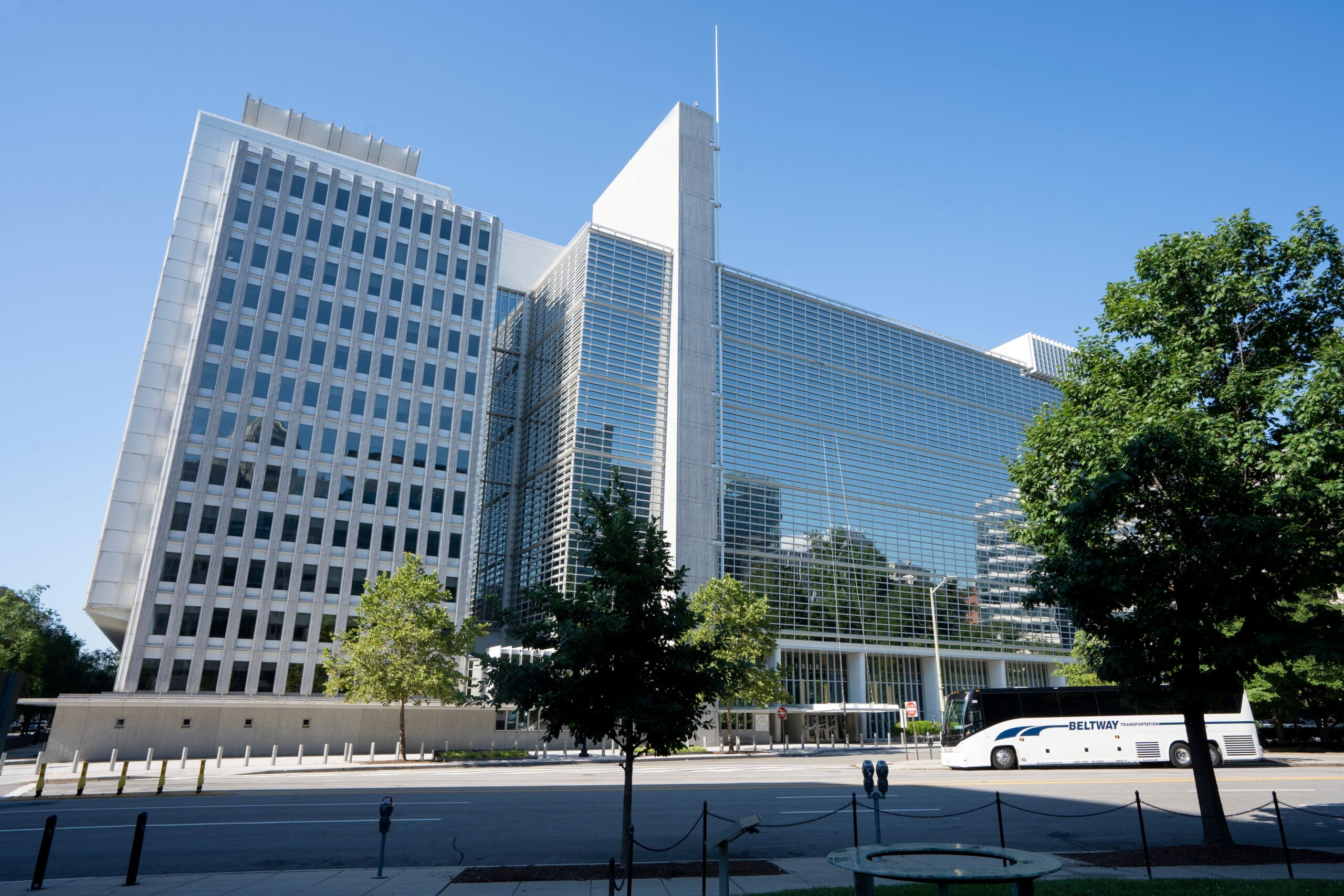
The World Bank building in Washington, DC. (Source: Shutterstock)
Tilak Doshi
Date: 21 November 2026
As the faithful gather in Antalya for COP31, the World Bank laid its offering on the altar last week: Governance for Climate and Development, the fifth annual digest of its Country Climate and Development Reports (CCDRs) now covering 103 economies. One might have expected a chastened institution. In April 2025 US Treasury Secretary Scott Bessent told the Bretton Woods twins (World Bank and IMF) that mission creep had knocked them off course, and on June 29th this year the Bank duly retired its target of steering 45% of its financing to climate. Yet its own climate page still boasts of $48 billion in “climate co-benefits” in the last fiscal year, 44% of its own-account financing.
The target is dead. The mania – a form of climate-focused pathology – lives on.
The CCDR is the Bank’s “core diagnostic” for helping countries align their “climate ambitions” with their development priorities, and the Bank’s blog trails the new report as a journey from commitment to delivery. The phrasing smuggles in an equivalence that no finance minister in Lusaka or Abuja would recognise. Why would a poor country have climate ambitions at all, beyond ensuring that poverty does not stand between its citizens and the travails of bad weather? Is civilisation itself not born of the struggle against the depredations of nature? Is science, in the Baconian tradition, not power over a harsh nature, the taming of her furies for the comfort of man? The ambitions in question belong to the Net Zero ideologues of Brussels and Davos. The poor merely get to be the guinea pigs of climate modelling and Net Zero imperatives.
The cart before the horse
The report opens with the assertion, repeated across all five editions, that “climate and development are inseparable”. It then declares that climate change poses a substantial threat to economic development, with projected GDP losses of between 1% and 20% by 2050 “compared with a baseline without climate change”. This is an alternate universe. No country has ever been offered a baseline without weather. The counterfactual that matters to a development bank surely is the loss from the absence of growth, measured against a baseline of robust growth, whatever the climate does.
The Bank’s own text gives the game away. Its modelled losses are larger in poorer and hotter economies. Its headline adaptation case is Nigeria, where the projected GDP loss shrinks from 6.7% to about 1% once one assumes mechanisation, air conditioning, health interventions and flood-resilient investment. Heat stress, it notes, costs far less in high-income countries, where machines do the heavy lifting. Mauritius is declared at risk of water scarcity, yet 61% of the water its system captures is lost before it reaches a customer. That is a plumbing problem. Mechanisation, air conditioning and pipes that do not leak used to be called economic development. The Bank has rediscovered it and filed it under “climate adaptation”.
The rest is conjecture by model. In Armenia, climate change “could” raise poverty by 2.7 percentage points by 2030, relative to that imaginary alternate universe baseline. In Nigeria, under a “pessimistic dry/hot scenario”, it “could” push 5.1 million more people into poverty by 2035. The report concedes that the impact channels modelled differ from country to country, that results are not comparable and that its estimates are merely “indicative”. Running climate models through economic forecasts to divine the poverty rate a decade hence is not much of an advance on the augurs of classical Rome, who inspected the entrails of sacrificed animals to learn what the gods had in store.
Where the report cites an actual event, it misrepresents. Zambia’s 2023-24 drought, which more than halved the maize crop, is offered as evidence of climate change destroying jobs. But the World Weather Attribution group, no nest of sceptics, found that El Niño, i.e., weather, was the key driver and that such droughts are, if anything, less likely in today’s climate than in a cooler pre-industrial one. That is of a piece with the IPCC’s own Sixth Assessment, whose Table 12.12, as Roger Pielke Jr. has patiently documented, shows that for most types of extreme weather a climate-change signal has not emerged from natural variability and is not expected to this century, even under the implausible RCP8.5 scenario.
Unsurprisingly, the Bank finds that the poor, and poor women above all, suffer most in its scenarios. Some 1.5 billion people, it says, are exposed to climate hazards and highly vulnerable because they lack basic infrastructure, financial access or social protection. Because, that is, they are poor. The rich are spared by sturdier homes and higher living standards. Poverty is the root cause of deprivation whatever the weather throws at people, and it would remain so under the most benign climate imaginable. The remedy is growth, as development economists such as Jagdish Bhagwati have argued for decades. The record bears them out: global death rates from natural disasters have fallen by more than 90% over the past century, a century in which the planet warmed and humanity grew rich enough to cope.
Climate martyrs and the island that got rich
Nowhere is the confusion plainer than in the treatment of small island developing states. Mauritius, the Seychelles, Fiji and São Tomé and Príncipe are said to face high risks from coastal flooding and sea-level rise, and the report puts the cost of defending Kiribati, Tuvalu and the Marshall Islands against half a metre of sea-level rise at $9.7 billion, some 20 times their combined annual GDP. As noted in Rupert Darwall’s new book, the small islands were cast as “climate martyrs” to extract the 1.5 °C target and the $100 billion climate finance pledge at the UN, with the politics leading the science.
The science itself is less obliging. A 2015 study of a central Pacific atoll found no islands lost and most enlarged. A 2018 survey of all 101 islands of Tuvalu found that the country’s land area had grown by 2.9% over four decades, with three-quarters of its islands expanding. Global sea level rose by roughly seven inches over the 20th century, a pace that coral islands and competent engineers have managed alike. The Maldives, poster child of the drowning nation, holds out one hand for climate finance while the other cuts the ribbon on a billion-dollar airport expansion programme built to handle 7.5 million passengers a year. Those are not the investment decisions of people who expect to be underwater.
Then there is the small island state the report never mentions. Singapore at independence in 1965 was a low-lying tropical island with no hinterland, no natural resources and an income of about $500 a head. Today it is among the richest societies on earth. It did not get there through a climate framework law. It had the good fortune to be ruled by leaders such as Lee Kuan Yew and Goh Keng Swee who shared no Fabian pretensions despite their university education in the UK.
Singapore was also fortunate that the Dutch economist Albert Winsemius, who arrived in 1960 at the head of a United Nations mission and stayed on as chief economic adviser until 1984, recommended pragmatic economic policies of small government, liberal market and trade policies and sound finance. As Peter Coclanis and I argued in our study of Southeast Asia’s growth, the region’s high performers shared an outward orientation, macroeconomic stability and openness to trade and foreign capital. Did the climate not change between 1965 and 2000, while Singapore, Hong Kong, Taiwan and South Korea were escaping poverty? Singapore builds sea defences today because it can afford them. It does not ask the World Bank for a diagnostic.
Adam Smith put it in a single sentence in 1755, two decades before The Wealth of Nations:
Little else is requisite to carry a state to the highest degree of opulence from the lowest barbarism, but peace, easy taxes and a tolerable administration of justice; all the rest being brought about by the natural course of things.
The Bank’s analysts, toiling over their “dry/hot” scenarios, appear to have forgotten the sage’s insights and the tradition behind it.
From the finance ministry to ‘civil society’
How did a once competent institution arrive here? The late Deepak Lal, who served as the Bank’s research administrator in the mid-1980s, saw it coming. In a 2004 column he described the battle between the “old” Bank, whose advice was grounded in the classical liberal economics summarised as the Washington Consensus, and the new one fashioned under Sir James Wolfensohn, the ninth President of the World Bank, which embraced the NGOs’ ‘civil society’ agenda.
On one side stood finance ministries and trained economists; on the other, activists, aid ministries and UN agencies. To ask the two to split the difference, Lal wrote, was like asking a scientist who knows the earth is round to accommodate a man who believes it flat. Citing the eminent economist Anne Krueger, he observed that once private capital markets had opened to developing countries the Bank faced three choices: confine itself to the poorest countries, reinvent itself around ‘soft’ issues such as the environment and NGO engagement, or close down. Bureaucrats being bureaucrats, it chose the second. Lal recommended the third.
I have chronicled the sequel over the years: the 2013 World Bank ban on coal-fired power lending under Jim Yong Kim, followed by the retreat from upstream oil and gas, in what I called the Bank’s defunct energy policy; the swift disappointment of David Malpass, who arrived as a Trump nominee and announced at his first press conference that the Bank’s green energy policies would persist; and the wider capture of the Bretton Woods institutions by the climate industrial complex. Lal himself concluded in Poverty and Progress that Western climate policy had become the gravest threat to the prospects of the world’s poor.
The new report shows the NGO mind in full possession of the building at 1818 H Street in Washington, D.C. Its governance chapter does not ask how poor countries might secure small government (to reduce propensities for corruption), secure property rights, sound money or cheap energy. It celebrates “framework laws” that turn climate targets into statutory obligations and “bind successive administrations”, noting with approval that more than 50 of its 103 economies have enacted or are preparing one. It advises that where climate branding meets resistance, energy access can offer a “more consensual framing”. It looks forward to “irreversible structural change”. Voters who might prefer cheaper electricity are a political-economy constraint to be managed. Britain, which pioneered this kind of legislation, now enjoys the highest electricity prices in the industrialised world. It is an odd export to press on poorer developing countries.
The same string of terrible ideas runs through the “low-emission pathways”, which propose an average 78.7% cut in emissions by 2050 for the countries modelled. Bulgaria, where the report admits nearly 30% of households were energy-poor in 2023 and where the exit from coal threatens 12,000 jobs at Maritsa East, is nonetheless walked down a path anchored in Net Zero by 2050. The modelled bill for all this “climate-smart development” averages 1.8% of GDP a year to 2030, and 11% in Fiji. Nigeria, we learn, received climate finance equal to about 8% of its estimated annual needs. Having invented the need, the Bank laments the gap.
Back to factory settings
There are flickers of sanity. Under Ajay Banga and American pressure, the Bank last year lifted its ban on nuclear power, though Germany, France and Britain still resist any return to upstream oil and gas. This report shows a climate-addled bureaucracy carrying on as before. It will find a patron in Ed Miliband, who has installed himself as the United Kingdom’s governor at the Bank and whose collision course with Washington I described in these pages in July.
The remedy is not complicated. The Bank should stop producing climate diagnostics and return to asking the question its founders set it: what stands between a country and sustained economic growth? The answers have not changed since Smith. Peace, easy taxes, tolerable justice, open trade and the cheapest reliable energy available will do more to protect a Gambian farmer or a Fijian fisherman from drought and storm than any number of framework laws and budget-tagging exercises. If the Bank cannot bring itself to say so, Lal’s third option remains on the table.
An institution founded to promote economic growth has joined the brigade fulminating against the weather gods. The world’s poor deserve better than that.
This article was republished from Tilak Doshi’s Substack and was first published on The Daily Sceptic on 17 November 2026.
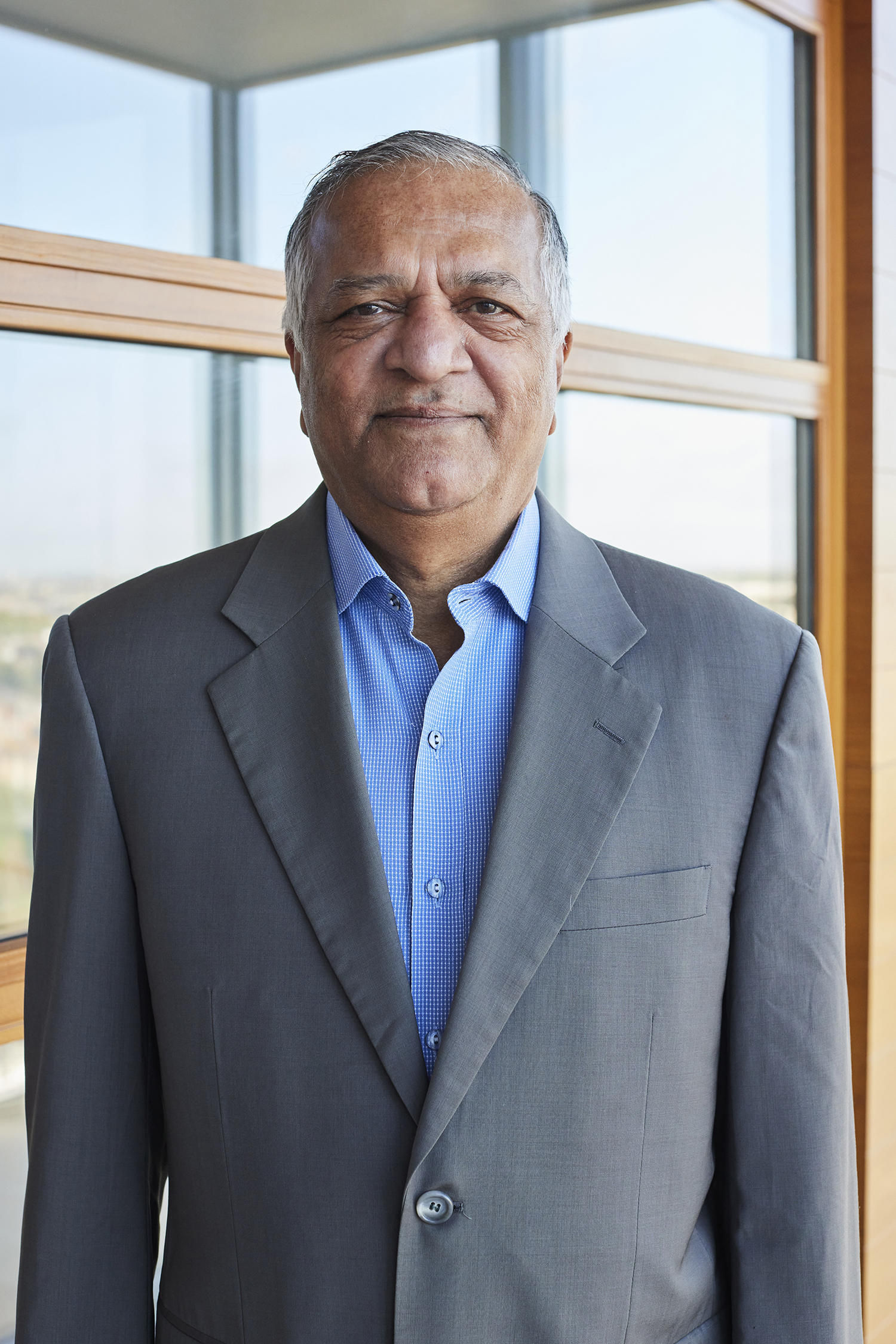
Dr Tilak K. Doshi
Dr Tilak K. Doshi is the Daily Sceptic‘s Energy Editor. He is an economist, a member of the CO2 Coalition and a former contributor to Forbes. Follow him on Substack and X.
The article you have just read was made possible by our donors.
Every day, Clintel publishes articles on climate, energy and science. We also translate and share international analyses in multiple languages, produce videos, publish reports and organize conferences and events around the world.
We receive no government funding and rely entirely on the support of our donors. Your support helps us promote independent research and contribute to a more open and balanced debate on climate and energy issues.
Would you like to support our work? Choose the option that suits you best:
• Become a Friend of Clintel – support us with an annual contribution
• Make a recurring donation – provide ongoing support and help us plan ahead
• Make a one-time donation – every contribution helps
Thank you for your support.
more news

Great Barrier Reef doing fine, but now has the “wrong coral”
In a recent interview with Tom Nelson, Australian coral reef researcher Peter Ridd once again showed that the Great Barrier Reef is doing fine. But alarmist scientists have now adopted a new strategy. Corals that should have disappeared but have instead become abundant are now being presented as the “wrong coral”.
Kathryn Porter: Iberian blackout was a warning
Britain’s energy system is becoming increasingly expensive and difficult to keep stable, according to energy analyst Kathryn Porter. In an interview with GWPF’s Harry Wilkinson, Porter also discussed the Iberian blackout of 2025. “It was completely because of renewables”.

Lomborg: Enormous Costs for Minimal Climate Benefit
Bjorn Lomborg recently discussed (the results of) his new website netzerocostbenefit.com. On The Andrew Neil Report, the Danish political scientist gave Britain as an example: it would have to spend £695 billion to get to net zero in 2050, which would result in a global temperature reduction of 0.00376°C (also see this Clintel article).
The post Climate Mania Has Made the World Bank Stupid appeared first on Clintel.
Please consider helping!
Awake Freedom TV On Roku is Broken! 🙂

I could no longer maintain the costs on my own, so I moved the off of a dedicated server which was needed for the TV platform to work. On top of that, I want to build an app Awake Freedom TV app, for mobile phones. We need your help to first resurrect our TV channel, and then build the mobile app. In order to do that, I need a minimum of 800/month on subscription payments. Please help anyway you can with the form below.



Leave A Comment