


There is no climate emergency!
The Strait of Hormuz Crisis Shows the World Still Runs on Fossil Fuels
The Strait of Hormuz, one of the world’s most critical energy chokepoints, highlights the continued global dependence on oil and gas. Recent geopolitical tensions have disrupted energy flows, exposing vulnerabilities in global supply chains and triggering emergency responses across Asia. Despite decades of rhetoric about an energy transition, fossil fuels remain indispensable for modern economies, not only for energy but also for agriculture, plastics and pharmaceuticals. The crisis underscores that energy systems are shaped by geography and economics, and that a full transition away from hydrocarbons will be far slower and more complex than often assumed. The post The Strait of Hormuz Crisis Shows the World Still Runs on Fossil Fuels appeared first on Clintel.
The EU’s Nuclear Phase-Out Was a Blunder
Following Friedrich Merz in January, Ursula von der Leyen has now also admitted that the phase-out of nuclear energy was a major ‘strategic mistake’, not only for Germany but for the EU as well. American researcher Roger Pielke Jr. uses some simple calculations to demonstrate the magnitude of the EU’s strategic blunder. The post The EU’s Nuclear Phase-Out Was a Blunder appeared first on Clintel.
 Paul Ehrlich (1932-2026): Farewell to the Long-Lived Failed Prophet of Miserablism – The Population Bomb author lived a long, wealthy, healthy life, an opportunity his work denied to countless others Gallery
Paul Ehrlich (1932-2026): Farewell to the Long-Lived Failed Prophet of Miserablism – The Population Bomb author lived a long, wealthy, healthy life, an opportunity his work denied to countless others
Paul Ehrlich (1932-2026): Farewell to the Long-Lived Failed Prophet of Miserablism – The Population Bomb author lived a long, wealthy, healthy life, an opportunity his work denied to countless others
Paul Ehrlich, author of The Population Bomb, became one of the most influential voices behind modern environmental pessimism. His warnings of inevitable resource depletion and societal collapse shaped decades of policy and public thinking. Yet, as history unfolded, many of his most prominent predictions failed to materialize—raising enduring questions about the consequences of alarmist narratives in science and policy. The post Paul Ehrlich (1932-2026): Farewell to the Long-Lived Failed Prophet of Miserablism – The Population Bomb author lived a long, wealthy, healthy life, an opportunity his work denied to countless others appeared first on Clintel.
US Energy Realism Pays Off in Iran Crisis
The stark contrast between American resilience and European collapse is a permanent lesson. National security should not be subject to the whims of the weather or the approval of climate activists in European capitals. The post US Energy Realism Pays Off in Iran Crisis appeared first on Clintel.
AI accurately reconstructs temperatures across Antarctica
Artificial intelligence is increasingly being applied in climate science, with mixed results so far. A new study, however, suggests that deep learning can successfully reconstruct Antarctic surface temperatures despite limited observational data. By combining sparse measurements with reanalysis datasets, the researchers claim to achieve high accuracy—offering new insights into long-term temperature trends across the continent. The post AI accurately reconstructs temperatures across Antarctica appeared first on Clintel.
Clintel President Václav Klaus warns: “No radical change in Europe in the near future”
We must not be naïve optimists about climate policy and should not overestimate the recent positive signals, like those from President Trump. This is the view of Clintel President Václav Klaus: “Nothing has changed in the European Union. We, with a background in the social sciences, cannot imagine that any radical change will take place in Europe in the near future.” Klaus made these remarks in his speech at the annual meeting of the Norwegian Klimarealistene in Oslo on March 15. The post Clintel President Václav Klaus warns: “No radical change in Europe in the near future” appeared first on Clintel.
New study finds low CO2-sensitivity again
A new paper by Frank Stefani compares solar variability and CO₂ emissions as drivers of global sea surface temperatures. Using the solar aa geomagnetic index alongside CO₂ data, the study estimates a transient climate response (TCR) of about 1.1–1.4 K, near the lower end of the IPCC range. The results align closely with other observation-based estimates and highlight the continuing scientific debate about the relative roles of solar activity and greenhouse gases in recent climate change. The post New study finds low CO2-sensitivity again appeared first on Clintel.
Clintel Ambassador Ian Plimer on popular Triggernometry podcast: “Climate science is the biggest cult in scientific history”
Clintel-ambassador for Australia, prof. Ian Plimer, didn’t hold back in his recent interview on the popular Triggernometry podcast: “There’s a very large body of people out there who are actually using science to promote scams. It’s absolutely crippling Western countries. You can’t run an industrial society on sea breezes and sunbeams.” The post Clintel Ambassador Ian Plimer on popular Triggernometry podcast: “Climate science is the biggest cult in scientific history” appeared first on Clintel.
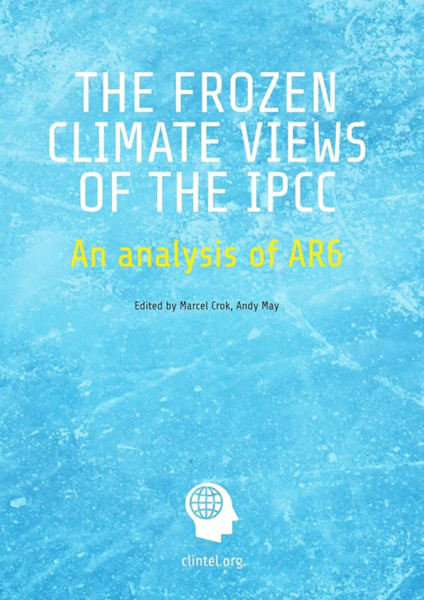
Groundbreaking New Paper Challenges Foundation of Climate Change Assessments, Revealing Fatal Flaws in Ocean Heat Content Measurements
An international team of scientists has published groundbreaking research revealing that the primary measurement used to support claims of planetary “warming” is fundamentally flawed and scientifically invalid. The post Groundbreaking New Paper Challenges Foundation of Climate Change Assessments, Revealing Fatal Flaws in Ocean Heat Content Measurements appeared first on Clintel.
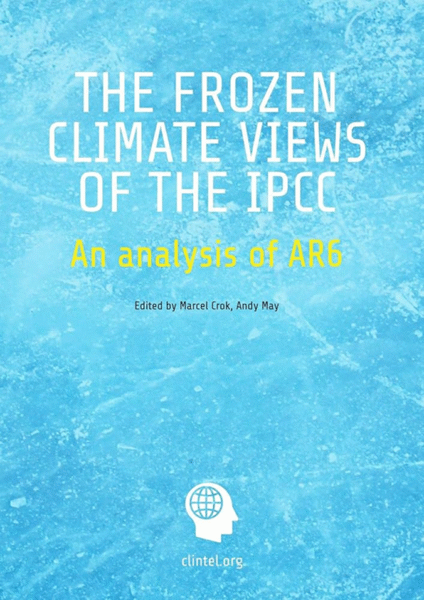
The Frontier of Climate Science: Solar Variability, Natural Cycles and Model Uncertainty
Climate scientist Nicola Scafetta has published a new book examining the complex interplay between solar variability, natural climate cycles, and the limits of current climate models. The Frontier of Climate Science explores how natural variability, observational uncertainties, and model limitations shape our understanding of past and future climate change. The post The Frontier of Climate Science: Solar Variability, Natural Cycles and Model Uncertainty appeared first on Clintel.

Absurd new study: hair salons can be a secret weapon for climate action
Great news! Researchers from several British universities have discovered that ‘hairdressers could be a secret weapon in tackling climate change’. Jo Nova reflects on this absurd finding. The post Absurd new study: hair salons can be a secret weapon for climate action appeared first on Clintel.
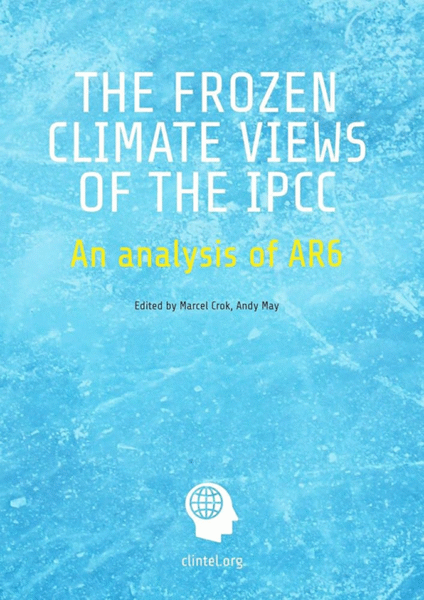
Why the modern CO₂ spike looks scarier than it is
Modern CO₂ levels often appear dramatic when recent instrumental measurements are directly compared with long-term ice core records. However, paleo-CO₂ proxies smooth atmospheric signals over centuries, which dampens rapid changes. When modern CO₂ data are smoothed to match proxy resolution, today’s levels still exceed past interglacial peaks but appear far less extreme than the raw measurements suggest. The post Why the modern CO₂ spike looks scarier than it is appeared first on Clintel.