



Interview George Sowers
George Sowers
Name: George Sowers
Country: USA
What is your background?
I was born in Atlanta in 1958. My father was a professor of Civil Engineering at Georgia Tech and was eventually inducted into the National Academy of Engineering.
My university training is in physics. I have a bachelor’s degree in physics from Georgia Tech and a PhD in physics from the University of Colorado in Boulder. I’ve lived in Colorado since 1981. My thesis research was in numerical simulations of quarks under the influence of the strong nuclear force using the techniques of lattice gauge theory. This work first exposed me to large scale numerical modelling: its utility and its limitations.
My 30+ years of work experience were entirely within the aerospace industry, starting at Martin Marietta which became Lockheed Martin. I rose through the engineering ranks, working on the Titan and Atlas space launch vehicles. I was the Chief System Engineer for the development of the Atlas V launch vehicle, still active. Atlas V has launched spacecraft to Pluto and Mars as well as dozens of commercial, military and intelligence satellites into Earth orbit. Countless computer models are used in the development of a launch system, but extraordinary care is taken to validate these models given the enormous stakes involved.
In 2006, Lockheed Martin and Boeing formed a joint venture called United Launch Alliance (ULA). I became the Vice President of Business Development and Advanced Programs. I was also responsible for the company’s Washington DC operations that included regular interactions with Congress and the Executive Branch agencies dealing in space activities. I became the Vice President of a newly formed human spaceflight division of ULA that included a human rated version of Atlas to carry the Boeing Starliner capsule and the upper stage of NASA’s SLS rocket whose first launch is imminent.
I ended my ULA career as Chief Scientist and Vice President of Advanced Programs. In that role, I started the Vulcan rocket development program and orchestrated a partnership with Jeff Bezos’ Blue Origin to develop the BE-4 engine. My group developed concepts for fully reusable in space vehicles designed to be refuelled with propellant sourced from space.
In 2017, I retired from ULA and joined the faculty of the Colorado School of Mines. I am part of the world’s first and only graduate program in space resources, devoted to harnessing the vast resources of space for the benefit of humankind. I teach systems engineering and a projects course. My research interest is in developing the water resources of the Moon and asteroids to produce and distribute liquid oxygen, liquid hydrogen propellants. Water is the oil of space!
Since when and why are you interested in climate change?
I have had an intellectual interest in the science of climate change for many decades. As a teenager, I remember the global cooling scare. While a young adult, that morphed into global warming and eventually climate change. From the first, I was sceptical that catastrophic consequences could arise from relatively modest increases in the trace gas CO2. For many years, the climate scare advocates could be dismissed as unserious and relatively harmless. But as their political influence increased, I became more alarmed. Their policy recommendations, if pursued, would destroy the economic foundation that has led to the incredible increase in human flourishing experienced since the Industrial Revolution. That is frankly insane.
In the 2000’s, I began to educate myself on the actual science behind the climate catastrophe claims. I studied climate history over human and geologic scales and read several books on climate modelling. I investigated the actual data on severe weather. In no case did the facts support the catastrophic claims. Nevertheless, many countries are now starting down the path of economic destruction. It must be stopped, and soon.
How did your views on climate change evolve?
I have always been sceptical of climate catastrophe claims. However, it did not really matter so long as those making the claims were on the fringe with little political power. One could laugh it off, like the predictions of mass famine made by Paul Ehrlich and the Club of Rome.
However, over the past decades, the political power of the climate catastrophe movement has grown to the point where it has taken over international organizations like the UN and many of the highest government offices in affluent nations in Europe, North America, and Australia.
My aha moment came when I realized that most of those in positions of power were not particularly worried about the climate crisis per se but saw it as an opportunity to implement socialist/Marxist policies, i.e., complete government control of the economy, to save us from the claimed climate crisis.
Over time, many of these politicians have become quite open about their aims. For example, Christiana Figueres, former executive secretary of U.N.’s Framework Convention on Climate Change, stated that “this is the first time in the history of mankind that we are setting ourselves the task of intentionally, within a defined period of time, change the economic development model that has been reigning for at least 150 years, since the Industrial Revolution.” A top aide to socialist US Congresswoman Alexandria Ocasio-Cortez admitted that the Green New Deal was not conceived as an effort to deal with climate change, but instead a “how-do-you-change-the-entire economy thing.”
As a scientist by education, I am deeply disappointed by the willingness of the science community to be an accomplice to the takeover. I have no doubt that many scientists really believe that increasing CO2 poses a danger to the climate, but the community has completely abandoned cherished principles of scientific practice and discovery. Honest debate regarding data and research is suppressed and those expressing contrary views are vilified as deniers. Grants for contrary research are denied and papers describing contrary results are refused publication. Even worse, data are manipulated, e.g., the US temperature records, to exaggerate evidence of warming.
Perhaps most egregious, as a long-time developer and user of scientific and engineering models, is the indiscriminate use of unvalidated, even falsified, climate models to predict a crisis in the future. I am a firm believer in the maxim “all models are wrong, but some are useful.” For a model to be useful in a particular domain, it must be validated. Validation is a rigorous process of proving that a model provides a faithful representation of the relevant aspects of the real world. In engineering applications, this usually entails anchoring the model to test data obtained under carefully controlled conditions. This is clearly not possible for climate models.
Furthermore, the usefulness of a model resides in its ability to make accurate predictions. Again, climate models fall short. Current models greatly overestimate the amount of warming experienced over the past 20 years. This problem is finally being recognized within the climate modelling community, who now admit their models “run hot.”
Is climate change a big issue in your country and how do you notice this?
The political left has made climate change a huge issue within the US. Now controlling the White House and both branches of Congress, they have been able to pass harmful and wasteful legislation suppressing the use of fossil fuels and supporting unreliable solar and wind. Many more destructive policies have also been pursued via executive action. Most media in the US are “all in” with the climate crisis narrative. Every adverse weather event is claimed to be due to climate change. It doesn’t matter whether it’s a cold snap, a heat wave, floods or drought, frequent storms, or a lack of storms (like the current lack of Atlantic hurricanes), it’s all due to climate change.
There are still some media that remain skeptical, but they are under increasing attack.
How would climate policy ideally look like in your view (suppose you are the minister for climate)?
I would first eliminate the position of climate minister!
Fundamentally, there is no climate crisis. Any policy that purports to address climate change should be eliminated. Most importantly, we should stop the war against fossil fuels (and nuclear power) and return to a free market approach to energy. In a free market, coal, oil, and natural gas will continue to provide very low cost, efficient, and convenient energy. Abundant, low-cost energy is the key to lifting billions of people out of poverty. We need to return to the trajectory of ever-increasing abundance that has dramatically enhanced human flourishing over the past 150 years. Keeping the climate change boot on the necks of the developing world countries is grossly immoral.
Since climate is always changing regardless of what humans do, we should continue to invest in technologies and infrastructure that enhance resilience to weather events. This policy has resulted in a 50-fold reduction in weather related deaths over the past century.
What is your motivation to sign the Clintel World Climate Declaration?
The current political trajectory in the western world is deeply alarming. It has resulted in the current energy disaster in Europe and the looming one in the US, Canada and Australia. The time is now to reverse course. Ordinary people are waking up. The Covid experience revealed the corruption and ineptitude of so-called experts. The same corruption and ineptitude lie behind “climate science.”
The Clintel Declaration is a small step toward eliminating the “science” justification from the ongoing destructive and immoral economic transition.
What question did we forget?
The following is a short summary of what we know about the real science of climate change and CO2. Each of these statements is well supported by data and analysis:
The following is a short summary of what we know about the engineering of the world’s energy system. Again, each statement is well supported by facts and analysis:
Over 80% of the world’s energy comes from fossil fuels: coal, oil, and natural gas. Fossil fuels are abundant, low cost, transportable, and have high energy density. They are well suited for all the energy needs of advanced society: electricity generation, transportation, and heavy industry. Fossil fuels have enabled the astonishing increase inhuman flourishing (wealth, health, technology, etc.) experienced over the past 150 years. Other energy sources: nuclear, solar, wind, hydro, geothermal, etc.) each have drawbacks compared to fossil fuels. Nuclear is excellent for electricity generation but has been wrongly vilified. It is the safest and cleanest of all energy options. Solar and wind are intermittent, unreliable, and of very low energy density. They currently supply around 3% of the world’s energy despite trillions of dollars in subsidies in the past several decades. Reliability can be improved by including enormous storage capacity, but the necessary technologies don’t exist. Hydro and geothermal are geographically limited to regions with fast moving rivers or volcanic regions, respectively. A transition to “green” energy is impossible without economic collapse, misery, and death. Expanded use of fossil fuels can lift the developing world out of poverty and continue the trajectory of ever-increasing human flourishing. Eventually, other energy sources will be developed like nuclear fusion and space based solar power that will eliminate energy scarcity forever.The post Interview George Sowers appeared first on Clintel.

New peer reviewed paper: climate sensitivity a third lower
Official IPCC estimates of future global warming may be overstated
Press Release by GWPF
A new paper reduces the estimate of climate sensitivity – the amount of warming expected for a doubling of carbon dioxide concentrations – by one third. The results therefore suggest that future global warming will be much less than expected.
The paper, by independent scientist Nic Lewis, has just appeared in the journal Climate Dynamics. It is an important challenge to the official view of the Intergovernmental Panel on Climate Change (IPCC).
Lewis has critiqued a 2020 assessment of climate sensitivity by Sherwood et al., which strongly influenced the IPCC’s Sixth Assessment Report, in 2021. Lewis commented:
“It is unfortunate that Sherwood et al.’s assessment of climate sensitivity, which underpinned the UN Framework Convention on Climate Change, contained such serious errors, inconsistencies and deficiencies in its methods”.
After correcting the Sherwood et al. methods and revising key input data to reflect, primarily, more recent evidence, the central estimate for climate sensitivity comes down from 3.1°C per doubling of CO2 concentration in the original study to 2.16°C in the new paper.
This large reduction shows how sensitive climate sensitivity estimates still are to input assumptions, and that values between 1.5°C and 2°C remain quite plausible.
Climate sensitivity represents the long-term global temperature increase caused by a doubling of atmospheric CO2 concentration. There are different measures of climate sensitivity. Both the Sherwood and Lewis papers estimate the so-called ‘effective’ climate sensitivity, which reflects a new equilibrium state projected from centennial changes after a doubling of the CO2 concentration. This measure is considered the most relevant one for predicting climate change in the coming two centuries. Climate sensitivity has always been a very important, but also highly uncertain, parameter in the climate change discourse. Earlier IPCC reports assessed its value as likely to be somewhere between 1.5°C and 4.5°C, with a best estimate of 3°C. However, prompted by the Sherwood paper, the 2021 Sixth Assessment Report moved that range upwards, to 2.5 to 4°C. Although for outsiders this might sound boring, for insiders it was a revolutionary change. Lewis’s corrections and revisions lead to a likely range of 1.75 to 2.7°C, which is not only lower but is also much less uncertain than either the 2021 official IPCC assessment or the very similar Sherwood et al. estimate (2.6 to 3.9°C). Nic Lewis is the lead or sole author of ten peer-reviewed papers on climate sensitivity. He was a participant in the 2015 workshop that kicked off the World Climate Research Programme project that led to the Sherwood et al. 2020 paper, but he was not a co-author of that paper.Lewis commented:
“The substantial reduction in assessed climate sensitivity upon updating key input data suggests that the increase in the bottom of the climate sensitivity range in the IPCC Sixth Assessment Report was unjustified”.
Lewis’s paper is entitled ‘Objectively combining climate sensitivity evidence’. It can be freely downloaded here. A detailed explanatory article about the paper is available here.
The post New peer reviewed paper: climate sensitivity a third lower appeared first on Clintel.

Interview Thom Gilliam
Thom Gilliam
Name: Thom Gilliam
Country: USA
What is your background?
I am a former Professor of Accountancy and former Silicon Valley executive. I studied at Florida State University (Ph.D), Notre Dame de Namur University (MBA), and San Diego State University (BSBA).
I spent 20 years working in the semiconductor and computer industries in Silicon Valley. My last position was Director of Finance and Operations at Silicon Graphics, Inc (SGI). Jim Clark, a Stanford professor, created a three-dimensional semiconductor, which he used to form SGI. During my time there, we grew the company from $100 million in revenue to just under $4 billion in ten years.
After SGI, I left the corporate world, travelled extensively, and then returned to school at Florida State University to earn a Ph.D. Then I accepted a position with IE University/Business School in Madrid. I successfully published in the top academic journals in my field, including an article about prediction models, which are at the heart of many global warming studies. I lived in Madrid for seven years before returning to the U.S. During my work life, I travelled to 53 countries and 49 states within the U.S.
Since when and why are you interested in climate change?
Al Gore’s movie, An Inconvenient Truth, began to stir political interest. My interest grew as political interest grew. If politicians had ignored it, I probably would have too. A short time later, it became a prominent political issue in America.
President Obama spent $245 billion on solar energy to appease global alarmists. In return, we got one scandal after another. While the amount lost to fraud remains unknown, his spending only yielded 0.06% of our energy use. It would cost $410 trillion to meet our energy needs at that rate, i.e., the solution made no sense.
How did your views on climate change evolve?
As politicians and celebrities became the face of global warming and scientist remained out of sight, I took a sceptical view. Who were these modern-day prophets? How could they predict the weather 25 years out when they often fail to predict it a day in advance? And even if they were right, how could they possibly know what was causing it? Why did global warming’s biggest advocates seem to live in oceanfront mansions, fly private jets, and cruise in mega yachts that spew emissions like old factories? I lived a few feet below sea level on a barrier island and knew I would have moved if I shared their alarm.
I also spent a lot of time in California’s Sierra Nevada mountains and saw the valleys carved out by the ice age. If the globe was warming, what made the current warming different than the past?
Those were questions I asked myself before I became trained in scientific matters. I looked at the models and read the global warming studies. The models omitted a significant variable, natural warming. Researchers had a good reason for omitting the variable. They didn’t know how to measure it. But good excuses fail to justify their dramatic conclusions from their admittedly incomplete models. Then there is the anecdotal evidence, such as shrinking glaciers with old tree stumps underneath them. The faults with prediction models and so much anecdotal evidence caused me to reject global warming theories.
Is climate change a big issue in your country and how do you notice this?
Americans are deeply divided, and climate change is a significant issue. We have millions of believers and non-believers, but few have read the science. The current government is run solely by believers. And it has shut down much of our fossil fuel industry. In California, the state government announced it would ban the sale of non-electric vehicles. Then two days later, they asked people not to charge their electric cars because of a power shortage. The shortage was not an anomaly. Similarly, the state of Colorado, which pushes electric energy, shut off electricity to homes with their thermostats set below 78 degrees (F) during a heat wave.
The U.S. government is spending billions of dollars to encourage electric vehicles, yet there is no way to charge them. We neither have the electricity nor the charging stations. My city, Nashville, Tennessee, has 325 EV charging stations within 15 km of the city’s center versus 16100 petro stations. It seems like insanity.
In Texas, they built windmills to generate a significant amount of the state’s energy. Although Texas is in the south, the windmills froze during a cold week last winter, and people lost their lives. Yet, outside the U.S., only Russia and Saudi Arabia have more oil than Texas.
How would climate policy ideally look like in your view?
Ideally, we wouldn’t have a climate policy. But if we must, I would prioritize the environment today. Many alternatives that climate alarmists offer would fail our less stringent environmental standards from just twenty years ago. I would not destroy my country’s natural beauty to mollify alarmists. We know that China, India, Russia, and the African continent, which contain most of the world’s population, will continue to use coal and oil. So it makes little difference what the rest of us do.
What is your motivation to sign the Clintel World Climate Declaration?
I have travelled a lot. And during my time in Madrid, I travelled extensively throughout Europe. That was not new for me, but it had been a few years since I spent significant time in Europe. I was shocked by the windmills.
Traveling by train, I looked out over the beautiful countryside and would come upon stretches of windmills. They looked hideous and ruined the natural beauty. Windmills seemed to have spread like cancer. They even had them installed in the waters off the shores of northern Europe. In the U.S., the craziness started with solar. We have beautiful deserts stripped of all life and replaced with miles of ugly solar panels.
Now climate alarmists are pushing windmills for the U.S. I shudder to think of the consequences of covering my beautiful country with those ugly bird-killing machines that have yet to prove sufficient. But even if successful, what’s next? The raw materials needed for batteries are in Africa and China. So, we will strip mine Africa and be at the mercy of China.
How many windmills will we need to cover the energy needs of 3 billion Chinese and Indians?
Though the initial warming studies were harmless attempts to garner publications and tenure, now global warming alarmists threaten our way of life. I can no longer ignore them.
What question did we forget?
Are there any economic issues related to climate change that concerns you?
I fear that the economics of renewable energy will destroy our freedom. Currently, our energy sources are highly diversified. The U.S. has numerous oil refinery companies and separate drilling companies. Likewise, we have companies that specialize in extracting natural gas and its processing, many of them. The same is true for coal. In addition, we have numerous third-party distributions, e.g., 16000 gas stations in Nashville.
But as we move to renewable energy sources, we simultaneously move to centralization of energy production. As I observed above, the windmills off the coast of Europe and the destruction of Arizona’s deserts require the government. The government controls much of the available land, and they finance the windmills. People or companies are not building them on their own. They require government subsidies. That should be a concern in itself, but it gets much worse.
During the 1930s, fascists rose to power in Europe. They realized that it was more productive if people worked for themselves. So instead of following Stalin’s practice of dictating what each individual did or how many widgets a factory produced, they controlled the capital. That is the root of socialism and the fascism that follows. The government controls the investments and thereby regulates the economy but allows individuals to prosper somewhat. Consequently, free societies reject centralized control of the distribution of capital.
Energy is no different than capital. Modern societies can do little without power. When the government controls energy, it becomes all-powerful. Every aspect of the economy requires energy. We have seen the devastation brought by our government’s war on energy. Once the government controls energy, it controls every aspect of your life. They will decide how much to tax through pricing an essential resource. They can determine which products get resources for production and which do not. People are accustomed to having their energy use monitored for billing purposes. Controlling it will be simple. Electric vehicles even allow remote shut-off.
Our freedom is at stake. With the energy grid controlled by the government, the citizens will be at the government’s mercy, just as we would be if the government controlled capital the way fascists once did in Europe. In America, the government is dismantling the “old” economy. I fear what is replacing it.
The post Interview Thom Gilliam appeared first on Clintel.

The Arrivecan app is DEAD.
I told you I would be taking a break. Well, [...]

4 federal lawsuits & Shaun Rickard September 21, 2022.
Shaun Rickard has made a plea for Canadians to support [...]

Denmark banned MRNA vaccines for children under 18!!
Dr. Chris Schumacher shared some important news about what happened [...]

The internet is being scrubbed of all ANTI – NARRATIVES!!
Yesterday, I posted about the documentary "The Creepy Line" along [...]

“The Creepy Line” documentary now ON Awake Canada!
This documentary explains totally how Google, Facebook, and other tech [...]

Awake Canada Offline Banners Going Across the Country!
This is our latest banner design for a rally in [...]

Final warning to Police, Military, and Citizens of Canada.
Justin Trudeau is committing genocide. In this video I urge [...]
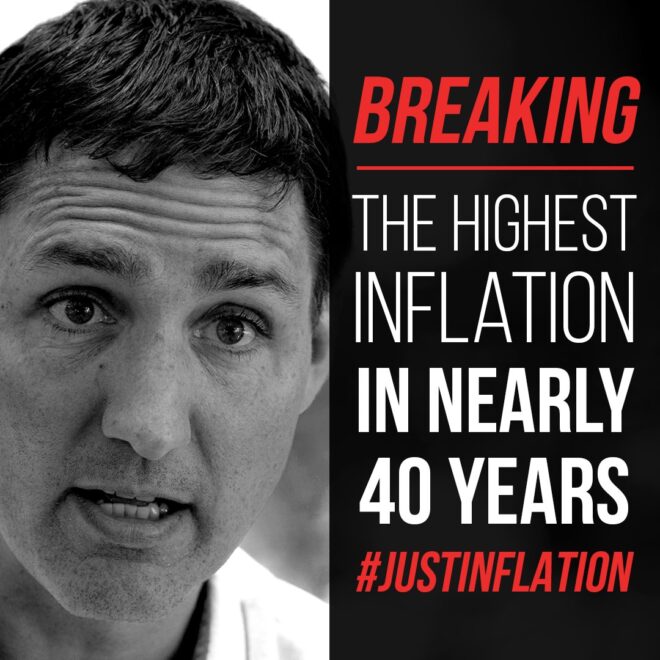
Canadians more concerned about inflation than climate change: government research
This article from True North is somewhat good. Climate crisis [...]

What airlines owe you if your flights are delayed or cancelled
Canadian airports continue to be plagued with massive delays, leading [...]