


Lomborg: Enormous Costs for Minimal Climate Benefit
Bjorn Lomborg recently discussed (the results of) his new website netzerocostbenefit.com. On The Andrew Neil Report, the Danish political scientist gave Britain as an example: it would have to spend £695 billion to get to net zero in 2050, which would result in a global temperature reduction of 0.00376 °C (also see this Clintel article).
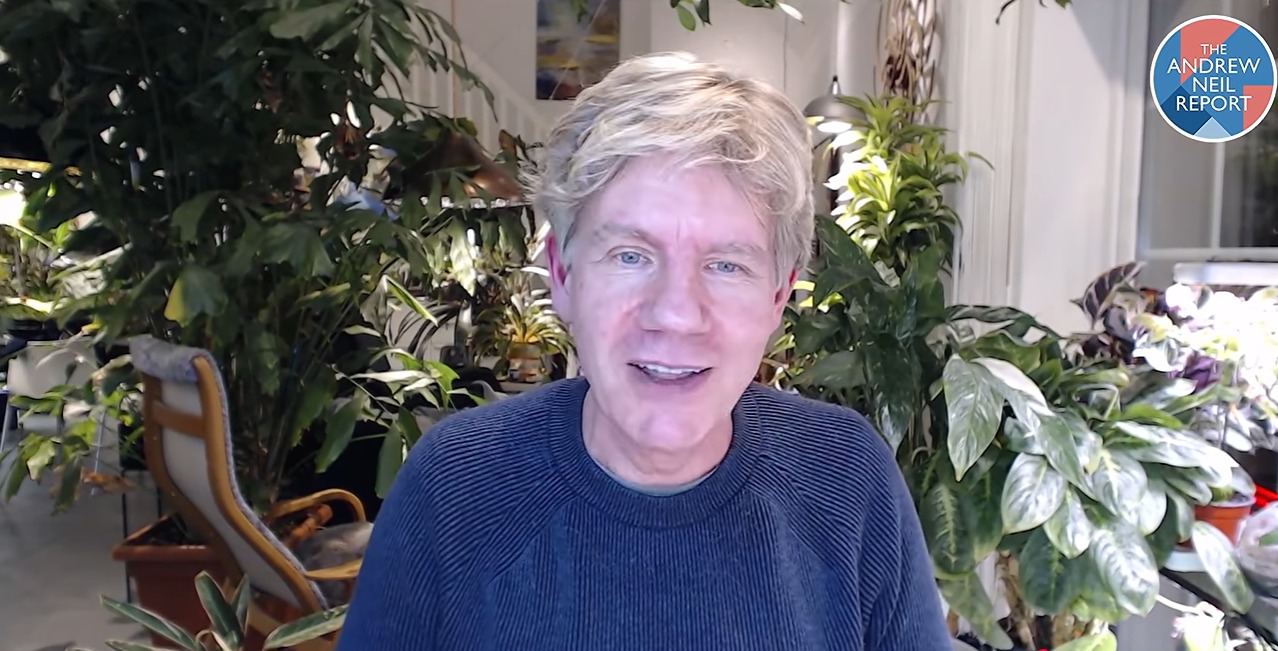
Bjorn Lomborg on The Andrew Neil Report.
Clintel Foundation
Date: 18 November 2026
Bjorn Lomborg argues that governments are spending enormous amounts of money on net zero policies for remarkably little climatic benefit. The new website is designed as a cost-benefit calculator rather than a climate-sceptic alternative to mainstream climate modelling. Lomborg stresses that its temperature calculations use the same basic climate science employed by the UN. For each country, the tool compares the economic cost of pursuing net zero with the reduction in global warming that the policy would produce.
You can see the entire interview below:
The United Kingdom provides a striking example. According to the calculations presented in the programme, achieving net zero by 2050 would cost Britain about £695 billion in present-value terms (also see this Clintel article). Yet the estimated reduction in global temperature would be only 0.00376 °C over the course of the century. The website also estimates that the global climate benefits of Britain’s policy would amount to about £74 billion, resulting in a return of roughly 11 pence for every pound spent.
Lomborg says the temperature calculation is based on the MAGICC climate model, a relatively simple model that has been used by the UN climate process. He compares two scenarios: one representing the expected emissions trajectory under existing policies and another in which Britain reaches net zero. The difference between the two produces the tiny temperature effect. “This is all based on the best science that we have.”
Lomborg’s point is not that climate change does not exist. Rather, he argues that the scale of the proposed response should be judged against the size of the problem and the economic resources being committed to solving it.
The hidden economic cost
The £695 billion figure, Lomborg explains, should not be interpreted simply as the money Britain will hand over to renewable-energy companies. Economic models instead estimate the opportunity cost of having more expensive energy than would otherwise have been available.
Higher energy prices reduce economic growth. Countries do not become poorer in absolute terms, Lomborg argues, but they become less rich than they otherwise would have been. The models used in his analysis suggest that the accumulated loss of economic output from aggressive decarbonisation could amount to several percentage points of GDP, with estimates ranging from about 3% to 18%. Lomborg chooses the middle estimate as the most reasonable.
The £695 billion British figure is therefore a discounted estimate of the economic loss over the century. Without discounting future losses, he says, the figure would approach £3 trillion.
Against this cost, Lomborg places the estimated climate benefit. Drawing on major economic assessments associated with Richard Tol and Nobel Prize-winning economist William Nordhaus, he calculates that Britain’s net-zero policy would produce around £74 billion in global climate benefits.
The important word is global. Britain receives little direct benefit from its own emissions reductions because climate change is determined by global emissions. Britain currently only accounts for roughly two-thirds of one percent of global greenhouse-gas emissions.
Why Lomborg rejects the “cheap renewables” argument
A major part of the interview concerns the claim that wind and solar power are now the cheapest forms of electricity. Lomborg argues that this statement confuses the marginal cost of producing electricity when the wind is blowing or the sun is shining with the full cost of running a reliable electricity system.
His analysis uses electricity-price data from roughly 100 countries. The data, he says, show a clear empirical pattern: countries with high shares of solar and wind do not have cheap electricity. On the contrary, the countries with more intermittent renewable generation tend to have higher electricity prices.
The explanation is the cost of backup. When wind and solar production is low, another source of electricity has to be available. When production is excessive, renewable generation may have to be curtailed. Grid expansion and reinforcement are also necessary because renewable generation is often located far from centres of demand.
Lomborg uses the analogy of a solar-powered car that can only operate when the sun is shining. The car might be extraordinarily cheap to run, but if the owner needs another car whenever it is dark or cloudy, the overall system is no longer cheap.
The same applies to electricity, he argues: consumers end up paying both for intermittent renewable generation and for reliable backup capacity.
Climate change: serious, but not the end of the world
Lomborg also rejects the idea that questioning net zero necessarily means denying climate change. He accepts that global warming is a real problem and notes that mainstream climate models project substantial warming if current policies remain insufficient.
His own model, he says, produces around 2.8 °C of warming from pre-industrial levels, broadly consistent with other estimates discussed in the interview.
But Lomborg distinguishes between saying that climate change is harmful and treating it as an existential catastrophe requiring unlimited spending. He points to the enormous decline in per-person mortality risk from floods, droughts, storms and wildfires over the past century, which he attributes primarily to economic development and greater resilience. “We know from three decades of research, climate change is a problem, but it’s not the end of the world.”
That distinction is central to his argument. Richer societies are generally much better able to cope with climate-related hazards because they can afford stronger infrastructure, better healthcare, air conditioning, flood protection and other forms of adaptation. For Lomborg, therefore, economic growth is not the enemy of climate resilience. It is one of its principal sources.
A political backlash
Andrew Neil asks whether politicians are beginning to realise that net zero has become politically difficult as the costs become more visible. Lomborg says there are signs of a shift in Britain, France, Germany and the United States.
His explanation is straightforward. Climate policy was politically attractive when the costs appeared to be decades away. Politicians could promise to “save the planet” while the immediate financial consequences remained largely invisible. After two or three decades, however, voters are increasingly experiencing high energy prices and the consequences for industry.
Lomborg points to the changing positions of conservative and populist parties in Britain and elsewhere, and to a broader shift among American Democrats away from presenting climate policy exclusively in terms of eliminating fossil fuels. He argues that mainstream parties should respond by abandoning expensive climate policies rather than allowing the issue to become a vehicle for political outsiders.
Lomborg’s alternative: innovation
Lomborg’s proposed alternative is not to abandon climate policy, but to change its focus completely. Instead of forcing society to adopt expensive technologies before they are economically competitive, governments should invest in research and development aimed at making clean energy cheaper than fossil fuels.
He says he worked with 50 leading climate economists, including three Nobel laureates, to identify the most effective ways of spending money on climate policy. Their conclusion was that substantially more public investment should go into energy R&D.
His recommendation is that rich countries spend around 0.1 % of GDP on green-energy research, roughly five times current spending according to the figures cited in the interview. “If we could make green energy cheaper than fossil fuels, we would have solved the whole thing.”
The advantage, Lomborg argues, is that genuinely cheap clean energy would not require governments to force developing countries to adopt it. Countries would switch voluntarily because it made economic sense.
Development as climate policy
The second part of Lomborg’s alternative is economic development. He argues that the world’s poorest populations are also the most vulnerable to climate change because poverty makes people vulnerable to almost every hazard, from disease and hunger to extreme weather.
For much of Africa, he says, the priority is therefore not reducing temperature by a tiny fraction of a degree but achieving economic growth, jobs, better education, less corruption and improved health. “It is not about cutting temperature. It’s about getting people out of poverty.”
He points to China and India as examples of how access to abundant and affordable energy can transform societies. Richer populations are better equipped to cope with climate change, whatever its eventual magnitude.
Lomborg also argues for adaptation rather than assuming that every climate impact must be prevented. The broader lesson, Lomborg argues, is that societies should spend money where it produces the greatest benefit rather than pursuing symbolic reductions in national emissions.
A different climate strategy
The interview ultimately presents Lomborg’s position as a cost-benefit argument rather than a rejection of climate science. His criticism is directed at the assumption that any reduction in emissions is worth almost any economic cost. His website is intended to make that trade-off visible.
For Lomborg, the conclusion is not to do nothing. It is to pursue policies that can eventually make decarbonisation economically attractive, while using economic growth and adaptation to protect people from climate impacts in the meantime.
His final warning is that continuing with today’s approach could produce a political backlash. If governments impose increasingly expensive energy systems while delivering almost imperceptible climatic benefits, voters may eventually reject the entire policy framework.
His alternative is deliberately less dramatic: invest in innovation, make clean energy cheap, allow economic development to continue and adapt rationally to the climate changes that cannot be avoided. “We could do much more good if we spent our money well.”
The article you have just read was made possible by our donors.
Every day, Clintel publishes articles on climate, energy and science. We also translate and share international analyses in multiple languages, produce videos, publish reports and organize conferences and events around the world.
We receive no government funding and rely entirely on the support of our donors. Your support helps us promote independent research and contribute to a more open and balanced debate on climate and energy issues.
Would you like to support our work? Choose the option that suits you best:
• Become a Friend of Clintel – support us with an annual contribution
• Make a recurring donation – provide ongoing support and help us plan ahead
• Make a one-time donation – every contribution helps
Thank you for your support.
more news
Clintel President Václav Klaus speaks in Paris on freedom and climate
The French Association des climato-réalistes is organising a conference on Thursday 3 December featuring Václav Klaus, former President of the Czech Republic and current President of Clintel (see the bottom of the article for registration details). Our esteemed colleagues at the Association des climato-réalistes and at climategate.nl recalled the following prescient commentary by Klaus from 2007 in connection with this event.
A tribute to Bill Nordhaus
William Nordhaus was an American economist, best known for his work in economic modelling and climate change, and a co-recipient of the 2018 Nobel Memorial Prize in Economic Sciences. He passed away on 30 October, aged 85.
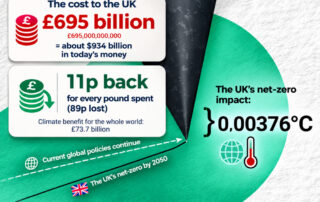
Only £695 billion for 0.00376 °C less warming by 2100
If Britain reaches its Net Zero target in 2050, the world will be 0.00376 °C less warm by 2100. Is that really worth £695 bn?
The post Lomborg: Enormous Costs for Minimal Climate Benefit appeared first on Clintel.
Please consider helping!
Awake Freedom TV On Roku is Broken! 🙂

I could no longer maintain the costs on my own, so I moved the off of a dedicated server which was needed for the TV platform to work. On top of that, I want to build an app Awake Freedom TV app, for mobile phones. We need your help to first resurrect our TV channel, and then build the mobile app. In order to do that, I need a minimum of 800/month on subscription payments. Please help anyway you can with the form below.

Leave A Comment