


A tribute to Bill Nordhaus
William Nordhaus was an American economist, best known for his work in economic modelling and climate change, and a co-recipient of the 2018 Nobel Memorial Prize in Economic Sciences. He passed away on 30 October, aged 85.
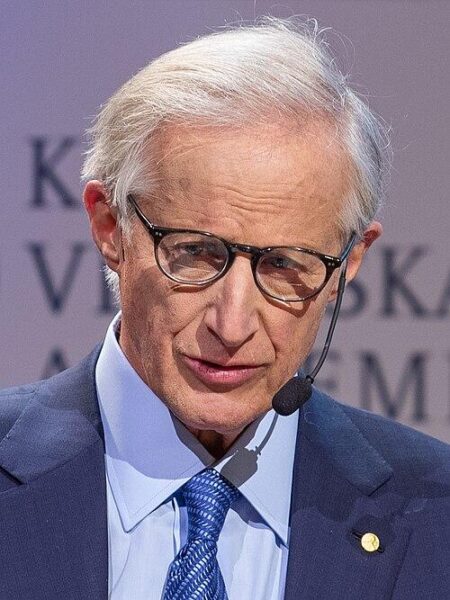
William Nordhaus, Stockholm, 2018. (Photo: Bengt Nyman, CC BY 2.0.)
Richard Tol
Date: 16 November 2026
I first met Nordhaus in the early 1990s at IIASA. We saw or emailed each other irregularly ever since. I was sorry to miss him at Yale in April 2025.
Nordhaus was the external examiner for my PhD, part of which was about building a multi-regional version of his DICE model. I (and others) spent many years trying to prove Nordhaus wrong. It is easy to change the assumptions in an integrated assessment model to argue for rapid greenhouse gas emission reduction. It is much harder to defend such assumptions. My papers on the subject typically conclude that Nordhaus was roughly right.*
Nordhaus is best known for asking a single question: What would a philosopher-queen or the good Duchess of Zhou do about greenhouse gas emissions? The answer annoyed everybody. She would act, to brown dismay, but not nearly as stridently as the greens demanded. From 1975 to 2024, Nordhaus’ optimal carbon tax has always been higher than the actual carbon price. They may not have appreciated it, but Nordhaus was always on the environmentalists’ side — from his energy work in the Carter Administration to the international climate negotiations under Bush the Elder.
Two other aspects of this work are often overlooked. First, DICE was open-access long before it was customary, let alone mandatory, to publish code online. This allowed others to examine the impact of his assumptions.
Second, Nordhaus made climate policy respectable. Nordhaus could not be dismissed as a hippie. He was a professor and provost at Yale, co-author of a major textbook, president of the American Economic Association, impeccably dressed, unfailingly polite, ever judicious. His words mattered in boardrooms and in the Oval Office.
Nordhaus did more than optimal climate policy; in his own words, he was interested in “technological change, environmental accounting, and energy-climate-economic analysis”. Many are fond of his work on the history of light and computing. His paper on political cycles is his most-cited, followed by the Ricardian paper with Mendelsohn and Shaw. The latter pioneered empirical analysis of economic impacts of climate change; previous estimates had relied on calibrated models. In his last message to me, Bill wrote he did not believe the recent econometric papers in this field.
With James Tobin, Nordhaus developed the Measure of Economic Welfare, the first attempt at an inclusive well-being indicator to complement GDP, a key measure of economic activity. That was in 1972. Nordhaus returned to this theme in 1999. They may not know it, but people who argue for a different kind of growth had an early ally in Nordhaus.
Nordhaus was a scholar. He wanted to understand things and transmit his insights to the next generation—hoping they would prove him wrong and he would learn. He preferred to work intensely with a few good younglings—Paul Krugman, Robert Mendelsohn, Zili Yang, David Popp, Ken Gillingham, Lint Barrage. Although he won the Nobel Memorial Prize for developing the tools to analyze first-best environmental policy, he always said an economic policy advisor’s main job is to prevent big mistakes.
*except, of course, the assumption that vulnerability to climate change is independent of per capita income; or the silly backstop in later versions of the model; oh, and don’t get me started on climate clubs.
Richard Tol is a professor of economics at the University of Sussex. He specializes in the economics of energy, environment, and climate. He is ranked among the top 100 economists in the world.
This article was first published on Richard Tol’s Substack on 2 November 2026.
The article you have just read was made possible by our donors.
Every day, Clintel publishes articles on climate, energy and science. We also translate and share international analyses in multiple languages, produce videos, publish reports and organize conferences and events around the world.
We receive no government funding and rely entirely on the support of our donors. Your support helps us promote independent research and contribute to a more open and balanced debate on climate and energy issues.
Would you like to support our work? Choose the option that suits you best:
• Become a Friend of Clintel – support us with an annual contribution
• Make a recurring donation – provide ongoing support and help us plan ahead
• Make a one-time donation – every contribution helps
Thank you for your support.
more news
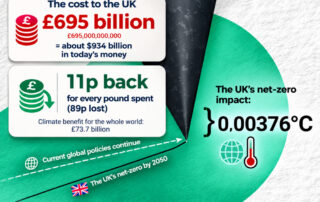
Only £695 billion for 0.00376 °C less warming by 2100
If Britain reaches its Net Zero target in 2050, the world will be 0.00376 °C less warm by 2100. Is that really worth £695 bn?
ICSF/Clintel Lecture: Ireland’s Dangerous Exercise in Wishful Thinking
Ireland’s energy policy has become dangerously unbalanced, according to Kieran O’Brien, former Managing Director of EirGrid. In his recent ICSF/Clintel Lecture, O’Brien argued that the country’s determination to decarbonise has come at the expense of energy security and affordability. “A target without a plan is merely a wish.”

Participant numbers soar at COP31 while financial pledges fall 70%
Despite the big bloat in attendance at COP31, the Big Money is leaving the room, says Jo Nova.
The post A tribute to Bill Nordhaus appeared first on Clintel.
Please consider helping!
Awake Freedom TV On Roku is Broken! 🙂
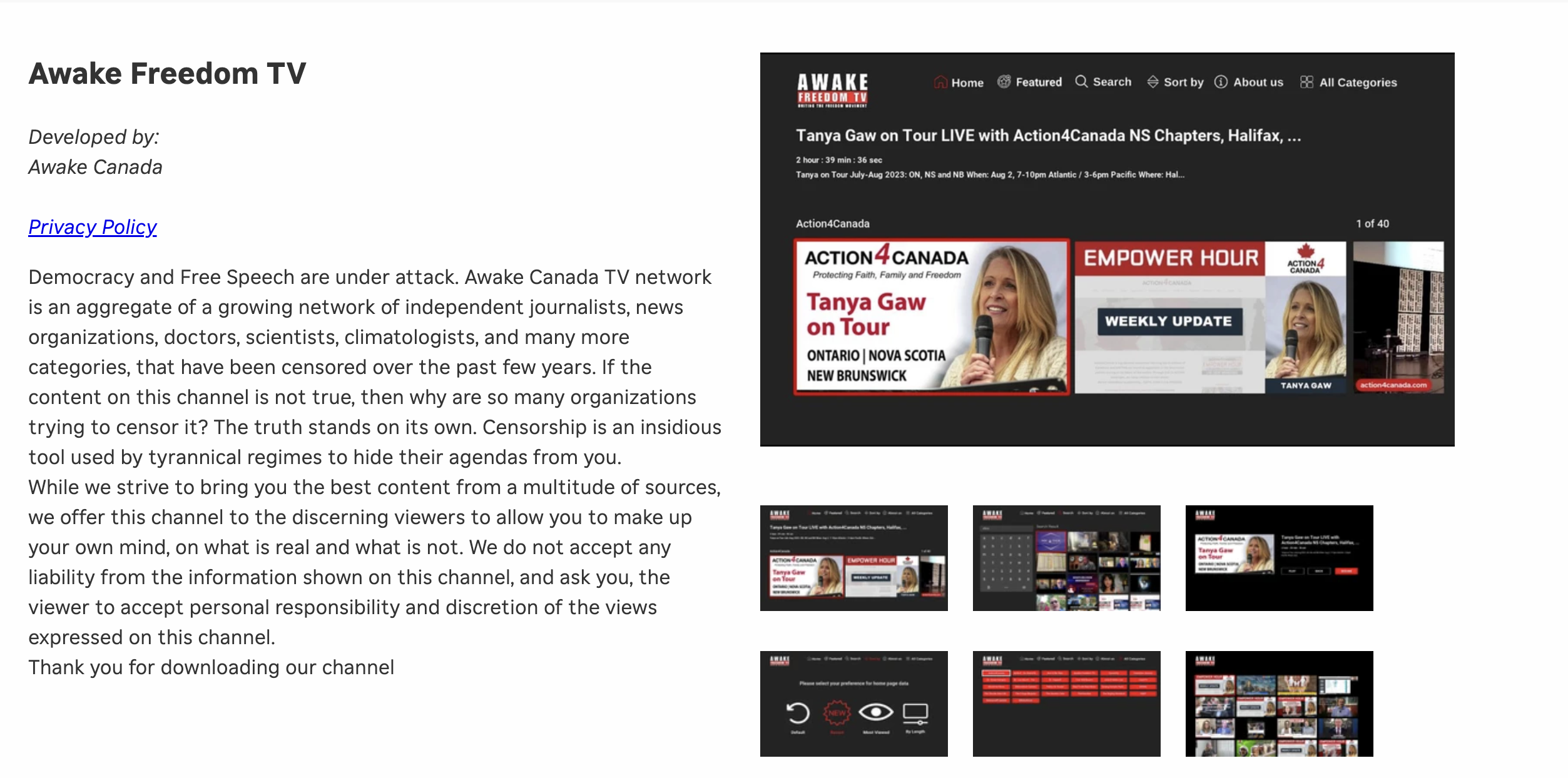
I could no longer maintain the costs on my own, so I moved the off of a dedicated server which was needed for the TV platform to work. On top of that, I want to build an app Awake Freedom TV app, for mobile phones. We need your help to first resurrect our TV channel, and then build the mobile app. In order to do that, I need a minimum of 800/month on subscription payments. Please help anyway you can with the form below.

Leave A Comment