


Roger Pielke Jr.: How RCP8.5 Became the Climate Policy Nightmare
In his second presentation for Clintel on October 11th, Roger Pielke Jr. explained how an extreme emissions scenario, originally designed to explore a possible future, became one of the dominant assumptions in climate research and policy.

Roger Pielke Jr. in his second presentation on October 11th. (Photos: MKFotografie)
Clintel Foundation
Date: 31 October 2026
Climate and policy researcher Roger Pielke’s central argument is that the extreme climate scenario RCP8.5 (now finally officially rejected), was not simply misunderstood by a few researchers: institutional choices helped transform an implausible pathway into a de facto baseline for assessing climate risks, economic damages and the consequences of global warming.
You can see the entire presentation below:
The consequences of the dominance of RCP8.5 have been far-reaching. Research based on RCP8.5 has influenced government assessments, media coverage and policy debates, often giving the impression that the world was heading towards the most extreme outcomes. Pielke argued that the history of RCP8.5 is a warning about what happens when the distinction between a hypothetical scenario and a credible projection is lost.
From a useful tool to a misleading baseline
Pielke began by distinguishing between scenarios designed to explore possibilities and those intended to represent plausible futures. Scenarios can help researchers investigate what might happen under different assumptions. But their usefulness depends on how they are interpreted and applied. An extreme scenario may be valuable for testing a climate model or exploring a worst case without being a realistic expectation of what the world will actually do.
The earlier Special Report on Emissions Scenarios, published in 2000, followed this principle. It presented 42 scenarios without designating one as the reference case or baseline. As Pielke explained, they were intended to represent different possible developments depending on choices made by societies.
The subsequent development of the Representative Concentration Pathways (RCPs), however, created a different situation. These pathways were initially designed to provide inputs for climate modelling. They were not intended to become universal forecasts for governments, financial institutions and economic assessments.
Pielke described a fundamental problem in the way the research community approached these scenarios. There was an incentive to demonstrate the practical relevance of climate research, because that helped justify funding and policy attention. This is the “original sin” behind the later confusion over the role of scenarios.
The problem was not simply that extreme scenarios existed. It was that the distinction between exploring a possibility and describing the future became blurred.
How RCP8.5 acquired the status of business as usual
RCP8.5 represents a very high-emissions pathway. It became particularly influential because it was increasingly treated as a “business as usual” scenario: a description of where the world would end up without major changes in direction.
According to Pielke, this was not what the original framework had intended. Several pathways were initially supposed to serve as baselines, but somewhere along the way this distinction was lost. RCP8.5 emerged as the dominant reference scenario, despite warnings that the different pathways were built from different modelling frameworks and could not simply be treated as interchangeable versions of the same future.
Pielke highlighted the role of the climate-modelling community in this process. The Coupled Model Intercomparison Project (CMIP) helped determine which scenarios would be prioritised for use by climate researchers. RCP8.5 was singled out as a reference scenario even though, as he recounted, the scientific community had been warned against doing so.
This institutional decision helped explain why RCP8.5 became so common in published research. Scientists using it were not necessarily making an explicit judgement that it was the most likely future. But once the pathway was treated as a baseline, subsequent studies could adopt it without revisiting its assumptions.
In other words, the scenario’s influence was not simply the result of its scientific merits. Its institutional status helped determine how it was used.

An extreme pathway that diverged from reality
Pielke argued that the assumptions behind RCP8.5 were already very difficult to defend and became increasingly implausible as real-world energy developments unfolded.
One of the clearest examples is coal. RCP8.5 projected an eightfold increase in coal energy use over the course of the century—around five times the level of proven coal reserves cited in Pielke’s presentation. Yet coal’s share of the global energy mix had already begun to decline by the time the RCPs were published.
The scenario also assumed that coal would be used on a large scale to produce liquid fuels for vehicles, replacing petroleum and diesel. At the same time, it projected shrinking shares for technologies such as wind and nuclear power. These assumptions increasingly diverged from the direction of actual energy development.
Pielke credited research initiated by Justin Ritchie with demonstrating the implausibility of the pathway. In his view, the problem should have been recognised much earlier, rather than allowing RCP8.5 to remain a standard reference point for years. RCP 8.5 was never plausible.
The consequences of this mismatch extended beyond climate modelling. Research based on RCP8.5 was used to assess extreme climate impacts, economic damages and the social cost of carbon. Pielke noted that much of the damage calculated in various social-cost-of-carbon methodologies occurs in projections involving more than 3°C of warming by 2100. That raises an important question: what happens to these estimates if the world does not follow such an extreme emissions pathway?
The concern is not that high-impact scenarios should never be studied. Rather, a scenario designed to examine an extreme possibility should not automatically become the central assumption behind economic and policy decisions.
Why the scenario became so influential
Once RCP8.5 had become a standard reference point, it acquired a momentum of its own. Researchers could build new studies on previous work, while journals, universities and the media had incentives to pay attention to dramatic findings. A study projecting severe consequences under an extreme scenario could attract more attention than one exploring a less alarming but more plausible future.
The result, Pielke argued, was a feedback loop. RCP8.5 became common in the literature partly because it had been designated as a reference scenario; its widespread use then helped reinforce the impression that it was an appropriate representation of business as usual.
The scenario also featured prominently in major assessments. Pielke pointed to the US National Climate Assessment, in which RCP8.5 played a substantial role. Projections of large economic losses by the end of the century subsequently received prominent media attention. When the assumptions behind those projections were not adequately explained, audiences could easily mistake a conditional outcome for a likely forecast.
The same problem affected the broader scientific literature. Pielke noted that extreme scenarios continued to appear in thousands of papers even after their weaknesses had become increasingly apparent. He also highlighted the difficulty of correcting a narrative once it has become established: researchers, policymakers and journalists may continue using familiar assumptions long after the original rationale for them has weakened.
A correction that has not yet reached the public
Pielke welcomed the recent move away from treating the most extreme emissions pathways as plausible reference cases. But he warned that changes within scientific assessments do not automatically translate into changes in public understanding or government policy.
Older studies remain available and continue to be cited. Local authorities and other organisations may still use assessments based on outdated scenarios. Meanwhile, dramatic headlines can survive long after the underlying assumptions have been revised.
For Pielke, the lesson is that scenario selection must be more transparent and regularly reassessed against developments in the real world. Extreme pathways can still serve a purpose in scientific exploration, but they should be clearly identified as such. Policymakers need to know whether an assessment describes a credible expectation, a conditional possibility or an extreme stress test.
The issue is also one of accountability. A relatively small group of experts can make decisions about scenarios that subsequently influence climate research, financial regulation and public policy around the world. Pielke questioned whether the governance of this process has received enough scrutiny, given the consequences of treating a particular pathway as a baseline.

The climate emergency debate: Pielke’s conclusion
During the question-and-answer session, the discussion broadened from scenarios to the political debate over climate change. Pielke observed that, in recent years, a more pragmatic approach to energy and climate policy had gained ground. Energy security and affordability were increasingly difficult for governments to subordinate to climate objectives, particularly in Europe.
Pielke also reflected on the debate over whether society faces a climate emergency—and therefore needs to place climate objectives above other priorities. In his assessment, that debate has been won by those who reject that framing, including people and organisations such as Clintel. “I think that battle is over. It’s been won.”
This should not be confused with a claim that climate change is not occurring or that it has no consequences. Pielke’s argument was about the political narrative and the priorities that should guide policy.
He advocated a more constructive focus on ensuring that everyone has access to secure, affordable and abundant energy, while retaining climate policy as one consideration among several.
The history of RCP8.5 illustrates why that distinction matters. A scenario intended to explore an extreme future acquired the authority of a baseline and helped shape decades of research and public debate. Pielke’s central warning was not against studying worst cases, but against confusing them with realistic expectations. Better climate policy, he argued, requires both sound science and a clear understanding of what the evidence actually says about the future.
The slides of this presentation: PowerPoint Presentation
The first presentation for Clintel: Roger Pielke Jr.: Don’t Accept the Climate Sceptic Label
Marcel Crok’s interview with Pielke: Roger Pielke Jr.: “I would scrap the temperature targets”
The article you have just read was made possible by our donors.
Every day, Clintel publishes articles on climate, energy and science. We also translate and share international analyses in multiple languages, produce videos, publish reports and organize conferences and events around the world.
We receive no government funding and rely entirely on the support of our donors. Your support helps us promote independent research and contribute to a more open and balanced debate on climate and energy issues.
Would you like to support our work? Choose the option that suits you best:
• Become a Friend of Clintel – support us with an annual contribution
• Make a recurring donation – provide ongoing support and help us plan ahead
• Make a one-time donation – every contribution helps
Thank you for your support.
more news

Halloween is saved: pumpkins are not endangered by climate change
CBC’s ‘Climate Change’ spook story about Canadian pumpkin harvests is all trick and no treat. CBC should have had done a little more homework and showed more discernment when making claims about long term climate change based on two years of pumpkin harvests, says Linnea Lueken.

No Evidence Extreme Weather Events Are Becoming More Frequent or Intense: (6) Wildfires
In a series of articles physicist Ralph B. Alexander examines whether weather extremes are becoming more frequent or intense. Following his previous article on tornadoes, this final installment focuses on wildfires.
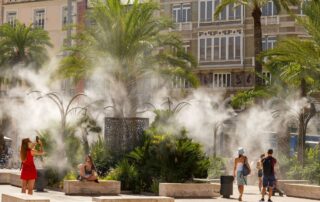
Claim of 50,000 heat-related deaths not based on facts
Once again, the media were reporting on heat-related deaths. As many as 50,000 people were said to have succumbed to the heat in European cities this summer. The media reported the news uncritically. However, a fact-check by Marcel Crok reveals that the researchers did not use any mortality figures at all in this study and that assumptions were piled upon assumptions.
The post Roger Pielke Jr.: How RCP8.5 Became the Climate Policy Nightmare appeared first on Clintel.
Please consider helping!
Awake Freedom TV On Roku is Broken! 🙂
I could no longer maintain the costs on my own, so I moved the off of a dedicated server which was needed for the TV platform to work. On top of that, I want to build an app Awake Freedom TV app, for mobile phones. We need your help to first resurrect our TV channel, and then build the mobile app. In order to do that, I need a minimum of 800/month on subscription payments. Please help anyway you can with the form below.

Leave A Comment