


Roger Pielke Jr.: “I would scrap the temperature targets”
The international community should abandon the Paris Agreement’s temperature targets of limiting global warming to well below 2 °C, says independent researcher and fellow of the American Enterprise Institute Roger Pielke Jr, in a recorded interview with Clintel Director Marcel Crok. That would open the door to a more pragmatic approach that would avoid sacrificing economic prosperity.
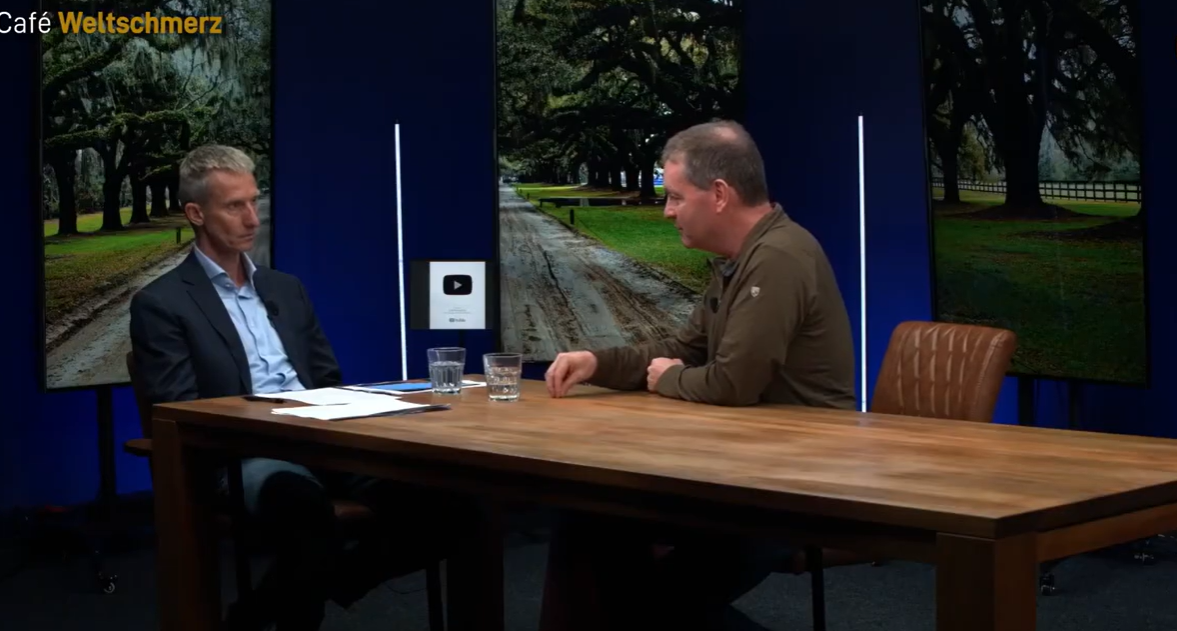
Clintel Director Marcel Crok interviewing Roger Pielke Jr.
Marcel Crok
Date: 27 October 2026
On Tuesday 13 October 2026 I spoke with Roger Pielke Jr., senior fellow at the American Enterprise Institute, in the studio of Café Weltschmerz in Schiphol-Rijk. Pielke, known for books such as The Honest Broker and The Climate Fix and for his Substack The Honest Broker, had just spoken at a Clintel event in Driebergen (first lecture here). The interview (here on the Clintel Youtube-channel) covered the tension between “climate is serious” (Pielke) and “there is no climate emergency” (Clintel), the role and functioning of the IPCC, his own experiences in academia, and above all the shift from climate to energy as the dominant policy question.
Serious, but no emergency
Pielke starts his talks always with the statement that climate change is real, serious and deserves serious attention for both mitigation and adaptation. This sits uneasily with Clintel’s slogan “There is no climate emergency.” He acknowledges the tension but sees it largely as a matter of semantics. “Climate change is real but it’s not an emergency or the apocalypse, I think that’s a fair reading of the science.”
In the United States the Biden administration often spoke of an “existential threat.” Those terms are hard to find in the IPCC reports. Pielke notes that the apocalyptic framing – Greta Thunberg’s “the world is going to end in 2030” or Al Gore’s scenarios – is increasingly marginal. “I do see those increasingly as fringe elements. They will always be with us.” In the real world of energy policy, few leaders in important decision-making roles act as if there is an acute emergency.
For Pielke the seriousness of climate change is mainly about uncertainty. Humans affect the climate system through fossil fuels, other greenhouse gases, aerosols and land-use change. We are altering the energy balance of the Earth system and do not know the consequences with certainty. Climate change is not a heart attack but more a long-term medical condition that has to be managed. The biggest risks, in his view, do not lie in sudden extreme events (hurricanes and floods show no clear global increase) but in slower changes in agriculture, ecosystems and the oceans.
Energy prices as a political thermostat
A recurring theme in his work is what Pielke calls the “iron law of climate policy”: when climate policy and the economy collide, the economy always wins. The idea of making fossil fuels more expensive to accelerate the transition has political limits. “We are not going to decarbonize our energy system by making fossil fuels more expensive. It will hit a political breaking point.”
“Energy prices are a bit of a thermostat politically.” People will pay higher prices for a time, especially in wealthy countries, but every place has its limit. This, he argues, helps explain the rise of populism in many places. In Europe and the United States, the carbon intensity of the economy (expressed as the amount of CO2 emitted per unit of GDP) has continued to decline, without a clear acceleration over the past sixty years. Pielke therefore sees no clear acceleration attributable to climate policy. Europe and the US perform roughly the same on that metric, despite differences in rhetoric.
IPCC: necessary, but flawed
Pielke believes we need the IPCC as an assessment body. Without such assessments people simply choose the science they like. “We have to have it. If it’s flawed and I’m happy to say: it is flawed, we should fix it, not get rid of it.” He therefore criticized the Trump administration’s decision not to participate. “The United States should have a seat at the table, not least because it holds a large share of the world’s relevant expertise.”
The shortcomings are real. The three working groups are largely islands; chapters work fairly independently. That makes a selective reading of the literature easy. Pielke points to examples of cherry-picking on the damage from extreme weather. He advocates “science arbitration”: experts with different views around one table, including sceptics. The Climategate emails showed attempts to keep certain work out of the IPCC. “That’s a big problem.” Broader expertise – on scenarios and economics as well – strengthens the process.
From university to AEI
Pielke’s own career illustrates the politicization of the climate debate. Before 2013, invitations to testify came only from Democrats; from 2013 onwards, only from Republicans. His message hardly changed. “It’s the parties that have moved.”
After public criticism from Obama’s science adviser John Holdren and a subsequent investigation prompted by Congressman Raúl Grijalva, the university effectively abandoned him, Pielke says. Over time, he lost his classes and his office and was relocated to a tiny, almost windowless closet that was later filled with empty file cabinets for “storage.” He found a new outlet in sports governance research, but the university later also closed the institute he had helped build. As Pielke later put it: “I don’t really feel like I’m leaving the university. The university left me.” At the American Enterprise Institute he found the opposite: “I have more academic freedom at the think tank than I felt like I had at the university.”
What brought him back to climate work was above all the research on scenarios. A 2017 paper by Justin Ritchie and Hadi Dowlatabadi on climate scenarios convinced him it was important. Since then he has focused strongly on scenarios and his work has led to the demise of the extreme RCP8.5 scenario.
Advice to Europe and the role of technology
If Ursula von der Leyen asked him for advice, Pielke would start with the observation that targets alone do not accelerate decarbonisation. “Targets don’t do that. Technologies do.” Phasing out coal is low-hanging fruit: coal accounts for roughly 40 percent of global CO₂ emissions. Replacing it with gas, nuclear or other options delivers measurable progress in carbon intensity. European leaders should focus more on the big picture; yellow vests will appear if energy becomes too expensive and de-industrialisation continues.
Wind and solar have a role, but not a major one. Solar is promising where storage is possible; wind has a large spatial footprint and practical difficulties. “They will play a role but it won’t be the major role.” He is more positive about nuclear, especially now that countries such as Germany (Merz) are acknowledging that the nuclear phase-out was a mistake.
Mitigation and adaptation must not be treated as opponents. “The minute that we have mitigation and adaptation as opponents that’s bad policy.” Smart mitigation policy decarbonises the economy and makes us wealthier at the same time, thereby strengthening adaptive capacity. Wealth, technology and growth are essential.
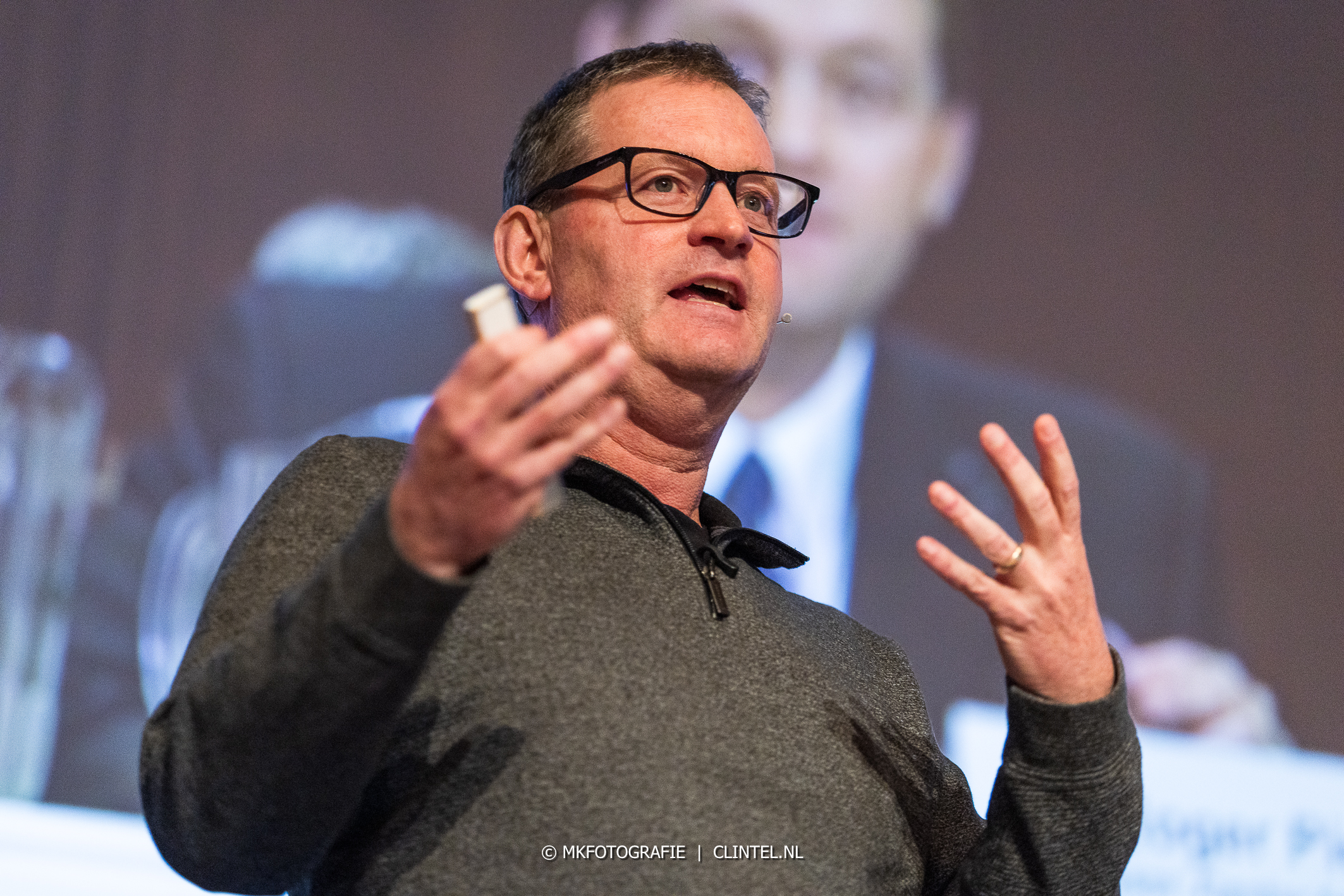
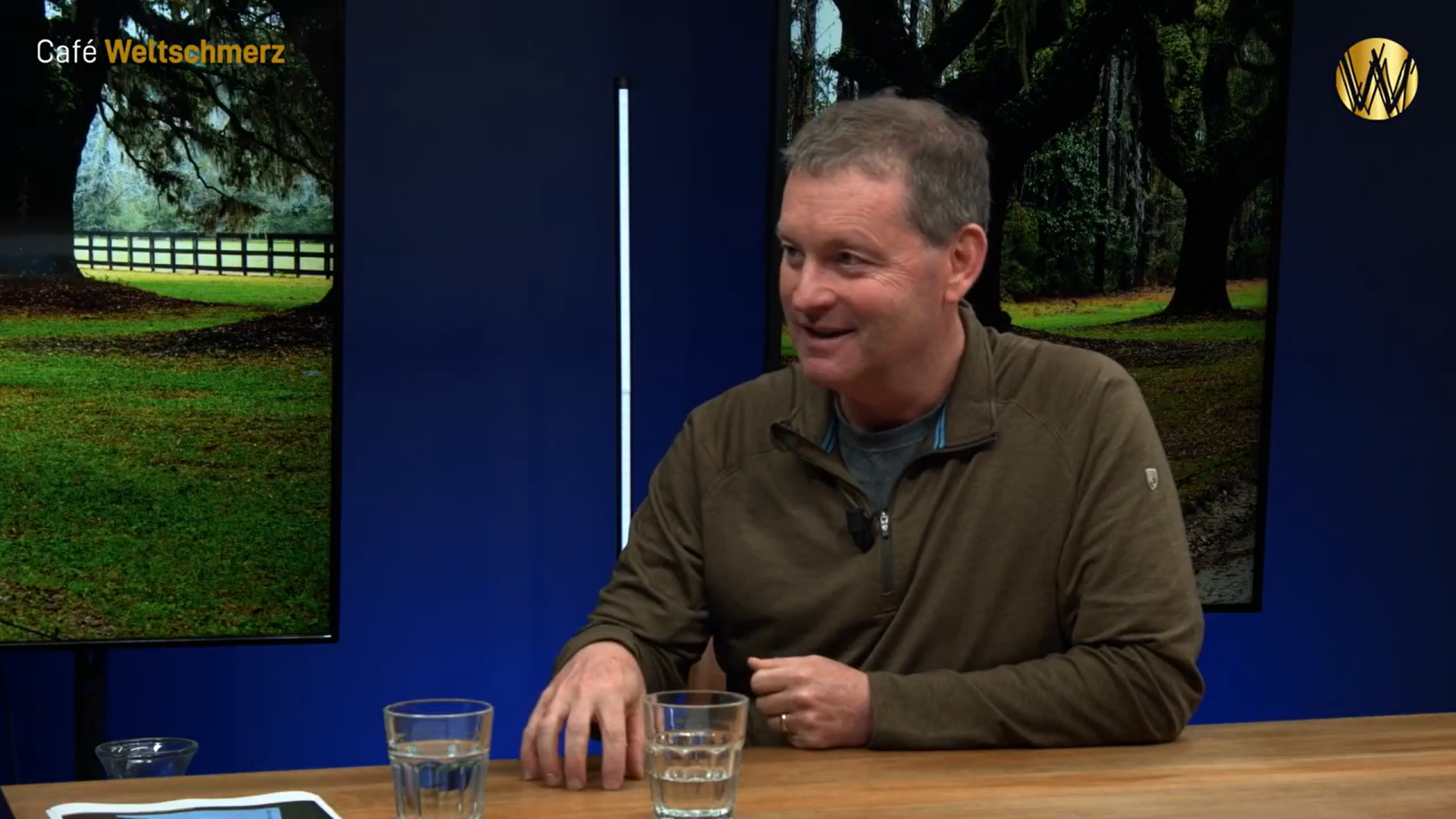
Pielke during his first lecture for Clintel on October 11th. (Photo: MKFotografie)
Optimism and the reversal of the umbrella
For the first time in many decades Pielke is optimistic about energy policy around the world. Japan is reconsidering nuclear power after Fukushima, while Australia is confronting its dependence on imported fuels. He believes climate policy is moving onto a better track.
“Energy is the umbrella and climate is underneath. It used to be climate was the umbrella, energy was underneath. Things have turned around.”
Scrap temperature targets
Pielke would scrap temperature targets such as 1.5 or 2 degrees. They are not meaningful policy goals: “It doesn’t tell you what we need to do in the real world. It’s an outcome.” Better to focus on the direction and rate of decarbonisation, measured by carbon intensity and driven by technology. “I’m much more interested in the direction of travel and the rate of travel, rather than net zero by… Pick any time… Which doesn’t mean very much.”
The conversation ended with Pielke’s current projects: dashboards that democratise climate data, an online course, and a sequel to The Honest Broker. The tensions between science and policy will not disappear, but they also offer a chance to do better.
This interview is part of Roger Pielke’s visit to the Netherlands. You can already watch the first lecture he held for Clintel on October 11th; his second lecture will follow soon.
The article you have just read was made possible by our donors.
Every day, Clintel publishes articles on climate, energy and science. We also translate and share international analyses in multiple languages, produce videos, publish reports and organize conferences and events around the world.
We receive no government funding and rely entirely on the support of our donors. Your support helps us promote independent research and contribute to a more open and balanced debate on climate and energy issues.
Would you like to support our work? Choose the option that suits you best:
• Become a Friend of Clintel – support us with an annual contribution
• Make a recurring donation – provide ongoing support and help us plan ahead
• Make a one-time donation – every contribution helps
Thank you for your support.
more news
Ideologues try a grid powered only by “renewables”
The island of El Hierro only has about 11,000 people, but in 2008 it set out to show the world how to do a full transition to an electric system powered only by wind turbines backed up by a hydro-electric energy storage system. Francis Menton wonders what has happened since.

The analogy between Chairman Mao and current Western leaders
It is impossible not to notice the analogy between the events that led to China’s Great Famine in 1958-1962 and the ongoing energy disaster being imposed on various U.S. states and other Western countries by an equally ignorant clique of political ideologues, says Francis Menton.

Climate Splits Voters by 51 Points, but Economy Ranks Higher
Among voters backing Democratic House candidates, 66% still call environment and climate policy very important. Among Republican backers, 15% do, says Charles Rotter.
The post Roger Pielke Jr.: “I would scrap the temperature targets” appeared first on Clintel.
Please consider helping!
Awake Freedom TV On Roku is Broken! 🙂
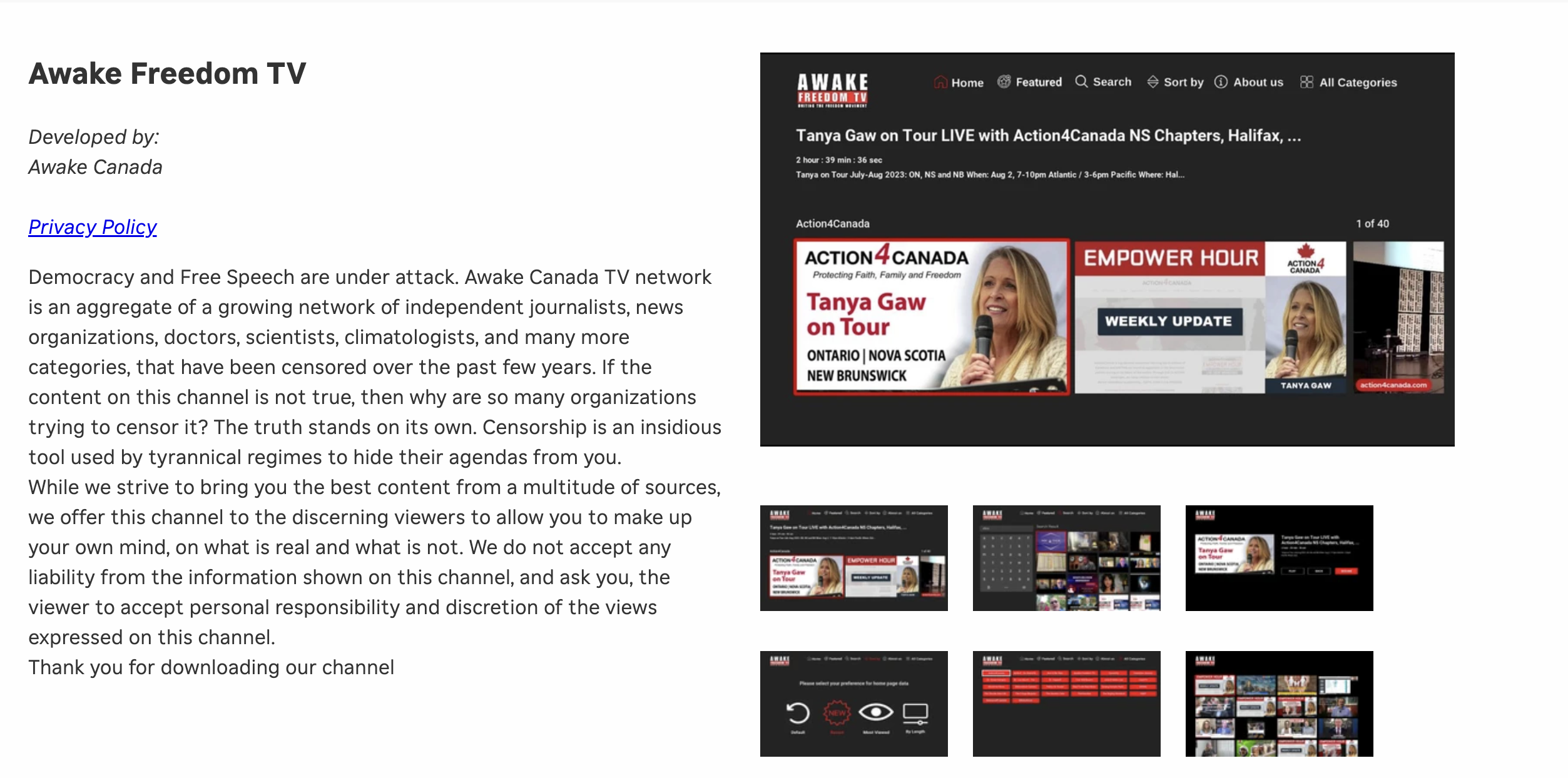
I could no longer maintain the costs on my own, so I moved the off of a dedicated server which was needed for the TV platform to work. On top of that, I want to build an app Awake Freedom TV app, for mobile phones. We need your help to first resurrect our TV channel, and then build the mobile app. In order to do that, I need a minimum of 800/month on subscription payments. Please help anyway you can with the form below.

Leave A Comment