“Svensmark’s research must continue”
Henrik Svensmark has lost his position at the Technical University of Denmark (DTU), and the research field he helped establish is being significantly downgraded. Now private donors, companies, philanthropic foundations and research funders around the world have an opportunity to demonstrate whether they genuinely support scientific freedom – including research where the politically convenient answer is not known in advance, says Karl Iver Dahl-Madsen.


Henrik Svensmark, a still taken from the documentary “Climate: The Movie”
Karl Iver Dahl-Madsen
Date: 22 August 2026
I am genuinely outraged by the treatment of Henrik Svensmark.
Here we have an internationally recognized scientist who has spent almost 30 years investigating one of the most interesting hypotheses in climate science, yet he has lost his position at DTU while the research program he helped pioneer is being substantially reduced. One could be forgiven for suspecting that modern research systems have ample money for projects that are safe, fashionable and unlikely to upset anyone, but become strangely hesitant when confronted with questions that might actually change our understanding of the world.
The important issue now, however, is not to conduct an endless post-mortem on Svensmark’s employment at DTU. The important issue is to ensure that the research continues, which means securing funding, equipment, collaborators and a new scientific environment in which the work can be carried forward.
Otherwise, an entire research program risks disappearing, not because the hypothesis has been disproved, but because the money and institutional backing have disappeared.
That would be scientifically foolish and economically irresponsible.
What is the research about?
Svensmark’s basic idea can be explained without a PhD in physics. Earth is constantly bombarded by cosmic rays from space, and these rays create electrically charged particles in the atmosphere that may help tiny airborne particles grow. Under the right conditions, water vapour can then condense around them, allowing these particles to develop into cloud condensation nuclei – in practical terms, some of the seeds from which clouds are formed.
Clouds matter because they influence the Earth’s temperature in several ways. They can reflect incoming sunlight back into space, while also trapping heat that would otherwise escape. At the same time, solar activity can affect the amount of cosmic radiation reaching the atmosphere. This creates a plausible physical chain linking solar activity, cosmic rays, cloud formation and, ultimately, the Earth’s temperature.
Several links in that chain have been demonstrated through experiments and observations. The great unresolved question is how powerful the total effect is in the real atmosphere.
Svensmark has therefore not delivered a final answer to the question of how much solar activity and cosmic radiation contribute to modern temperature changes. But neither has his hypothesis been falsified, and that distinction is crucial. A hypothesis that remains physically plausible and empirically testable should not be abandoned merely because it is inconvenient or unfashionable.
Science does not determine whether a hypothesis is right or wrong by a show of hands. It does so by testing it as hard as possible.
The next decisive step
The next step should be to incorporate the Svensmark mechanism into a global climate model so that the full chain is represented: from solar activity and cosmic radiation, through aerosol formation and cloud processes, to the resulting effect on temperature. The model results can then be compared with the wealth of observations that already exists.
If the modelling shows that the mechanism has little climatic importance, we will have learned something important and can narrow the range of plausible explanations for natural climate variability. If, on the other hand, it shows that the effect is substantial, the implications could be much larger and could force a reconsideration of how some natural climate influences are represented.
Either result is scientifically useful. Closing down the research and leaving the question unanswered is not.
The consequences extend far beyond the corridors of universities. Climate and energy policies involve enormous sums of money and influence energy prices, investment decisions, industrial competitiveness, employment and the living standards of ordinary people. It is therefore not some obscure academic detail whether climate models correctly represent the major natural influences on the climate system.
I have described the proposed project and its funding requirements in more detail on my blog. The work will require scientists, modelling capacity and several years of financing. That is not free, of course, but set against the staggering sums spent internationally on climate and energy policy, the cost is modest to the point of being almost trivial.
Svensmark is a strong scientist
Henrik Svensmark is not a researcher whose work sits unread in some academic archive. Measured by the conventional criteria that the scientific community itself uses – publications, citations, international impact and interest in individual papers – he remains a strong and highly relevant scientist.
Several of his recent papers have ranked among the most widely read publications at the international scientific publisher Wiley. A paper on supernovae and the burial of organic carbon ranked among the top ten per cent most downloaded papers in Geophysical Research Letters. A later paper examining the relationship between supernovae and biodiversity on Earth became one of the most widely read papers in Ecology and Evolution, and in 2025 Svensmark received another “Top Viewed Article” distinction for research on the formation of condensation nuclei in marine clouds.
One of his papers has been accessed or downloaded more than 8,000 times and achieved an Altmetric score of 330.
None of this proves that every Svensmark hypothesis is correct, nor should it. Science is not a popularity contest, and a heavily downloaded paper can still be wrong. But these figures make it rather difficult to argue that his research is irrelevant, exhausted or without international interest.
There is, therefore, something distinctly absurd about a research program being dismantled in Denmark at the very moment when researchers and readers around the world continue to read, discuss and highlight the work.
Research should not always be comfortable
Around the world, enormous foundations, philanthropic organizations and research funds declare that they want to support outstanding, innovative and high-impact science. They speak of intellectual courage, discovery, breakthrough research and the willingness to take risks.
Here is an opportunity to prove that they mean it.
The problem is certainly not uniquely Danish. Too much research funding everywhere is channeled towards projects designed so carefully around prevailing political and academic fashions that no one on a grant committee is likely to feel uncomfortable. Applications contain the right vocabulary, address the right priorities and promise results that everybody can safely applaud.
The result can become a kind of academic confirmation industry: another project that moves a decimal point, confirms what most people already expected and gives the researchers another entry on their CV. Such research may be technically impeccable and professionally conducted, but that does not necessarily mean that it advances human knowledge very far.
Major scientific breakthroughs rarely emerge from the safest part of the intellectual landscape. They tend to come when someone asks a question others have overlooked, notices a relationship that others have dismissed, or insists on investigating something that a comfortable majority would prefer to regard as settled.
Svensmark’s project is risky in precisely that useful scientific sense. The result is not known in advance. Some will dislike the question, and some may even become angry because it is being asked at all. That is not a reason to avoid the research. It is one of the reasons why the research is interesting.
The potential reward is considerable. A proper test of the mechanism could either show that its climatic significance is small, thereby closing an important scientific question, or it could reveal that natural solar-related processes matter more than presently assumed in some climate assessments.
Either way, the result would be valuable.
If research of this kind is not a task for ambitious scientific philanthropy, what is?
Many small streams – and preferably one large one
Work is under way to establish an international crowdfunding campaign and a durable organizational framework around the research, but what is needed now is not merely money. We also need people who can open doors, make introductions and bring the project to the attention of those who have both the resources and the courage to support it.
If you know someone at a major philanthropic foundation, a family office, an international research fund, a large company or among private individuals with the means to finance serious independent science, contact them. Particularly valuable are people who understand that worthwhile research does not come with a guarantee that the result will be ideologically convenient.
Those able to contribute personally are also welcome. The project does not have to begin with a billionaire, a private jet and a castle in Scotland. A large number of smaller donations can help retain expertise, staff and equipment while permanent financing is being established, and in a project of this kind continuity matters. Once a research environment is dismantled, it is much harder and more expensive to rebuild.
We are therefore looking for major commitments, smaller donations, introductions to foundation boards and family offices, expertise in international science funding, institutional partners and assistance with crowdfunding. Those wishing to contribute funding, contacts or practical experience can contact Klimarealisme directly.
There is also a broader challenge here for the international philanthropic community. Foundations in the United States, Europe, Britain, Canada, Australia, Asia and elsewhere manage billions of dollars and explicitly claim that they exist to support science, discovery, intellectual freedom and human progress.
Some of them will no doubt regard this project as too controversial. Fine. We do not need all of them.
We need a handful with courage.
Somewhere in the global philanthropic world there must still be people who understand that the purpose of financing science is not merely to fund conclusions we already like.
This is not about believing Svensmark
This appeal is not another invitation to an endless climate debate, nor does it require anyone to agree with Henrik Svensmark in advance. I am not asking donors to finance a predetermined conclusion or to declare allegiance to a particular view of climate science.
I am asking them to finance a rigorous test of an important, physically plausible and testable scientific hypothesis.
That is the whole point of scientific freedom.
Henrik Svensmark has spent most of his professional life developing this line of research. That such an accomplished and original scientist cannot automatically retain the research environment and funding needed to take the next decisive step is, frankly, a disgrace.
So forget the polite nodding. Call the wealthy uncle. Write to the foundation board. Contact the family office. Talk to the entrepreneur. Send this article to the person who can actually open a door.
Somewhere in the world there are donors who still understand that genuinely independent research sometimes has to make people uncomfortable.
We only need to find them.
This article was published first, in Danish, in Kontrast on 6 August 2026: Svensmarks forskning skal videreføres.

Karl Iver Dahl-Madsen
Karl Iver Dahl-Madsen is an independent consultant (owns Dahl-Madsen ApS), chairman of the board of the Danish climate-sceptical association Klimarealisme (Climate Realism), and a frequent commentator/debater in Danish media on climate policy, energy, and environmental issues. More: https://klimarealisme.dk/
The article you have just read was made possible by our donors.
Every day, Clintel publishes articles on climate, energy and science. We also translate and share international analyses in multiple languages, produce videos, publish reports and organize conferences and events around the world.
We receive no government funding and rely entirely on the support of our donors. Your support helps us promote independent research and contribute to a more open and balanced debate on climate and energy issues.
Would you like to support our work? Choose the option that suits you best:
• Become a Friend of Clintel – support us with an annual contribution
• Make a recurring donation – provide ongoing support and help us plan ahead
• Make a one-time donation – every contribution helps
Thank you for your support.

more news

How Roger Pielke Jr. Became Voldemort in Climate Science
Climate scientist and public-policy scholar Roger Pielke Jr. argues that the climate debate has become increasingly detached from the underlying evidence. In a wide-ranging interview on the Love Journalism show, Pielke discussed extreme weather, climate scenarios, decarbonisation, energy policy, political polarisation, journalism and his transition from academia to becoming one of Substack’s most widely read climate writers.
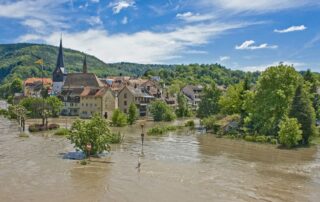
No Evidence Weather Extremes Are Becoming More Frequent or Intense: (3) Floods
In a series of articles on extreme weather attribution, physicist Ralph B. Alexander examines whether observational evidence supports claims that weather extremes are becoming more frequent or intense. Following his previous article on droughts, this installment focuses on floods.
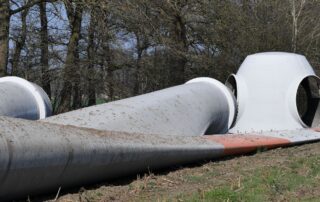
The Biggest Garbage Heaps in Human History
So much for the lies about clean, renewable, sustainable energy. Where will all the trash go? Cumulative global wind garbage (blades only) is projected to reach 200,000,000 tons by 2050 and cumulative global solar trash, 78,000,000 tons, says Paul Driessen.
The post “Svensmark’s research must continue” appeared first on Clintel.
Please consider helping!
Awake Freedom TV On Roku is Broken! 🙂
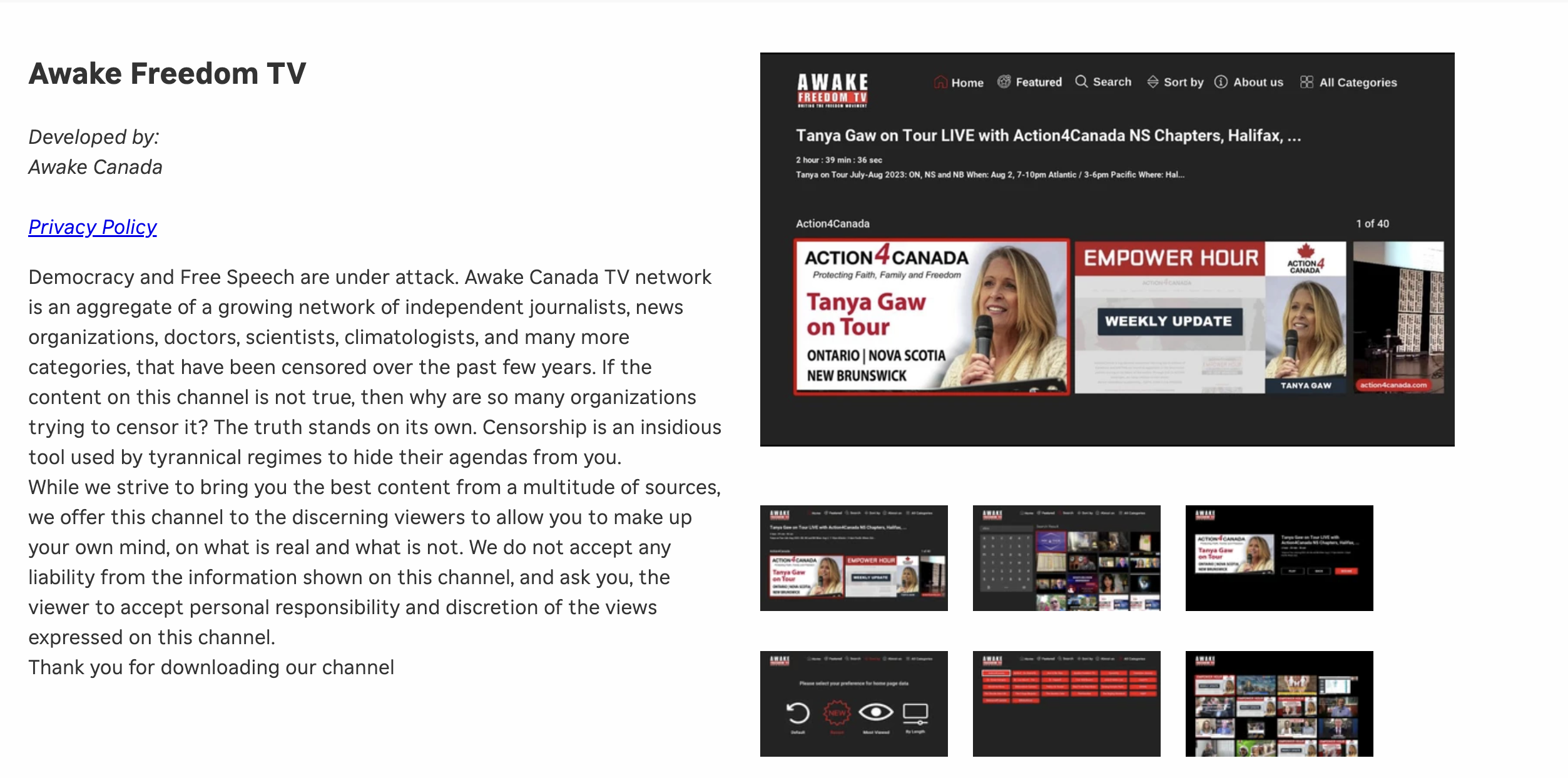
I could no longer maintain the costs on my own, so I moved the off of a dedicated server which was needed for the TV platform to work. On top of that, I want to build an app Awake Freedom TV app, for mobile phones. We need your help to first resurrect our TV channel, and then build the mobile app. In order to do that, I need a minimum of 800/month on subscription payments. Please help anyway you can with the form below.