


“There Is No Such Thing as Renewable Energy”
Geologist, energy expert and educator Scott Tinker challenged some of the central assumptions behind the modern energy transition in his recent appearance on the popular podcast Triggernometry: “There’s no such thing as renewable energy.”

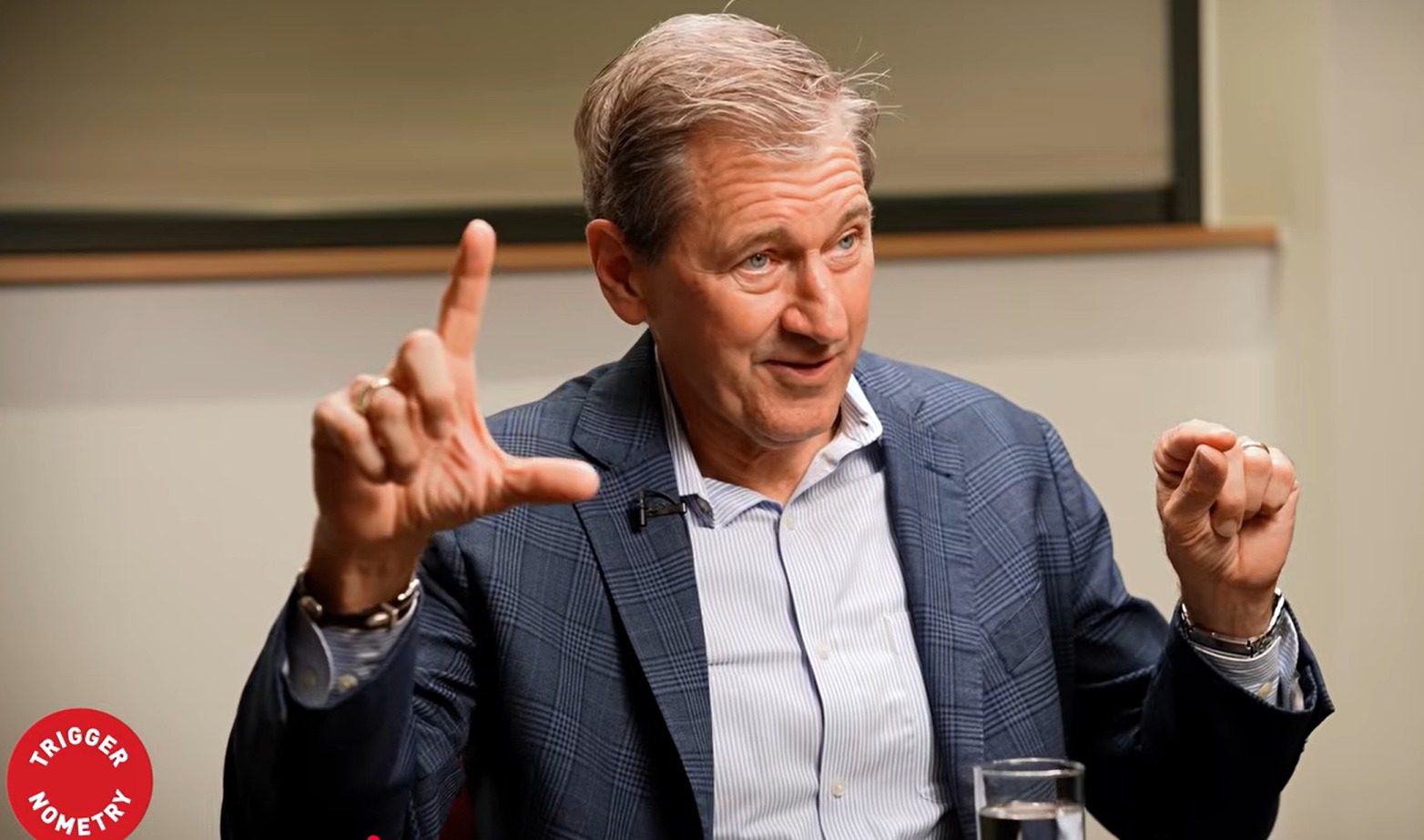
Scott Tinker on the Triggernometry podcast
Clintel Foundation
Date: 18 August 2026
Solar panels and wind turbines may draw on energy flows that are continuously replenished by nature, Tinker argued, but the industrial systems required to capture that energy are made from mined materials, manufactured, replaced and ultimately discarded. Calling the energy “renewable” therefore obscures the physical infrastructure on which it depends.
You can see the entire interview here:
Tinker’s argument is not that solar and wind have no role. On the contrary, he repeatedly stressed that he is not anti-solar or anti-wind. They can be useful components of a diversified energy system, particularly in places where they are economically and technically appropriate. His objection is to the idea that they can simply replace the high-density, dispatchable energy sources on which modern industrial civilization depends.
His perspective is rooted in an unusual combination of technical experience and global observation. A geologist by training, Tinker spent 17 years working in the technical side of the oil and gas industry before moving to the University of Texas at Austin, where he developed a large research unit combining energy, environmental and economic research. He subsequently travelled extensively and made films examining how energy systems actually function in different parts of the world. That experience, he told hosts Konstantin Kisin and Francis Foster, convinced him that energy cannot be considered in isolation from economics, development and the environment.
Density is the key
The central concept in Tinker’s analysis is energy density. Human civilization, he argued, has historically moved towards sources capable of delivering increasingly large amounts of useful energy from relatively small quantities of material. Wood gave way to coal, coal to oil, and then increasingly to natural gas and nuclear energy. Each step enabled greater mobility, industrial production and economic activity.
Coal, for example, concentrates chemical energy that plants originally captured from sunlight. Oil is still more convenient and energy-dense for transportation, while natural gas contains more hydrogen relative to carbon. Nuclear fuels take the principle to an entirely different level. Tinker sees this progression not primarily as a political choice but as the consequence of physics and economics. “It’s the physics. It’s not judgment,” he said when discussing the limitations imposed by energy density.
Solar and wind face two fundamental problems in his view. The first is their relatively low power density. Producing large amounts of energy requires large collection areas and substantial quantities of materials. Those materials have to be mined, processed and manufactured. The second problem is intermittency. Solar power disappears at night and is reduced by clouds; wind power varies with weather conditions. A modern electricity system, however, must operate continuously.
That means wind and solar require backup, storage or other forms of firm generation. Tinker points to natural-gas plants and increasingly large batteries as examples. He uses the striking comparison that lithium-ion batteries have very low energy density by weight, illustrating the physical challenge of storing enough energy to maintain a modern electricity system through extended periods of low renewable output.
He also emphasized that the developing world cannot simply be expected to accept a much less energy-intensive future. A small solar installation can be transformative in an isolated village with no electricity grid. Tinker described installing a 3.5-kilowatt solar system in an indigenous Colombian village, providing lighting, fans and refrigeration for medicines. But that was only a first step. Bringing such communities into the modern economy requires much larger quantities of reliable, dense energy.
The world is not actually abandoning fossil fuels
This, Tinker argued, is one of the great misunderstandings surrounding the energy transition. Looking at percentages can create the impression that fossil fuels are disappearing, while absolute consumption tells a different story.
According to the picture he presented, coal, oil and natural gas still account for roughly 80% of global primary energy. Their percentage share has changed, but because population and economic activity continue to grow, consumption of several fossil fuels is still increasing in absolute terms. At the same time, solar, wind and other sources are being added rather than simply replacing existing supplies.
The geographical dimension is particularly important. Asia, led by China and increasingly India, is consuming enormous quantities of energy because it is producing an enormous share of the world’s manufactured goods. Western countries may reduce their domestic emissions by moving heavy industry overseas, but Tinker regards this as little more than accounting.
His description is deliberately provocative: wealthy countries can appear greener because they have outsourced energy-intensive manufacturing to countries where coal remains abundant and inexpensive. The atmosphere, however, does not recognize national borders. If goods consumed in Europe or America are produced using coal in Asia, the associated emissions have not disappeared. They have simply moved geographically.
Tinker connects this directly to the relationship between energy and prosperity. Europe and the United States consume a disproportionately large share of global energy, but also generate a disproportionately large share of global wealth. Much of Asia and Africa, by contrast, have large populations but substantially lower energy consumption per person.
His conclusion is encapsulated in another short phrase: “Energy creates wealth.” The implication is that energy policy is also development policy. Restricting access to affordable and reliable energy can have consequences far beyond electricity prices, particularly in poorer countries seeking to industrialize.
Why Tinker is critical of Net Zero
These considerations underpin his criticism of current Net Zero strategies. Tinker recalled challenging the International Energy Agency’s 2021 Net Zero roadmap, arguing that one of its most questionable assumptions was that global energy consumption would decline. At the same time, the scenario envisaged fossil fuels falling towards zero while solar, wind and bioenergy expanded enormously.
Tinker argues that such scenarios are sometimes presented as if they were forecasts rather than conditional pathways. In his view, the problem is particularly serious when governments use them as roadmaps for actual policy without adequately considering population growth, economic development, energy demand and physical constraints.
He is particularly critical of policies that sacrifice economic strength in pursuit of emissions reductions. Europe, he argued, has experienced roughly two decades of economic stagnation while the United States and China continued to grow. If energy-intensive industries close in Europe and relocate elsewhere, he contends, the environmental benefit may be illusory while the economic cost is real.
The broader point is that environmental protection depends partly on prosperity. Wealthier societies can afford cleaner water, cleaner air, better infrastructure and environmental restoration. Poor societies often cannot. Consequently, deliberately weakening an economy in the name of environmental protection can, in Tinker’s analysis, undermine the very environmental goals policymakers claim to pursue.
Climate change: real, but not an existential apocalypse
Tinker’s position on climate change itself is more nuanced than the caricature of a climate “denier.” He explicitly accepts that the planet is warming, that atmospheric CO2 concentrations have risen substantially and that human emissions are contributing to the warming.
Where he sharply departs from much contemporary climate rhetoric is in his assessment of the consequences. He urged viewers, especially young people, to distinguish between warming itself and claims about catastrophic changes in extreme weather.
Tinker directed listeners to the IPCC’s Sixth Assessment Report, particularly Working Group I, Chapter 12, Table 12.12. He argued that the table does not show confident historical emergence of many feared changes in extreme weather, even when looking at projections under the then-most-extreme RCP8.5 scenario. He therefore believes that media and political descriptions of individual events can give a much more alarming impression than the underlying assessment literature warrants.
His concern is particularly focused on young people. Tinker described encountering university students who believed humanity might disappear within a few decades because of climate change. He regards such fears as disproportionate to the evidence and argues that young people should be encouraged to examine the underlying data rather than absorb a single, relentlessly catastrophic narrative.
His advice is essentially one of proportionality: climate change is a genuine issue, but so are poverty, food, water, health, education and access to energy. A sensible policy should balance all of these rather than optimize society around a single environmental variable.
India, nuclear power and the next energy transition
India provides, in Tinker’s view, perhaps the clearest illustration of why global energy demand is unlikely to fall dramatically. With a population larger than China’s but an economy still far smaller, India has enormous room for economic expansion. Tinker expects that expansion to generate a major increase in energy consumption.
This does not necessarily mean that rising energy demand must translate into proportionally rising emissions. Tinker believes the longer-term evolution of the energy system points towards methane, hydrogen and nuclear power. He regards nuclear energy as especially promising because of its enormous energy density and ability to provide continuous electricity.
India, he argues, has an opportunity to avoid part of the fossil-fuel-intensive development path followed by China by accelerating nuclear power and natural gas. France’s rapid expansion of nuclear power provides, in his view, an example of how a country can achieve substantial decarbonization without sacrificing reliable electricity.
Adaptation rather than panic
The interview ends with another important element of Tinker’s philosophy: adaptation. Even if the world continues to warm, he does not believe humanity is powerless. Humans have adapted to changing environments throughout history, and technological progress has dramatically expanded the ability of wealthy societies to protect themselves from environmental hazards.
Tinker therefore sees the future energy system not as a simple contest between “green” and “dirty” technologies, but as an optimization problem involving energy security, affordability, reliability, economic growth, environmental protection and technological development. There will be trade-offs, he argues, and every country will have a different optimal mix.
His final message is consequently less about denying climate change than about resisting simplistic solutions. “We are adapting,” he told the hosts.
For Tinker, the central question is not whether societies should reduce environmental impacts. It is how they can do so without sacrificing the abundant, reliable energy that makes modern prosperity possible. In his view, the eventual answer is likely to come not from eliminating dense energy in favour of intermittent sources, but from technological progress towards even denser, cleaner and more reliable forms of energy—above all natural gas, nuclear fission and, if the technology can be mastered, nuclear fusion.
The result is a distinctly pragmatic vision of the energy future: expand energy access, allow poorer countries to become richer, recognize the physical limits imposed by energy density, and pursue cleaner technologies when they become economically and technically superior. For Tinker, that is what a genuine energy transition should look like.
The article you have just read was made possible by our donors.
Every day, Clintel publishes articles on climate, energy and science. We also translate and share international analyses in multiple languages, produce videos, publish reports and organize conferences and events around the world.
We receive no government funding and rely entirely on the support of our donors. Your support helps us promote independent research and contribute to a more open and balanced debate on climate and energy issues.
Would you like to support our work? Choose the option that suits you best:
• Become a Friend of Clintel – support us with an annual contribution
• Make a recurring donation – provide ongoing support and help us plan ahead
• Make a one-time donation – every contribution helps
Thank you for your support.

more news
October 11, 2026: Roger Pielke Jr. to Speak at Clintel Event in Driebergen
The American scientist Roger Pielke Jr. is one of the most interesting and outspoken voices in the international climate debate. On Sunday afternoon, October 11, he will come to Driebergen, the Netherlands, at Clintel’s invitation for an extensive lecture on extreme weather, climate-related damages, climate scenarios, and the politicization of climate science.

The Climate Policy Trap: Why Failure So Often Leads to More of the Same
Group identity, social status, and a credential-dominated policy establishment make the climate narrative increasingly immune to disappointing results, argues Evert Doornhof of Clintel. The result is a climate policy trap in which failure doesn’t lead to reconsideration, but to even more climate policy.

No, the Loneliness Epidemic is Not Caused by Climate Change
The loneliness epidemic is made worse by climate change because increasingly common severe weather is forcing people to stay separate. Linnea Lueken comments on this new and absurd claim.
The post “There Is No Such Thing as Renewable Energy” appeared first on Clintel.
Please consider helping!
Awake Freedom TV On Roku is Broken! 🙂

I could no longer maintain the costs on my own, so I moved the off of a dedicated server which was needed for the TV platform to work. On top of that, I want to build an app Awake Freedom TV app, for mobile phones. We need your help to first resurrect our TV channel, and then build the mobile app. In order to do that, I need a minimum of 800/month on subscription payments. Please help anyway you can with the form below.


Leave A Comment