


Central Banks Double Down on Climate Regulation
The ECB has quietly expanded its “climate factor”. This is a rear-guard action by a green priesthood that senses the ground shifting but cannot bring itself to abandon the climate faith, says Tilak Doshi.

Source: Shutterstock
Tilak Doshi
Date: 12 August 2026
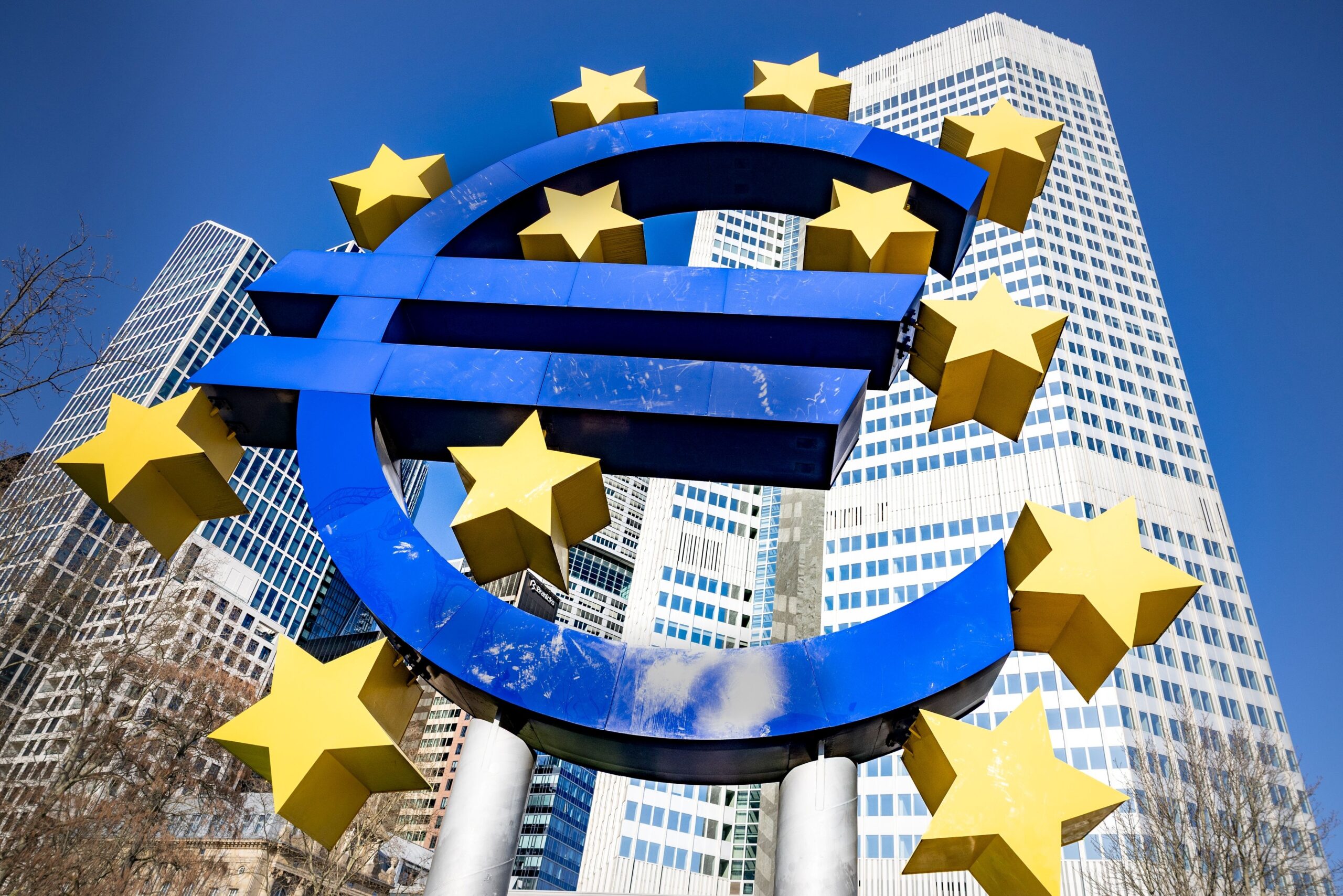
As wildfires continued to scorch parts of southern Europe, Frank Elderson of the European Central Bank’s Executive Board took to the pages of the Guardian to warn that the “climate and nature crises” now pose a direct threat to “core financial stability” and even “core price stability”. The destruction of ecosystem services, he insisted, is not some “flower-power, tree-hugging exercise” but “core economics”. The ECB, he added, is already deepening its scrutiny of banks’ exposures to nature-related risks, with further analysis due later this year.
This is the same institution that, only 10 days earlier, quietly expanded its “climate factor” in the “Eurosystem collateral framework” to cover non-financial corporate loans. From the end of 2027 at the earliest, loans to companies deemed exposed to “transition shocks” from climate change will face an additional haircut of up to 5%. The July decision and Elderson’s August rhetoric are of a piece: the ECB continues to weaponise climate (and now nature) policy even as the empirical, political and market ground shifts decisively under the alarmist camp.
From wildfires to collateral haircuts
As Green Central Banking reported, the climate factor — already applied to non-financial corporate bonds since mid-2025 — will now extend to credit claims in a major expansion of its punitive scope.
The ECB frames this as mere risk management against shocks from policy changes, technology, consumer behaviour, litigation or macroeconomic adjustment. In reality it is green industrial policy by another name: systematically raising the cost of capital for higher-carbon activities under the guise of protecting the central bank’s balance sheet.
The Bank of England has moved in parallel. In June it excluded bonds from coal-mining companies from eligibility and announced haircut add-ons for sectors exposed to the Net Zero transition. Both institutions claim they are only addressing financial risks, not directing capital. This is casuistry. When a central bank embeds contested climate scenarios into the valuation of the assets which banks must pledge for liquidity, it ceases to be a neutral lender of last resort and becomes an agent of the climate industrial complex. It also imposes higher compliance costs on a private sector already burdened by high regulatory costs in most Western countries.
The central bank as climate enforcer
I have written at length (here and here) about the fatal combination of incompetence and overreach that occurs when central banks embrace ESG. Mark Carney, the fêted “rock-star banker”, exemplified the trend while governor of the Bank of England and later as UN special envoy. He urged central banks to become ESG watchdogs, invoking Adam Smith’s Theory of Moral Sentiments to justify imposing (his) moral sentiments on capital markets. The Network for Greening the Financial System (NGFS), the Glasgow Financial Alliance for Net Zero (GFANZ) and the Net Zero Banking Alliance (NZBA) all flowed from this mindset and Carney’s efforts. Institutions whose narrow mandate is price and exchange rate stability via interest rates and liquidity were drafted into the planetary salvation business.
The ground shifts, yet the faith persists
The disjuncture is acute. While the NGFS is still operating, it has been severely weakened. The US Federal Reserve, FDIC (Federal Deposit Insurance Corporation), OCC (Office of the Comptroller of the Currency), Treasury and FHFA (Federal Housing Finance Agency) all withdrew in early-to-mid 2025, citing mission creep beyond statutory mandates. GFANZ is now heavily diluted and restructured rather than fully collapsed. In January 2025 it shifted away from requiring Net Zero commitments via sector alliances, opened broader participation and refocused on mobilising capital, especially in emerging markets. NZBA has fully collapsed. After a mass exodus of major US, Canadian, European and other banks, remaining members voted in October 2025 to cease operations.
Even as the ECB doubles down, the private-sector ESG complex that provided the intellectual and financial scaffolding (‘green finance’) is shrinking. Global sustainable funds recorded approximately $84 billion in net outflows in 2025 — the first year of overall redemptions since Morningstar began systematic tracking. US sustainable funds suffered a third consecutive year of outflows. More recent data from the Investment Company Institute show that funds investing according to ESG criteria posted a net outflow of $1.45 billion in June 2026 alone.
The ESG label has become politically toxic in large parts of the American market; fund closures outpace launches; assets under the explicit banner have stagnated or declined amid regulatory scrutiny and underperformance relative to conventional peers. What was once marketed as the inevitable march of ‘stakeholder capitalism‘ has proved vulnerable to higher interest rates, energy realities and political pushback in the US red states. Perhaps most critical is the fear that ESG fund managers potentially face legal charges of breach of their fiduciary duties to beneficiaries.
RCP8.5
This private-market retreat coincides with a broader ground shift under the climate alarmist camp — shifts the ECB, Brussels and its green allies appear determined to ignore. In April 2026 the international committee responsible for scenarios feeding the IPCC’s Seventh Assessment Report formally retired the high-end pathways, including RCP8.5 and its SSP equivalents. Roger Pielke Jr. and others had documented for years that RCP8.5 — long treated by activists, media and even some central-bank stress tests as ‘business as usual’ — required implausible assumptions about coal consumption, population growth and technological stagnation.
The IPCC’s own scenario developers have now labelled it “implausible”. The extreme warming trajectories that justified trillions in green spending, punitive regulation and the entire European Green Deal architecture have been quietly walked back. The apocalypse has been cancelled; what remains is a far less alarming range of outcomes that does not remotely justify the economic self-harm currently being inflicted on European industry and households.
Simultaneously, the second Trump administration has launched a sustained counteroffensive against the globalist climate agenda across multiple fronts. Treasury Secretary Scott Bessent has been particularly effective in reining in the World Bank and IMF. He has publicly criticised their “mission creep” into climate, gender and social issues, insisting they return to core mandates of poverty reduction, economic growth and financial stability. Under sustained American pressure as the largest shareholder, the World Bank formally retired its target of directing 45% of lending to climate-related projects. The institution is being pushed to finance affordable, reliable energy — including fossil fuels — rather than chase arbitrary green quotas that distort decision-making and divert resources from health, education and basic infrastructure in developing countries. The IMF is folding its ‘climate’ and ‘gender’ units into more conventional macro-financial work.
These are not minor bureaucratic adjustments; they represent a decisive rejection of the idea that multilateral development finance exists to enforce Western Net Zero orthodoxy on the Global South.
Even central banks obey physics and economics
Despite these tectonic shifts — the scientific retreat from extreme scenarios, the political repudiation in the United States, the private capital flight from ESG branding and the growing evidence of economic damage from decarbonisation — the ECB presses ahead. Christine Lagarde’s ECB, like the Bank of England, continues to treat ‘climate transition risk’ as a force of nature which requires defensive, pre-emptive financial engineering by the expert class rather than as the largely policy-induced phenomenon – engineered by the expert class itself – it really is.
‘Transition risk’ is not a physical or technological inevitability, despite Al Gore’s apocalyptic predictions 20 years ago. It is the risk created by governments that threaten to strand assets through regulation, carbon pricing and subsidy schemes driven by the IPCC’s already defunct scenarios. Central banks that amplify those threats through collateral haircuts are not managing risk — they are manufacturing it.
The deeper pathology is institutional. Once central banks accept that their remit includes steering the energy mix and valuing ‘ecosystem services’, there is no coherent limiting principle. Nature-related risk, biodiversity, social equity and whatever the next progressive priority may be can all be framed as ‘financial risks’ requiring supervisory intervention. Price and currency stability become secondary; democratic accountability is diluted. Central banks become the financial enforcers of the green agenda.
European households already face the consequences of high energy costs, deindustrialisation pressures and the competitive disadvantage relative to the United States and Asia, where energy abundance remains a strategic priority. Embedding climate (and ‘nature’) factors deeper into the collateral framework will reinforce those trends by raising the cost of capital for the very sectors that still power the continent.
Resilience
The climate industrial complex displays remarkable resilience. Fifty years of failed climate predictions don’t matter. It survives the failure of successive COPs to deliver meaningful emissions reductions in the developing world. It survives the economic costs of Europe’s green experiment even as they become unbearable for the average household. And it seems to be surviving the quiet burial of its preferred extreme UN-blessed scenarios and the Trumpian revolution in energy affairs. But capital is mobile, voters are restive, and physical and economic reality — the need for abundant fossil fuels, the parasitical intermittency of renewables, the sheer material intensity and cost of the ‘energy transition’ programme — does not yield to institutional fiat even with Central Banks leading the charge.
The ECB’s latest manoeuvre, and Elderson’s accompanying rhetoric, amount to a rear-guard action by a green priesthood that senses the ground shifting but cannot bring itself to abandon the faith. Central banks need to be restored to their proper, limited mandates — low inflation, currency convertibility and financial conditions that help bring about low interest rates supportive of enterprise and economic growth.
This article is republished from Tilak’s Substack. It was first published by the Daily Sceptic on 8 August 2026.
Tilak’s Substack is a reader-supported publication. To receive new posts and support his work, consider becoming a free or paid subscriber.

Dr Tilak K. Doshi
Dr Tilak K. Doshi is the Daily Sceptic‘s Energy Editor. He is an economist, a member of the CO2 Coalition and a former contributor to Forbes. Follow him on Substack and X.
The article you have just read was made possible by our donors.
Every day, Clintel publishes articles on climate, energy and science. We also translate and share international analyses in multiple languages, produce videos, publish reports and organize conferences and events around the world.
We receive no government funding and rely entirely on the support of our donors. Your support helps us promote independent research and contribute to a more open and balanced debate on climate and energy issues.
Would you like to support our work? Choose the option that suits you best:
• Become a Friend of Clintel – support us with an annual contribution
• Make a recurring donation – provide ongoing support and help us plan ahead
• Make a one-time donation – every contribution helps
Thank you for your support.

more news

Global Greening Hits New Record as Climate Emergency Fails to Materialise
Global greening, due to CO2, has hit a new record high, according to research recently published in Nature. Meanwhile activists refuse to accept that the ‘climate emergency’ has failed to materialise, says Chris Morrison.

“Net Zero Drives Up Energy Costs and Undermines Grid”
British energy analyst David Turver has delivered a blunt assessment of the United Kingdom’s energy policy, arguing that the country’s pursuit of Net Zero is making electricity increasingly expensive, complicating the operation of the power grid and undermining the conventional generation needed to keep the system reliable.

The weather isn’t getting worse. The lawsuits are
The recent NAS (National Academies of Sciences) report could trigger a wave of costly new lawsuits and forced settlements based on theoretical assumptions rather than observable evidence, says Angela Wheeler.
The post Central Banks Double Down on Climate Regulation appeared first on Clintel.
Please consider helping!
Awake Freedom TV On Roku is Broken! 🙂

I could no longer maintain the costs on my own, so I moved the off of a dedicated server which was needed for the TV platform to work. On top of that, I want to build an app Awake Freedom TV app, for mobile phones. We need your help to first resurrect our TV channel, and then build the mobile app. In order to do that, I need a minimum of 800/month on subscription payments. Please help anyway you can with the form below.


Leave A Comment