


F*c‡-checking and other attacks on research
A thorough analysis of personal experiences of possible wider interest, by Demetris Koutsoyiannis.


Cartoon created with ChatGPT (OpenAI)/Demetris Koutsoyiannis
Demetris Koutsoyiannis
Date: 22 September 2026
“Πρὸς φίλους καὶ ἀδελφοὺς ἔστι παρρησία“
(Towards friends and brothers, there is parrhesia[i.e. outspokenness, frankness, freedom of speech],
Aristotle, Nicomachean Ethics 1165a29).
“I disapprove of what you say,
but I will defend to the death your right to say it“
(Evelyn Beatrice Hall, “The Friends of Voltaire”,
reflecting her conception of Voltaire’s viewpoint).
1- Introduction
Almost two years ago, in the following post I recounted my experiences of difficulties in publishing my research:

.. but I won .. (Read full story)
I’ll continue today with this entertaining topic, focusing on post-publication attacks. Climagenda, climalarmism and climactivism are very powerful due to their connection with the omnipotent climafia. To censor or silence dissenting voices several methods are used as exemplified below. In the examples I give, I provide links and names of involved colleagues whenever the related material is in the public domain. Otherwise I don’t, but the involved parties may feel free to reveal their names by means of posting comments, if they feel like defending their positions.
2- Retraction
If climalarmists were not able to block the publication of a scientific paper whose findings oppose the climagenda, their most common practice is to push the publishers to retract it. This is particularly the case if the paper is correct, novel and important.
Thus, when the Royal Society (of the UK) published in 2022 our two companion papers entitled “Revisiting causality using stochastics”1, the climalarmists were alarmed and sprang into action. Ken Rice2 created a pubpeer site and Gavin Cawley3 published comments there. The reason why they did those are revealed by Rice4 in his blog. He says:
I thought I might simply highlight that I started a PubPeer thread about this paper and Gavin Cawley has already posted a couple of useful comments. A PubPeer thread about the Zharkova et al. paper produced quite an extensive comment thread and probably played a role in it being retracted. You might argue that a paper shouldn’t be retracted just because one of the case studies produces results that are almost certainly wrong. On the other hand, you might also argue that if one of their case studies produces such results that it rather undermines their whole method. You might also argue that it’s rather embarassing that one of the Royal Society’s journals could publish a paper with what is, these days, a very obviously wrong result.
In other words, these two gentlemen have effectively appointed themselves judges of what is scientifically wrong and right, able to dictate to scientific organizations, including the Royal Society, what they are allowed to publish and what they should retract.
In a later post, Rice5 uncovers two things: (a) that they emailed to the Royal Society pushing to retract our papers, and (b) that the Royal Society responded negatively (how dared they!). Specifically, Rice writes:
When the Proceedings of the Royal Society A paper came out last year, I emailed the editor to point out that they’d published a paper with a rather nonsensical result. I didn’t get a response. However, I was cc’d into a response to someone else who had also complained. This response was, unfortunately, rather dismissive and somewhat insulting. The response said that the criticism had been discussed with the board member and subject editor who handled the paper. According to them, the criticism misinterpreted what was in the paper and was not well-founded. Apparently, the result was scientifically intriguing and would be of interest to many of their readers.
Later their comments, either verbatim (with precisely the same figures) or paraphrased, were used by anonymous reviewers to kill follow-up papers of mine6. They were also used by self-proclaimed sceptics to attack my and others’ papers (see more information in the graphical abstract of the essay linked in the latest footnote). Moreover, rumors have reached me that self-proclaimed sceptics also push for retraction of my papers. As I was told, the rumors are trustful but there is no citable evidence.
What puzzles me is the very intense zeal and passion of those “sceptics”. Why should one, particularly if he regards himself a sceptic, worry if someone else publishes his ideas, views and research findings? Even if someone’s views or findings are erroneous, what’s the worry for other parties? It’s not their own responsibility. After all, the current landscape of scientific publications is full of papers with errors, or even worse, with nonsensical material.
Is the possibility that the dissenting views are correct, rather than erroneous, that panics them?
As a citable example illustrating this passion, I refer to a recent work of another colleague, Jonathan Cohler7 (which BTW is consistent with my findings). I was astonished to read in email exchanges (related to this work and involving many recipients regarded to be sceptics) reactions like:
He is doing the whole skeptic community more harm than 30 years of alarmist propaganda.
Another “sceptic” colleague said:
please remove him from any further correspondence.
A similar fear of damage to the reputation of Clintel is publicly expressed by the Clintel member Kees le Pair in a recent Dutch blog8 (with machine translation to English):
Co-organising [a workshop about carbon cycle by Clintel] damages the already fragile reputation of the sceptical view of climate policy.
In a similar tone at the same blog Dirk Visser9 wrote10
If Clintel starts taking the views of Murray Salby, Hermann Harde, Ed Berry and Demetris Koutsoyiannis seriously, it is heading down a dead end and will suffer a serious blow to its credibility.
Why do “sceptics” behave with such intense zeal and passion? Why they don’t want different views to appear in the light? Who knows… There are several possible explanations. Perhaps they want to prove that they are reasonable guys, and not outsiders, distanced from the establishment. Or maybe by confessing faith in the dogma “Humans are responsible” present themselves as contributing to planet’s salvation. Or maybe their ego is so big that they do not want anyone else to say anything different to what they say or can understand. Whatever the motivation, the observable behaviour is the same: dissenting views are treated as something to be suppressed rather than tested.
Some reactions may be explained in these lines. But it would be foolish not to consider another possibility: The climagenda is too important to rely on a single defence line. One can be sure that there are multiple “Surovikin Lines” of defence. And as the maxim attributed to Lenin goes, “The best way to control the opposition is to lead it ourselves”. (Nb., the maxim does not appear in Lenin’s texts—it rather summarizes actions of his.)
Anyhow, the good news about me (but not about everybody) is that, despite efforts, none of my papers has been retracted (at least till now).
3- Discussion papers
Formal Discussion papers or Commentaries in peer-reviewed journals are the best way of scientific dialogue, once the quality protocols are followed. These include peer review of the Commentaries and ensuring the authors of the original paper the right to reply. These protocols, however, may be violated when conventional wisdom is at risk.
After publication of the Royal Society papers I mentioned above, Leif Åsbrink submitted a Commentary, which was peer reviewed and approved for publication.11 Interestingly, Åsbrink is also a Clintel member, perhaps also worrying for the reputation of “the sceptical community”.
Åsbrink did not challenge our methodology nor our results. His Commentary did not contain anything related to our mathematical part. He simply expressed disagreements with some of our formulations and interpretations. These disagreements allowed us to confirm our results in the original papers and to shed further light on why our original formulations stand.
I conjecture that more Commentaries were submitted, and this one was selected, after review, as the best one—which means that the level of criticism in the other submissions was even lower. My conjecture is based on the reply I received from the Royal Society to my email expressing our willingness to provide a Reply to each Commentary they received. They clarified in their reply that their policy is only to publish one comment article on a paper.
However, the Royal Society rejected our Reply to Åsbrink’s Commentary. As I wrote elsewhere12, in retrospect, I fully understand them after the reactions by certain groups, and the pressure to retract our papers. I am satisfied that the Royal Society resisted that pressure.
Nonetheless, we published a stand-alone paper elsewhere13, which also contained information and analyses disputing Åsbrink’s claims, and we informed all parties about it by the following email to Åsbrink copied to the Royal Society editors.
On 2023-09-21 20:25, Demetris Koutsoyiannis wrote:
Dear Dr Asbrink,
I am copying below our earlier correspondence (more than a year ago) for all recipients’ convenience in recalling the case.
As you see in my latest email, I wished your comment on our papers was accepted. My wish came true and your comment was accepted and published. But our reply was rejected.
I wanted you to know that we tried to honour your comment through formal procedures in PRSA. Specifically:
— Initially we prepared a very detailed reply addressing all your points, which was not accepted because it was too long.
— Then we prepared a short reply, according to the instructions and the page limits we were given. This was rejected by the Editor without sending it to review.
— To our complaint that this contrasts their own rules, as stated in their web site, they replied that they are sorry that their web site was misleading.
Meanwhile, we decided to submit a stand-alone paper somewhere else. It took a long time to have our paper published, but eventually we succeeded a week ago (as you may see in the front page, it took four editors to decide):
Paper: https://doi.org/10.3390/sci5030035
Altmetrics: https://mdpi.altmetric.com/details/154244550/twitterIn our new paper we address all your concerns, as well as those of other critics who were posting in blogs and social media, trying to find errors in our papers.
We thank you for your comment, which helped us to investigate further the T/CO2 issue, and to strengthen our results and our confidence in them.
With kind regards, on behalf of all coauthors,
Demetris Koutsoyiannis
National Technical University of Athens
Additional information on how the new paper disputes Åsbrink’s claims can be found in another document14.
On another paper of mine, “Net Isotopic Signature of Atmospheric CO2 Sources and Sinks: No Change since the Little Ice Age”15, Arno Kleber also published a formal Commentary.16 The editors of the journal invited me to reply, also copying to me the Commentary and its two reviews. Both were very positive. Both reviewers looked very happy with their thought that the comment tore down my paper. However, I believe that it’s my Reply17 that effectively dismantled the Commentary. This time the editors published my Reply. Despite that, the climalarmists remain happy with the published Commentary—they very often refer to it in blogs and social media, missing to mention the Reply. Similar is the behaviour of AI bots.
4- Fact checking
Since in my case the attempts for retraction of my papers failed and the Commentaries yielded little, a next weapon deployed was to f*c‡-check my papers. This is typically undertaken by news agencies, where the meaning of “news” has recently evolved, by incorporating “fact-checking”, to become identical to “propaganda”.
Back in 2023, just after our paper “On Hens, Eggs, Temperatures and CO2: Causal Links in Earth’s Atmosphere”18 was published, I was contacted by a journalist who worked for German news agencies. He told me that a particular agency (a famous one—what an honour for me!) had assigned him the task to fact-check that paper. He was very honest and professional. We exchanged lots of emails and also had video-conferences.
I asked him whether he believed he had the sufficient knowledge to fact-check a paper which was a result of intense scientific research. He honestly replied: No, but he was assigned by the agency to do this job. After the intensive exchanges and discussions, I felt the journalist was convinced that everything in the paper was right. I asked him if, after this, he would publish a fact-checking article saying his positive verdict about the paper. He honestly answered that his agency
“is not interested in publishing research results defying what is called the scientific consensus.”
I appreciated this honest reply. Of course, the fact that the agency would not publish anything positive about the paper was not a surprise for me. As far as I can know, indeed this agency never published anything related to my work—and this is a satisfaction.
A few months ago I received another email of this type for another paper of mine, the isotopic paper on which Kleber made his Commentary. This time the email was from Agence France-Presse (AFP) and said that they spoke to experts in the field of climate science and they raised several points about my study. In turn, I asked them similar questions to those above, but this time there was no answer, exept that their target audience is that of social media. I also asked the question, Why these “experts” did not follow the formal academic procedure to publish their criticisms about my paper in academic journals? I also pointed out that another expert (Kleber) did follow the formal academic procedure, and published his Commentary on my paper, to which I formally replied. My questions remained unreplied, yet I replied to their own. My full replies are attached below.
Link to full replies: https://climath.substack.com/api/v1/file/d6a94cfc-67a9-4e09-8b21-8448d07b9a90.pdf
Eventually, AFP made a post about my paper in Swedish19, which starts as follows (machine translation into English):
Misleading claims about climate change are spreading on social media following the heatwave in Europe
Published July 7, 2026 4:42 PM — Reading time: 7 minutes
Anna HOLLINGSWORTH , AFP Finland
Despite the overwhelming consensus among scientists on human-caused climate change, a 2024 Greek peer-reviewed study has been circulated in Swedish social media posts falsely claiming there is no evidence of significant amounts of carbon dioxide from human activities in the atmosphere. Climate scientists interviewed by AFP questioned the study’s conclusions and said it was being used to spread misleading and inaccurate claims about climate change.
The only part of my reply quoted in this post is this:
In an email to AFP on June 30, 2026, Koutsoyiannis, the study’s author, rejected criticism of the study. “I trust and follow the scientific method rather than the IPCC or any other political or scientific authority,” he said.
The post names the “experts” who “kindly” judged my work and found it mistaken: Alexander J. Turner and Alex Vermeulen. They don’t say anything specific about my paper (e.g. quoting errors they found in it), they just repeat the usual narrative.
The same paper was also fact-checked more than a year ago by the Austrian fact-checking site Mimikama20. In this case, the fact-checker did not bother to contact me and pose any question. Rather, I was alerted for the post by a colleague, to whom I replied:
From the Google translation I find the post you linked to be nonsense. I don’t think it deserves any effort to deal with it.
Another paper of mine, “Refined Reservoir Routing (RRR) and Its Application to Atmospheric Carbon Dioxide Balance”21 was fact-checked by the Deutsche Presse-Agentur (DPA — German Press Agency)22. Again, I was not invited to provide any explanation. Again I don’t think it deserves any effort to deal with it.
The low level of criticism of these f*c‡-check agencies is expected, of course. I guess their bosses, including powerful political figures such as Ursula von der Leyen, President of the European Commission, who struggles to protect us from the existential threat of the free speech (which she calls “information manipulation”)23 are satisfied. But I wonder whether anyone who examines the evidence carefully can take this seriously and remain happy with the way his money is spent, by being supplied to these agencies.
5- Argumentum ad hominem
This is the most beloved tactic in blogs and social media. Take this as a typical example:
FALSE. The new paradigm: Koutsoyiannis replaces the greenhouse paradigm with an Atmospheric Radiative Effect (ARE) framework in which pressure, water vapour, and convection dominate climate behaviour. No need for CO₂. Climate alarmism is dogma and a scam. #auspol #BBCNews https://t.co/FXAiYUT8Ua
— Edmund Esterbauer (@BirdlifeSC) August 29, 2026
Here we have a pseudonymous commenter making strong claims. First he correctly says that I am a hydrologist—but I examine the meaning of this below. Second, he says that my math makes no sense, without providing even one example. Third, he presents the fact that I quote myself as a problem. This demonstrably classifies as a lie (see other lies in next section), contradicted by the published record, because I cite lots of other authors. Of course, I also cite previous works of mine—those upon which the new paper builds. What would the alternative be? To hide the results of the previous works? To copy/paste in the new paper the related material from the old papers, repeating myself ad infinitum? Fourth, he uses a citation to a blog trying to dispute my work. In this respect Kleber’s Commentary has been the most popular troll reference, but in this case the reference is to a 18-year old post in the climate-narrative site RealClimate.
The “argument” of self-referencing has been very popular. As another example, here is what Dirk Visser wrote recently in a blog:24
Although these scientific positions do form a coherent whole, the authors mentioned [Murray Salby, Hermann Harde, Ed Berry and Demetris Koutsoyiannis] mainly refer to one another and to themselves. However, the science behind them is dubious and based on shaky foundations. It is a house of cards that will collapse sooner or later.
In another comment in the same blog, the same person takes a step further, implying that I am stupid25:
For the time being, I do not intend to take him [Koutsoyiannis] on; it seems like a futile effort. He is indeed good at statistics, but he is also very convinced that he is right. His calculations are sound, but the interpretation is not. I cannot help thinking of Mark Twain’s saying: “Never argue with stupid people, they drag you down to their level and beat you with experience.”
I appreciate, of course that he recognizes that I am good at statistics. Others are more severe with me like this troll26, diagnosing
a fraudulent “paper” by the maliciously deceptive charlatan Demetris Koutsoyiannis, published by the predatory fake journal crank publisher MDPI.
Coming back to Dirk Visser, in another comment in the same blog he says:27
Koutsoyiannis is a hydrologist, skilled in stochastic methods and statistics. His work in hydrology is widely appreciated; he is an excellent scientist. Unfortunately, however, he applies his skills in advanced statistical methods (such as the use of impulse response functions) incorrectly in climatology. To mention one of his biggest mistakes: he claims to have demonstrated that CO2 always follows temperature and that the continuing rise in CO2 is the result of rising temperatures. He does this using data from which he has taken differences. There is therefore absolutely no trend left in those data, but there are short-term fluctuations. Those fluctuations indeed show that CO2 follows temperature with a lag of seven months, but the response is weak: approximately 7 ppm/K. His mistakes are to apply this response to the background trend and to inflate the response to more than 100 ppm/K
I won’t reply here about the essence of his comment, because he may find extensive replies about the applicability of the T→CO2 causality on all time scales both in peer-reviewed papers28 and in other documents.29 I will only reply to the first part of the comment, that I am a hydrologist—same as in the first example I provided in this section. This has been a favourite argument of both eponymous critics, like in this case, and trolls. Other critics and trolls also stress the fact that I am a civil engineer.
Both these are correct, I am a civil engineer and I am a hydrologist—but as typical of humans, I am many more things. Their aim is though to point out that I am not good in climatology—as implied in the comment above—or I do not have any relationship with climate—as stated in trolls’ comments.
First off, given the way things have turned out, e.g. with climate modellers simulating the climate of a virtual world to issue threat alerts, and thus serve the politically driven climagenda, the climate became too serious a matter to entrust to “climate scientists”30. By contrast, engineers have a proven track record in dealing with real-world problems.
Second, history of science suggests that one of the most influential climatologists in history, who advanced our understanding of changing climate, was Milutin Milanković. By profession he was a civil engineer. Both his undergraduate studies and his PhD were in civil engineering.
Third, hydrology is not unrelated to climate. Hydrology is the science of water on Earth and climate is formed mainly by water.31
Fourth, to bless my beard in a section devoted to argumentum ad hominem, I can point to the list of my 84 publications related to climate, among which 47 are in peer-reviewed journals.32 I can also provide the next screens, which suggest that my bibliometric rankings classify me at the top 1% in climatology worldwide. More specifically, at the time of writing, both ResearchGate and Google Scholar reported my scores as higher than that of 99% (or among the top 1%) of researchers in climatology in their databases.

DK’s ResearchGate statistics related to climatology.

The first Google Scholar’s screen, containing 1679 scientists in total for the climatology tag, with the top 10 scientists according to the number of citations.

The second Google Scholar’s screen, containing 1679 scientists in total for the climatology tag, with the scientists ranked top 11-20 according to the number of citations.
6- Blatant lies
I have already referred to lies in previous sections. However trolls spread bigger, blatant lies. For example, that my papers were not peer reviewed, while they were, of course,33 or that I did not reply to Commentaries, while I did, of course.34
One may say that it’s typical of trolls —either human trolls with fake names, or machine trolls (bots)— to tell lies. However, eponymous colleagues do not avoid telling lies, too. For example, Åsbrink accused me for invoking “religious” arguments35, while I do not think any of my papers appeals to religion.
Moreover, “official” bots also spread lies. They are much more dangerous than common trolls, because people tend to believe what these bots say. As an example, Grok posted on X that my 2023 paper “On Hens, Eggs, Temperatures and CO2: Causal Links in Earth’s Atmosphere”36 was retracted:
@SchneidGabriel @RogerCoppock @grok Please evaluate this thread for veracity from the “there is no valid scientific paper to show CO2 driving temperature” point forward. Use only peer-reviewed scientific publications, do not speculate, and reduce to as close to zero as possible the chance of “hallucination”.
— Craig Jefferson (@craigg16410) August 31, 2025
When I pointed this out to it, Grok apologized to me37 stating that none of my papers have ever been retracted. However, it did not post a correction into the related thread.
Noten
1 Koutsoyiannis, D., Onof, C. Christofides, A., and Kundzewicz, Z.W., 2022. Revisiting causality using stochastics: 1.Theory. Proceedings of The Royal Society A, 478 (2261), 20210835, doi: 10.1098/rspa.2021.0835.
Koutsoyiannis, D., Onof, C. Christofides, A., and Kundzewicz, Z.W., 2022. Revisiting causality using stochastics: 2. Applications. Proceedings of The Royal Society A, 478 (2261), 20210836, doi :10.1098/rspa.2021.0836.
2 K. Rice, comment #1 in pubpeer site on “Revisiting causality using stochastics: 2. Applications” (2022), https://pubpeer.com/publications/7828A34E1F905217D557E4F8E93CC1
3 G. C. Cawley, comment #3 in pubpeer site on “Revisiting causality using stochastics: 2. Applications” (2022), https://pubpeer.com/publications/7828A34E1F905217D557E4F8E93CC1#3
4…and Then There’s Physics (blog by K. Rice), Revisiting causality using stochastics (2022), https://andthentheresphysics.wordpress.com/2022/07/27/revisiting-causality-using-stochastics/
5…and Then There’s Physics (blog by K. Rice), Scientifically intriguing? (2023), https://andthentheresphysics.wordpress.com/2023/10/01/scientifically-intriguing/
6 Koutsoyiannis, D., 2024. From hen’s egg to serpent’s egg: Peer reviews and other attacks on science for silencing voices opposing the “climate crisis” narrative, NTUA, Athens, https://www.itia.ntua.gr/en/docinfo/2468/.
7 Cohler, J., 2025. Isotopic falsification of the fossil-dominant hypothesis for atmospheric CO2, https://drive.google.com/file/d/1U6pSIvPkf-BLYCu88Z8PKoo5M1I0dbWr/view?pli=1.
Podcast presentation: Jonathan Cohler: “ Fossil fuel combustion drove essentially none of the atmospheric CO2 growth”, https://www.youtube.com/watch?v=xuEdCaS7Gqs.
8 https://www.climategate.nl/2026/09/controverse-over-de-koolstofcyclus/, comment dated 8 Sep 2026 15:20.
9 As a general rule for this post, for each person I refer to, I also provide a link to the Google Scholar profile as an indication of the person’s scientific identity. For Dirk Visser I was not able to find any “coordinates”. Hopefully, I’ll correct this omission in an update of the post.
10 As footnote 8, comment dated 8 Sep 2026 09:39.
11 Åsbrink, L., 2023. Revisiting causality using stochastics on atmospheric temperature and CO2 concentration. Proceedings of the Royal Society A, 479 (2269), 20220529.
12 https://judithcurry.com/2023/09/26/causality-and-climate/#comment-995095.
13 Koutsoyiannis, D., Onof, C., Kundzewicz, Z.W., and Christofides, A., 2023, On hens, eggs, temperatures and CO₂: Causal links in Earth’s atmosphere. Sci, 5 (3), 35, doi: 10.3390/sci5030035.
14 As footnote 6, p. 45 of 52.
15 Koutsoyiannis, D., 2024. Net isotopic signature of atmospheric CO2 sources and sinks: No change since the Little Ice Age. Sci, 6 (1), 17, doi: 10.3390/sci6010017.
16 Kleber, A., 2024. Comment on Koutsoyiannis, D. Net Isotopic Signature of Atmospheric CO2 Sources and Sinks: No Change Since the Little Ice Age. Sci 2024, 6, 17. Sci, 6 (4), 62, doi: 10.3390/sci6040062.
17 Koutsoyiannis, D, 2024. Definite change since the formation of the Earth. Reply to Kleber, A. Comment on “Koutsoyiannis, D. Net Isotopic Signature of Atmospheric CO2 Sources and Sinks: No Change Since the Little Ice Age. Sci 2024, 6, 17”. Sci, 6 (4), 63, doi: 10.3390/sci6040063.
18 As footnote 12.
19 I sociala medier sprids missvisande påståenden om klimatförändringarna efter värmeböljan i Europa | Faktakoll, https://faktakoll.afp.com/doc.afp.com.B8NB2CQ
20 CO₂-Signatur seit 40 Jahren unverändert? (Faktencheck), https://www.mimikama.org/co2-signatur-40-jahre-unveraendert/.
21 Koutsoyiannis, D., 2024. Refined Reservoir Routing (RRR) and its application to atmospheric carbon dioxide balance. Water, 16 (17), 2402, doi: 10.3390/w16172402.
22 Klimawandel – Treibhausgase tragen zur Erwärmung der Atmosphäre bei, https://dpa-factchecking.com/germany/260903-99-523553/.
23 In her following talk (watch the video around 14:00), Ursula von der Leyen, parallels free speech, which she calls “information manipulation”, to a virus and censorship to its vaccine:
24 As footnote 8, comment dated 8 Sep 2026 09:39.
25 As footnote 8, comment dated 8 Sep 2026 11:01.
26 X post by “Philalethes Eirenaios”, 5 Jun 2026, https://x.com/e_philalethes/status/2062923633257787782.
27 As footnote 8, comment dated 9 Sep 2026 00:45.
28 “On hens, eggs, temperatures and CO₂: Causal links in Earth’s atmosphere” as in footnote 12. Also:
Koutsoyiannis, D., 2024. Stochastic assessment of temperature – CO₂ causal relationship in climate from the Phanerozoic through modern times. Mathematical Biosciences and Engineering, 21 (7), 6560–6602, doi: 10.3934/mbe.2024287.
29 Christofides, A., Koutsoyiannis, D., Onof, C., and Kundzewicz, Z.W., 2023. Causality, Climate, Etc. doi: 10.13140/RG.2.2.21608.44803, Climate Etc. (Judith Curry’s blog), 370 pp., https://www.itia.ntua.gr/en/docinfo/2353/.
30 Here I paraphrase Georges Clemenceau maxim: “La guerre! C’est une chose trop grave pour la confier à des militaires.”
31 Koutsoyiannis, D., 2021. Rethinking climate, climate change, and their relationship with water. Water, 13 (6), 849, doi: 10.3390/w13060849,.
Koutsoyiannis, D., and Vournas, C., 2024. Revisiting the greenhouse effect—a hydrological perspective. Hydrological Sciences Journal, 69 (2), 151–164, doi: 10.1080/02626667.2023.2287047.
32 https://www.itia.ntua.gr/en/search/?authors=koutsoyiannis&tags=climate.
33 I cite this X post, which the “author” later deleted, but the Wayback machine kept it:

See also a reply to that X post by Kenneth Richard here:
@matzxl @ter_jez @PGDynes “Published WITHOUT any peer review”
This is clearly a false statement, easily refuted by reading the reviews (see link). But do provide evidence that the 3 peer reviewers did not actually referee the paper.
https://t.co/DILSjk31BI https://t.co/CCULOzRJvR
— Kenneth Richard (@Kenneth72712993) September 1, 2025
34 I cite this X post, which the “author” later deleted, but the Wayback machine kept it:

See also a reply to that X post by Kenneth Richard here:
@matzxl @ter_jez @PGDynes “Koutsoyiannis didn’t even bother to react to this response.”
He did. You’re just too uninformed (and likely unwilling) to investigate honestly.
Here is the Reply (link) to the Kleber Comment. All you needed to do was click on the “Reply” bar.
https://t.co/hFkyRyRgh9 https://t.co/gZfFJVsrcW
— Kenneth Richard (@Kenneth72712993) September 1, 2025
This article was published first on the Substack of Demetris Koutsoyiannis on 19 September 2026.
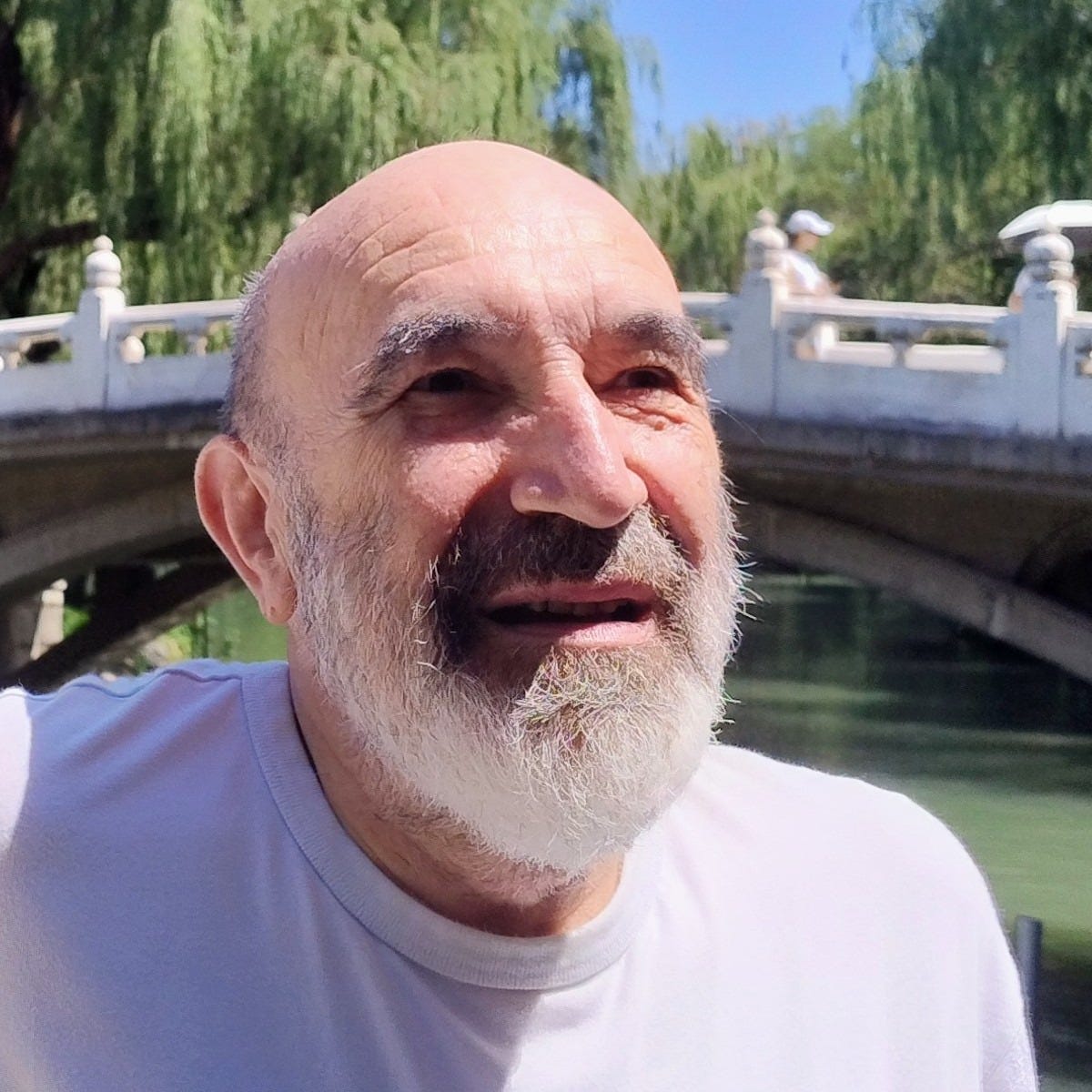
Demetris Koutsoyiannis
Demetris Koutsoyiannis is professor emeritus of Hydrology and Analysis of Hydrosystems at the National Technical University of Athens. He has a rich experience in teaching, research, administration, and engineering and a good connection with reality thanks to the village where he was born.
The article you have just read was made possible by our donors.
Every day, Clintel publishes articles on climate, energy and science. We also translate and share international analyses in multiple languages, produce videos, publish reports and organize conferences and events around the world.
We receive no government funding and rely entirely on the support of our donors. Your support helps us promote independent research and contribute to a more open and balanced debate on climate and energy issues.
Would you like to support our work? Choose the option that suits you best:
• Become a Friend of Clintel – support us with an annual contribution
• Make a recurring donation – provide ongoing support and help us plan ahead
• Make a one-time donation – every contribution helps
Thank you for your support.

more news

F*c‡-checking and other attacks on research
A thorough analysis of personal experiences of possible wider interest, by Demetris Koutsoyiannis.

Former MI6 chief: Energy Transition leaves UK dangerously exposed
Former MI6 chief Sir Richard Dearlove has warned that Britain’s approach to energy has left the country dangerously exposed to hostile states, arguing that national security considerations have been pushed aside in the pursuit of Net Zero.

ICSF/Clintel lecture by Lars Schernikau: Wind and Solar Cannot Power Europe
Europe is facing a growing energy challenge that cannot be solved by simply adding more wind and solar power, said energy economist Lars Schernikau in his recent ICSF/Clintel lecture. “Germany could see serious power shortages before the end of the decade.”
The post F*c‡-checking and other attacks on research appeared first on Clintel.
Please consider helping!
Awake Freedom TV On Roku is Broken! 🙂

I could no longer maintain the costs on my own, so I moved the off of a dedicated server which was needed for the TV platform to work. On top of that, I want to build an app Awake Freedom TV app, for mobile phones. We need your help to first resurrect our TV channel, and then build the mobile app. In order to do that, I need a minimum of 800/month on subscription payments. Please help anyway you can with the form below.

Leave A Comment