Climate Change Will Not Starve the World
Climate change should be regarded as a manageable factor rather than an existential threat to global food supplies. Humanity has repeatedly demonstrated an ability to increase agricultural productivity faster than population growth, says Karl Iver Dahl-Madsen.


Predictions that climate change will trigger widespread food shortages are based on a fundamental misunderstanding of how modern agriculture works, according to Danish food and environmental consultant Karl Iver Dahl-Madsen (also chairman of the board of the Danish climate-sceptical association Klimarealisme). Speaking recently at the EIKE Conference in Germany (Halle), Dahl-Madsen argued that the world’s food supply has become increasingly resilient to weather and climate fluctuations because technological progress, rising agricultural yields, international trade and human adaptation matter far more than changes in average temperature.
You can see the entire presentation by Dahl-Madsen below:
Madsen’s starting point was deliberately optimistic. “I tell you for sure that we will never run out of food if we behave rational,” he told the audience. For Dahl-Madsen, the key to understanding the future of food is therefore not to extrapolate isolated climate risks, but to examine what has actually happened to food production over the past century.
The historical record, he argued, is difficult to reconcile with the idea that changing climate conditions have placed an increasing burden on humanity. Over roughly the past 100 years, the global population has quadrupled, but agricultural productivity has increased even more. At the same time, extreme poverty and child mortality have fallen dramatically, life expectancy has risen and access to electricity has expanded. Food availability, in his presentation, is part of the same broader story of technological and economic progress.
Marginal impact
Dahl-Madsen’s central argument is that climate is a relatively minor factor compared with technological development. Global food availability has continued to rise because farmers respond to demand by increasing production, improving yields and reducing costs. “The climate impact, if there is one. is marginal compared to the technological development,” he said.
This distinction between climate and technology is crucial to his analysis. Agricultural production does not simply respond passively to environmental conditions, he argued. Farmers change crops, improve cultivation methods, use fertilizer and pesticides, adopt new genetics and increasingly employ machinery and digital technology. As a result, a temperature or precipitation change that might reduce the yield of a particular crop in a particular location does not necessarily translate into a reduction in global food production.
Denmark provides an example. Dahl-Madsen pointed to the country’s wheat production, which has roughly doubled since 1960, from around four tonnes to approximately eight tonnes per hectare. More generally, yields have risen across Europe and globally. Importantly, he noted that fluctuations in agricultural production tend to become smaller when viewed at a global rather than local level. A bad harvest in one region can coincide with a good harvest somewhere else. International trade allows food to move between the two.
For that reason, Dahl-Madsen strongly rejected the idea that countries should strive for food self-sufficiency. Local agriculture can be highly vulnerable to individual weather events, whereas a globally integrated food system spreads the risk. Food security, in his view, depends not on producing everything domestically but on maintaining the ability to buy and sell food across borders.
Adaptation
He also challenged the notion that increasing temperatures necessarily imply falling agricultural yields. Plants have broad temperature ranges in which they can grow, he argued, and farmers can switch crops when climatic conditions change. In his assessment, a warming of several degrees does not automatically represent a catastrophe for agriculture.
Adaptation is therefore one of the most important elements missing from many pessimistic assessments, according to Dahl-Madsen. Farmers have always adapted to changing weather conditions, and there is little reason to assume that they will stop doing so in the future. He was particularly critical of assessments that average projections made with and without adaptation. Such an approach, he suggested, understates the ability of agricultural producers to respond to changing circumstances.
Water, rather than temperature itself, is potentially the more important concern. Plants need water, and drought can have substantial effects on yields. Yet Dahl-Madsen argued that the available climate scenarios do not provide sufficient grounds for assuming that worsening drought will become a dominant global threat to food production. Moreover, irrigation, crop selection, improved water management and technological innovation can all increase agriculture’s ability to cope with changing precipitation patterns.
Higher atmospheric CO2 concentrations, meanwhile, could provide a modest benefit to agriculture, in his assessment. Carbon dioxide is one of the inputs required for photosynthesis, and higher concentrations can improve plant water-use efficiency and increase growth under suitable conditions. Dahl-Madsen acknowledged that increased CO2 may alter the nutritional composition of some crops because carbohydrates can increase faster than proteins. But he maintained that protein yields can rise as well, even if their concentration is somewhat diluted.
Biofuels
The speaker reserved some of his strongest criticism not for climate change itself, but for policies introduced in its name. Biofuels, particularly the use of food crops for ethanol and biomass energy, are in his view a serious threat to food security because they divert productive agricultural land and crops away from feeding people. “Food is such a much more valuable crop than bioethanol,” he argued.
Dahl-Madsen contrasted this with what he sees as genuine examples of human-driven food crises. Venezuela, he said, experienced a sharp decline in agricultural production following political and economic changes, while the Swedish famine of the 1860s demonstrated how vulnerable pre-modern societies were to poor weather. Modern Denmark offers the opposite example. A drought in 2018 reduced the country’s grain harvest by about 23 percent, but there was no famine: Denmark could simply import the food it needed.
Looking ahead, Dahl-Madsen sees considerable scope for further increases in food production without proportionally increasing agriculture’s environmental footprint. Precision agriculture, using satellites, drones and targeted applications of water, fertilizer and pesticides, could improve efficiency. Genetics and biotechnology could raise yields further, while aquaculture could expand food production beyond the limits of traditional fisheries. He also envisaged future possibilities ranging from cultured meat to highly energy-intensive vertical farming.
Misguided policy
The greatest danger, in his view, is consequently not climate change but misguided policy. Restrictions on trade, opposition to genetically modified crops, restrictions on agricultural inputs and energy policies that make fertilizer and pesticides more expensive could all undermine food security. International trade is particularly important because it allows the global food system to absorb local shocks.
Dahl-Madsen’s overall message was that climate change should be regarded as a manageable factor rather than an existential threat to global food supplies. Humanity has repeatedly demonstrated an ability to increase agricultural productivity faster than population growth, while technological progress has made food systems less vulnerable to local climatic shocks. The future, he concluded, is likely to be characterized not by global scarcity but by continued adaptation, innovation and increasingly abundant food—provided governments do not undermine that process through restrictive policies.
The article you have just read was made possible by our donors.
Every day, Clintel publishes articles on climate, energy and science. We also translate and share international analyses in multiple languages, produce videos, publish reports and organize conferences and events around the world.
We receive no government funding and rely entirely on the support of our donors. Your support helps us promote independent research and contribute to a more open and balanced debate on climate and energy issues.
Would you like to support our work? Choose the option that suits you best:
• Become a Friend of Clintel – support us with an annual contribution
• Make a recurring donation – provide ongoing support and help us plan ahead
• Make a one-time donation – every contribution helps
Thank you for your support.

more news

Measuring Meaningless Climate Actions
What would Americans gain from eliminating every ton of carbon dioxide emitted from the use of fossil fuels in the United States? The answer, says Vijay Jayaraj, is nothing.

“Amendment to Climate Assessment is only a first step”
“Amendment to Climate Assessment is only a first step” The Trump administration has proposed an amendment to the U.S Fifth National Climate Assessment that acknowledges its emission forecasts are implausible and must not guide federal policymaking. This is a welcome restoration of scientific integrity, says executive director Angela Wheeler of the CO2 […]

Jonathan Cohler: “The rise in atmospheric CO2 is not caused by humans.”
Physicist Jonathan Cohler has put forward a controversial and uncompromising challenge to one of the central assumptions of modern climate science and policy. He argues that the rise in atmospheric carbon dioxide over the past few decades is not due to human emissions, but is the result of natural processes.
The post Climate Change Will Not Starve the World appeared first on Clintel.
Please consider helping!
Awake Freedom TV On Roku is Broken! 🙂
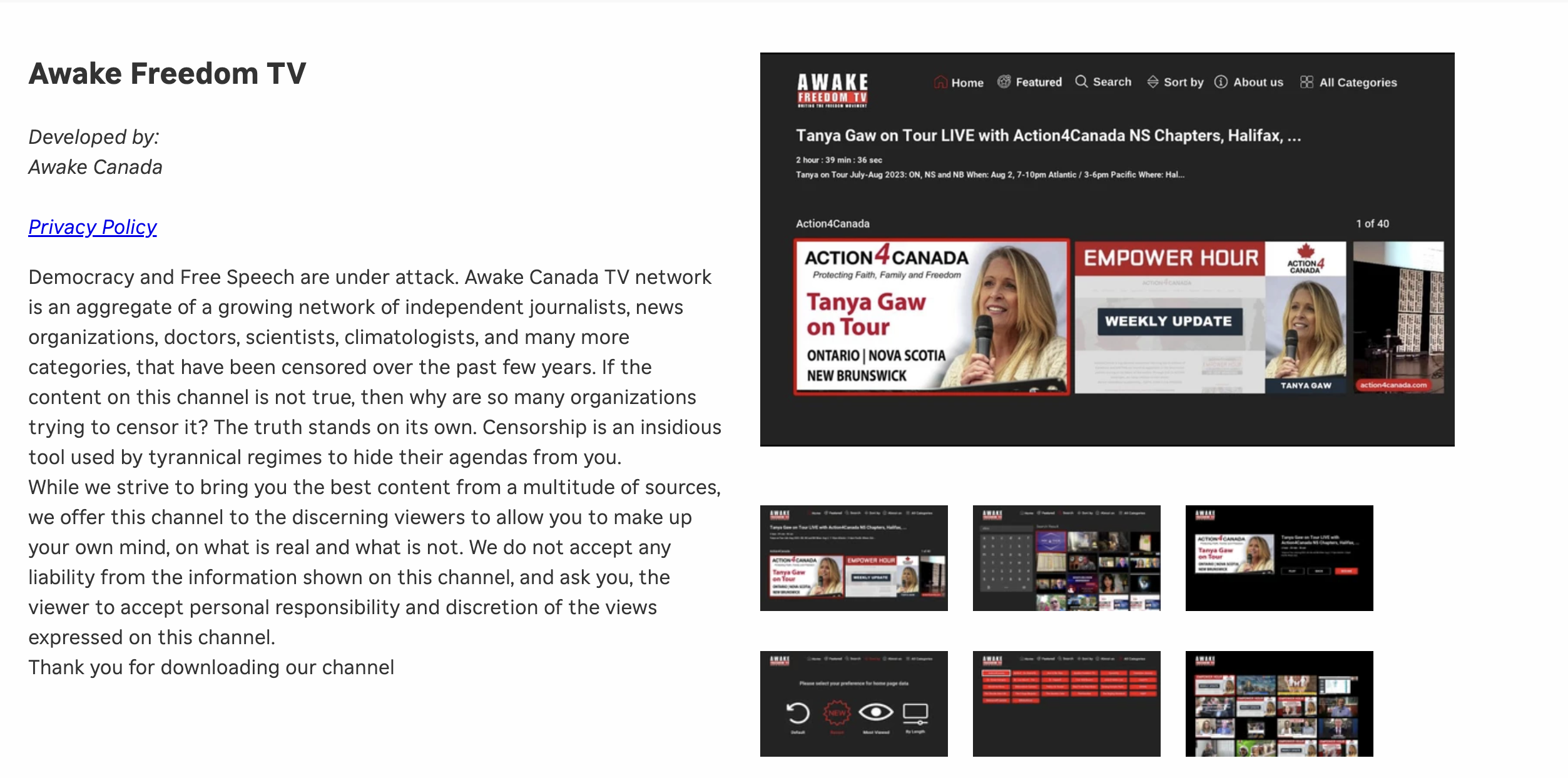
I could no longer maintain the costs on my own, so I moved the off of a dedicated server which was needed for the TV platform to work. On top of that, I want to build an app Awake Freedom TV app, for mobile phones. We need your help to first resurrect our TV channel, and then build the mobile app. In order to do that, I need a minimum of 800/month on subscription payments. Please help anyway you can with the form below.